Department of Management, School of Management, Jiangsu University, Zhenjiang, P.R. China.
Department of International Trade, School of Finance and Economics, Jiangsu University, Zhenjiang, P.R. China.
Community Health Equity Res Policy. 2023 Apr;43(3):239-248. doi: 10.1177/0272684X211004945. Epub 2021 Apr 8.
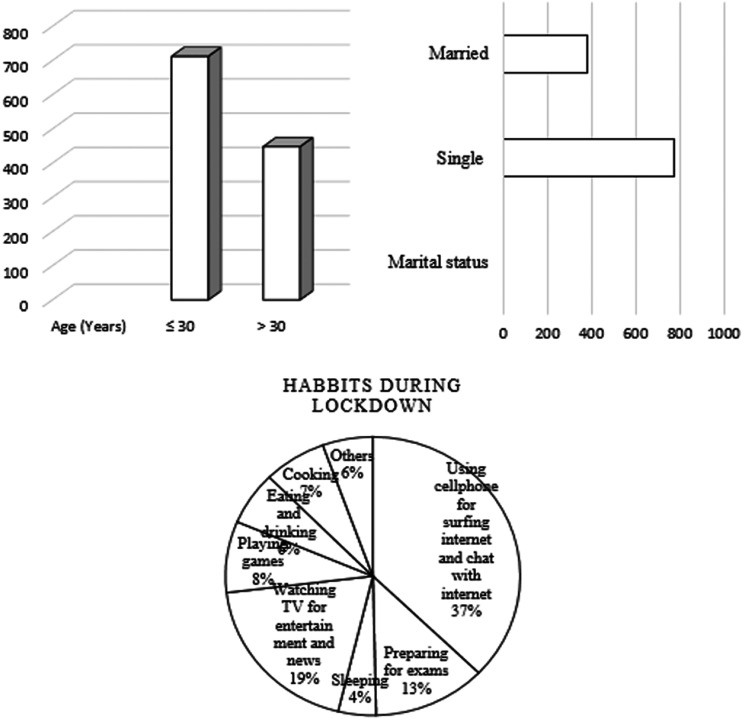
The recent outbreak of coronavirus disease (COVID-19) is the worst global crisis. Since no successful treatment and vaccine have been reported, efforts to improve the public's knowledge, attitudes, and practices are critical to reducing the spread of COVID-19. This study aims to investigate the general public knowledge, attitude, and practices regarding COVID-19. A cross-sectional online survey was conducted in three developing countries (China, India, and Pakistan). The reason for choosing only three countries is to identify the cross-border effect statistically and data collection constraints. The IBM SPSS version 23.0 was used for descriptive, univariate, and multivariate analysis of the study. One thousand one hundred and sixty participants completed the study, one-quarter of them were female, and three-quarters were male. The study's findings evidenced that the knowledge and attitude correlation was 58.4% and between knowledge and practices 18.2%. Furthermore, the knowledge was found lower in females, among India and Pakistan, and people aged less and equivalent to 30 years. The attitudes among respondents were found poorer among unmarried females and India and Pakistan residents. While the practices found lower among employed, unemployed and, respondents had a bachelor's degree, and females reside in India. And future studies should focus on factors that influence the government regarding the imposition of lockdown, boost the economy in the pandemic, and motivate the general public to follow the health institution's instructions.
最近爆发的冠状病毒病(COVID-19)是全球最严重的危机。由于没有报道成功的治疗和疫苗,因此努力提高公众的知识、态度和实践对于减少 COVID-19 的传播至关重要。本研究旨在调查公众对 COVID-19 的一般知识、态度和实践。在中国、印度和巴基斯坦这三个发展中国家进行了横断面在线调查。选择仅三个国家的原因是为了从统计学上确定跨境效应和数据收集的限制。使用 IBM SPSS 版本 23.0 对研究进行描述性、单变量和多变量分析。1160 名参与者完成了这项研究,其中四分之一是女性,四分之三是男性。研究结果表明,知识和态度的相关性为 58.4%,知识和实践之间的相关性为 18.2%。此外,研究发现女性、印度和巴基斯坦以及年龄在 30 岁及以下的人群的知识水平较低。研究发现,未婚女性、印度和巴基斯坦居民的态度较差。而在就业、失业和拥有学士学位的受访者中,实践水平较低,女性居住在印度。未来的研究应关注影响政府实施封锁、促进大流行期间经济发展以及激励公众遵循卫生机构指示的因素。