Department of Infectious Diseases, Jeju National University College of Medicine, Jeju, South Korea.
Department of Medical and Biological Sciences, The Catholic University of Korea, Bucheon, South Korea.
Front Cell Infect Microbiol. 2021 Mar 23;11:649570. doi: 10.3389/fcimb.2021.649570. eCollection 2021.
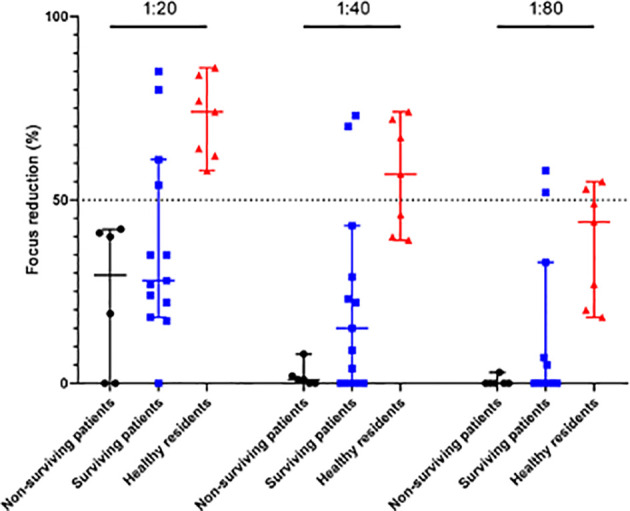
Severe fever with thrombocytopenia syndrome (SFTS), a newly emerging tick-borne viral disease, has been detected in Asia since 2009, and person-to-person transmission is possible. SFTS is characterized by atypical signs, including mild to severe febrile illness similar to that associated with hemorrhagic fever, with 16.2 to 30% mortality. We found that the titers of neutralizing antibodies, play an important role in protective immunity, to SFTS virus (SFTSV) in survivors and healthy residents who lived in endemic areas and who were positive for SFTSV IgG, were higher than those in non-survivor patients. Moreover, the titers were maintained in surviving patients and healthy residents but not in non-surviving patients in South Korea.
严重发热伴血小板减少综合征(SFTS)是一种新出现的蜱传病毒性疾病,自 2009 年以来在亚洲被发现,且存在人际传播的可能。SFTS 的特征为非典型体征,包括类似于与出血热相关的轻至重度发热疾病,死亡率为 16.2%至 30%。我们发现,中和抗体滴度在保护免疫中起着重要作用,在幸存者和居住在流行地区且 SFTSV IgG 阳性的健康居民中,SFTS 病毒(SFTSV)的中和抗体滴度高于非幸存者患者。此外,在韩国,幸存者患者和健康居民的滴度得以维持,但非幸存者患者的滴度则没有。