Department of Gastroenterology, Kanazawa University Hospital, Japan.
Department of General Medicine, Kanazawa University Hospital, Japan.
Mol Oncol. 2021 Aug;15(8):2203-2218. doi: 10.1002/1878-0261.12963. Epub 2021 May 2.
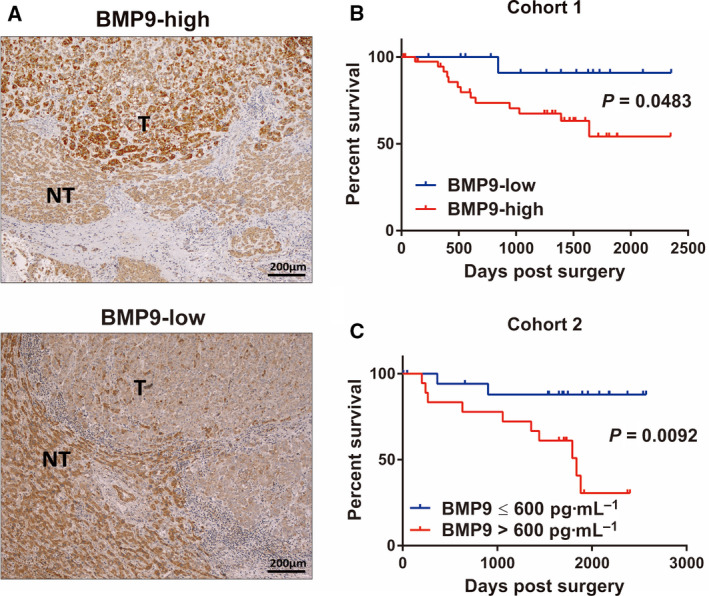
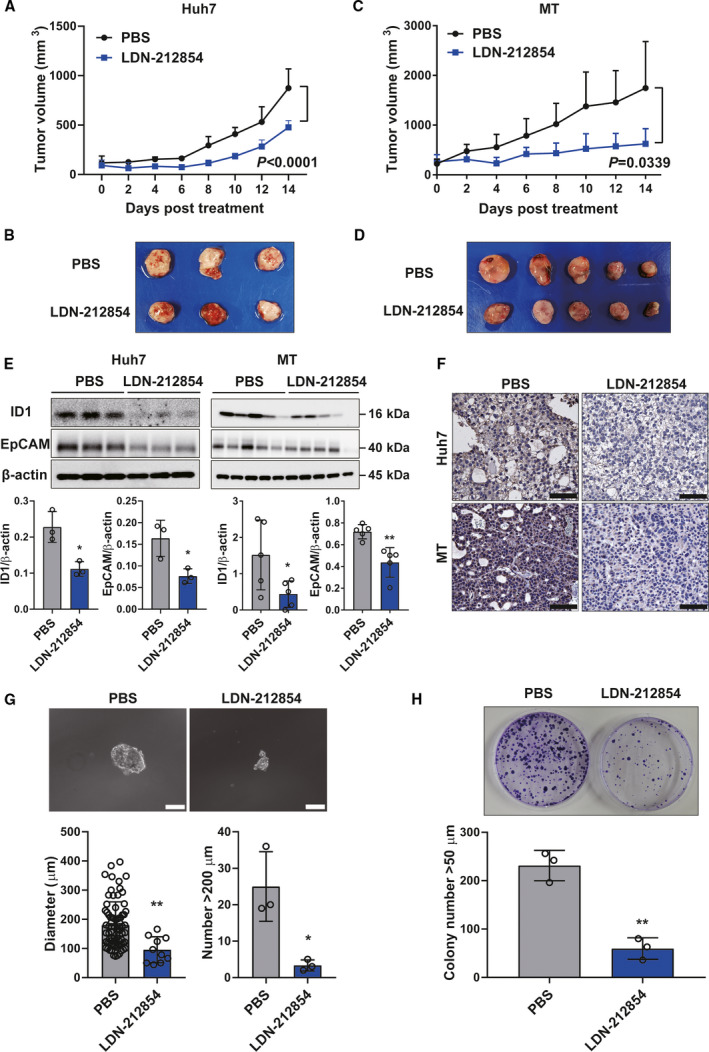
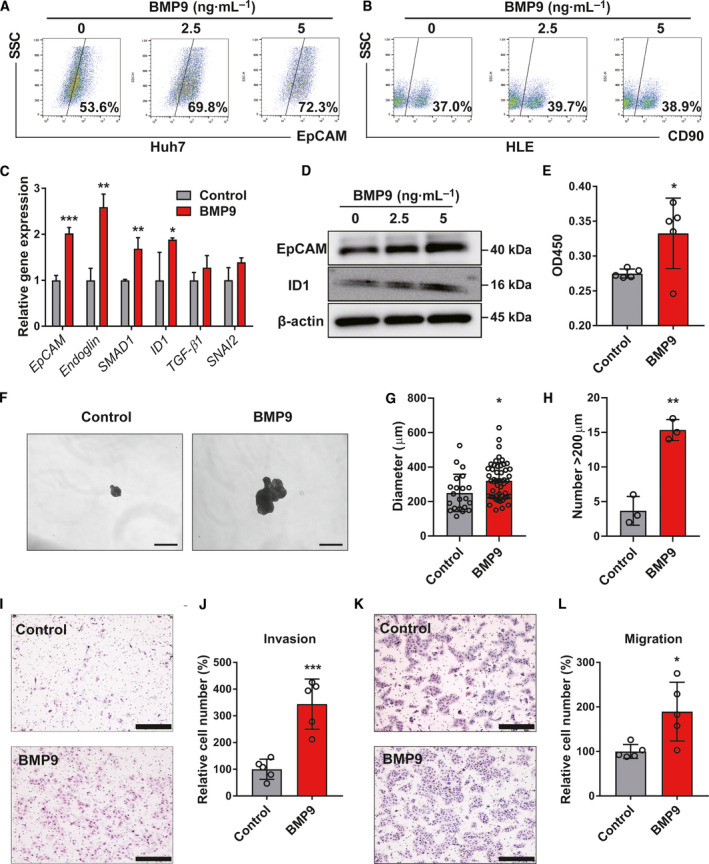
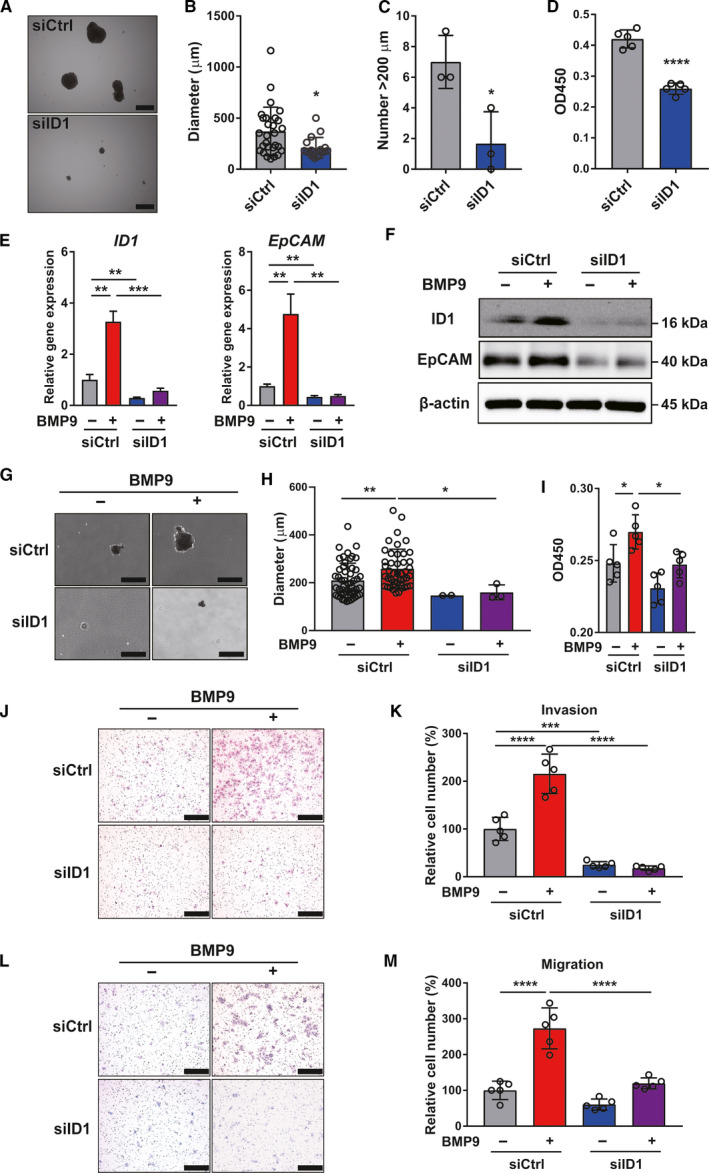
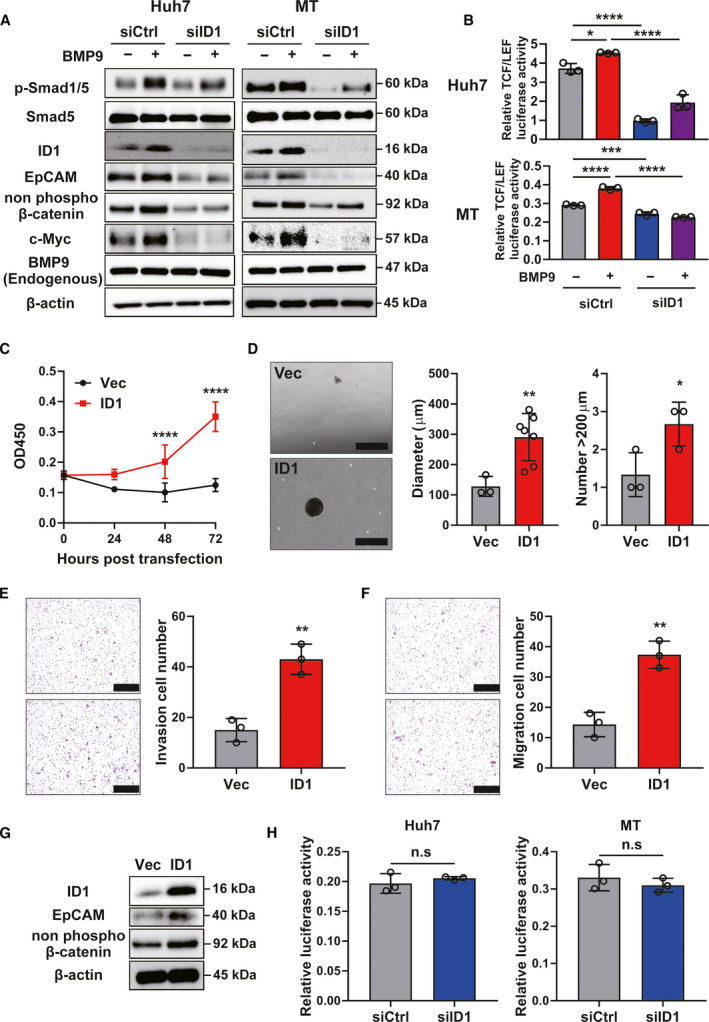
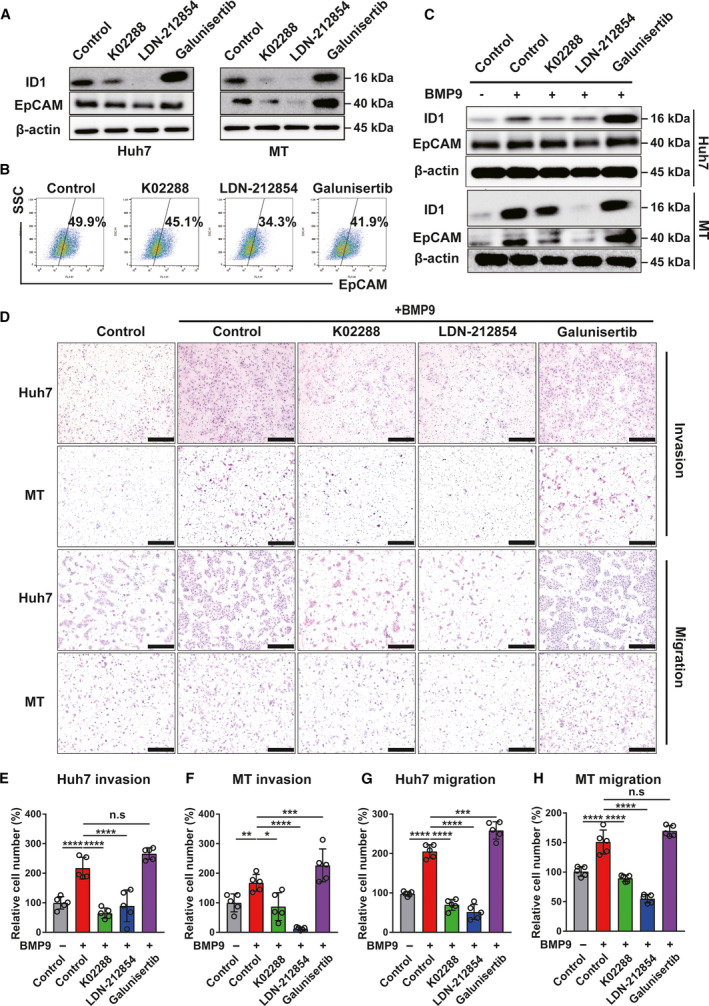
The malignant nature of hepatocellular carcinoma (HCC) is closely related to the presence of cancer stem cells (CSCs). Bone morphologic protein 9 (BMP9), a member of the transforming growth factor-beta (TGF-β) superfamily, was recently reported to be involved in liver diseases including cancer. We aimed to elucidate the role of BMP9 signaling in HCC-CSC properties and to assess the therapeutic effect of BMP receptor inhibitors in HCC. We have identified that high BMP9 expression in tumor tissues or serum from patients with HCC leads to poorer outcome. BMP9 promoted CSC properties in epithelial cell adhesion molecule (EpCAM)-positive HCC subtype via enhancing inhibitor of DNA-binding protein 1 (ID1) expression in vitro. Additionally, ID1 knockdown significantly repressed BMP9-promoted HCC-CSC properties by suppressing Wnt/β-catenin signaling. Interestingly, cells treated with BMP receptor inhibitors K02288 and LDN-212854 blocked HCC-CSC activation by inhibiting BMP9-ID1 signaling, in contrast to cells treated with the TGF-β receptor inhibitor galunisertib. Treatment with LDN-212854 suppressed HCC tumor growth by repressing ID1 and EpCAM in vivo. Our study demonstrates the pivotal role of BMP9-ID1 signaling in promoting HCC-CSC properties and the therapeutic potential of BMP receptor inhibitors in treating EpCAM-positive HCC. Therefore, targeting BMP9-ID1 signaling could offer novel therapeutic options for patients with malignant HCC.
肝细胞癌 (HCC) 的恶性本质与癌症干细胞 (CSC) 的存在密切相关。骨形态发生蛋白 9 (BMP9) 是转化生长因子-β (TGF-β) 超家族的成员,最近有报道称其参与了包括癌症在内的肝脏疾病。我们旨在阐明 BMP9 信号在 HCC-CSC 特性中的作用,并评估 BMP 受体抑制剂在 HCC 中的治疗效果。我们已经确定,HCC 患者肿瘤组织或血清中高 BMP9 表达与较差的预后相关。BMP9 通过在体外增强 DNA 结合抑制蛋白 1 (ID1) 的表达来促进上皮细胞黏附分子 (EpCAM) 阳性 HCC 亚型的 CSC 特性。此外,ID1 敲低通过抑制 Wnt/β-catenin 信号显著抑制 BMP9 促进的 HCC-CSC 特性。有趣的是,用 BMP 受体抑制剂 K02288 和 LDN-212854 处理的细胞通过抑制 BMP9-ID1 信号来阻断 HCC-CSC 的激活,而用 TGF-β 受体抑制剂 galunisertib 处理的细胞则没有。在体内,用 LDN-212854 治疗可通过抑制 ID1 和 EpCAM 来抑制 HCC 肿瘤生长。我们的研究表明 BMP9-ID1 信号在促进 HCC-CSC 特性中的关键作用,以及 BMP 受体抑制剂在治疗 EpCAM 阳性 HCC 中的治疗潜力。因此,靶向 BMP9-ID1 信号可能为恶性 HCC 患者提供新的治疗选择。