Wang Mingxia, Zhang Jinyuan, Zheng Li, Fang Hongwei, Zhang Yiguo, Deng Huimin, Wang Mansi, Yu Xiuqin, Meng Qingxiang, Chen Yuanli, Liao Lijun, Lv Xin, Yang Hao, Wang Xiangrui
Department of Anesthesiology and Critical Care Medicine, Shanghai East Hospital, Tongji University School of Medicine, 150 Jimo Rd, Shanghai, 200120, China.
Department of Anesthesiology, Shanghai Pulmonary Hospital, Tongji University School of Medicine, 507 Zhengmin Rd, Shanghai, 200433, China.
Pain Ther. 2021 Jun;10(1):675-689. doi: 10.1007/s40122-021-00265-w. Epub 2021 Apr 11.
Postherpetic neuralgia (PHN) is the most common complication of herpes zoster. Methylene blue (MB) is an inhibitor of nitric oxide synthesis with potentially analgesic and anti-inflammatory properties. Studies have demonstrated that thoracic paravertebral single MB injection is effective in treating chronic pain. However, there are rare reports of the efficacy of continuous thoracic paravertebral infusion of MB for pain management in PHN patients. The purpose of this study was to evaluate the therapeutic effects of continuous thoracic paravertebral infusion of MB on PHN.
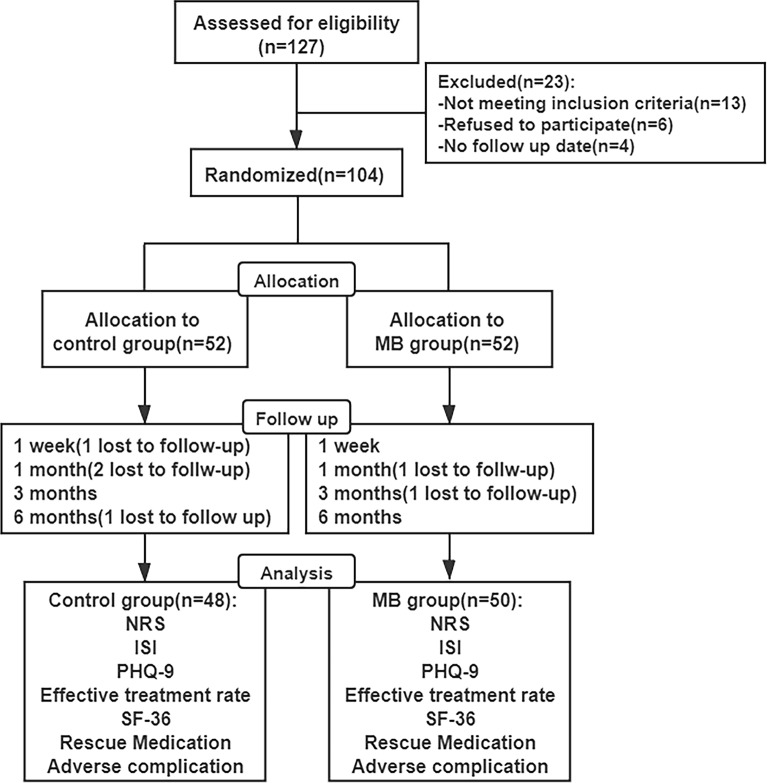
A total of 104 PHN patients were randomly divided into two groups: the control group (continuous thoracic paravertebral infusion of 5% lidocaine in a total volume of 300 ml) and the MB group (continuous thoracic paravertebral infusion of 5% lidocaine plus 0.2% MB in a total volume of 300 ml). All patients were evaluated using the Numerical Rating Scale (NRS), Insomnia Severity Index (ISI), Patient Health Questionnaire-9 (PHQ-9), 36-Item Short-Form Health Survey (SF-36), and medication doses before and after the procedure. The effective treatment rate and adverse complications were recorded 6 months after the procedure.
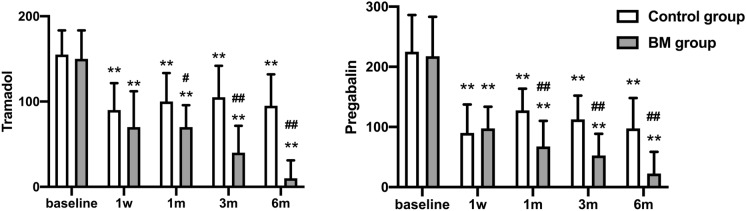
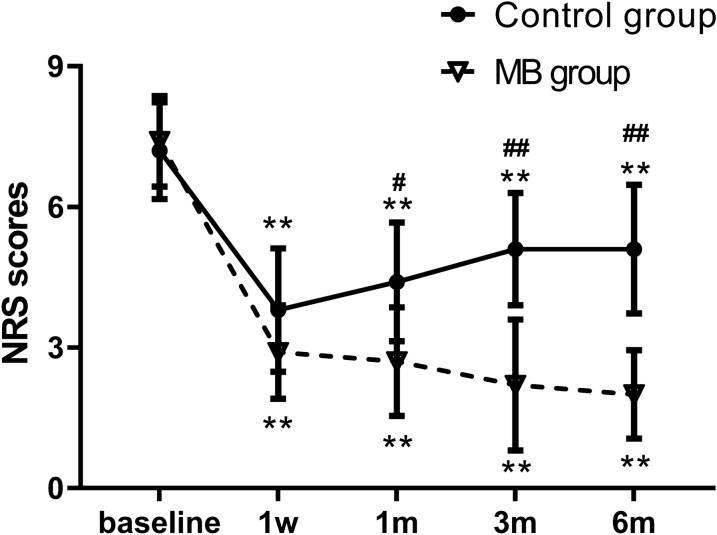
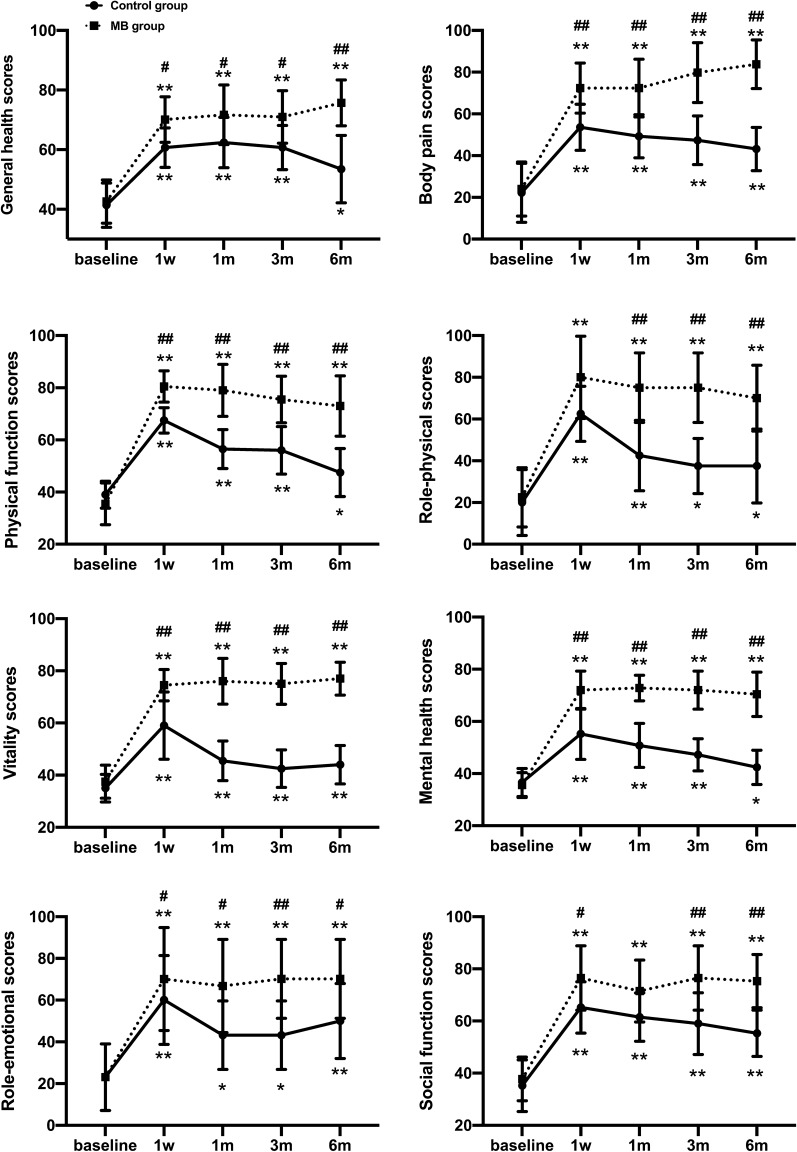
In both groups, the NRS scores, ISI scores, PHQ-9 scores, and rescue medication dosages were significantly decreased at different time points after treatment compared to baseline, while the SF-36 scores were evidently improved at different time points after treatment compared to baseline. Compared with the control group, the MB group had significantly reduced NRS scores, ISI scores, PHQ-9 scores, and rescue medication dosages at each observation time point. Furthermore, the SF-36 scores in the MB group were significantly higher than those in the control group at each observation time point. The total effective treatment rate of the MB group was higher than that of the control group 6 months after the procedure. No severe adverse complications were observed in either group.
Ultrasound-guided continuous thoracic paravertebral infusion with MB is a safe and effective therapy for PHN. Continuous infusion with MB can significantly reduce pain intensity, improve pain-related depression, increase quality of life, and decrease the amount of rescue medicine with no serious adverse complications.
带状疱疹后神经痛(PHN)是带状疱疹最常见的并发症。亚甲蓝(MB)是一种一氧化氮合成抑制剂,具有潜在的镇痛和抗炎特性。研究表明,胸椎旁单次注射MB可有效治疗慢性疼痛。然而,关于连续胸椎旁输注MB用于PHN患者疼痛管理疗效的报道很少。本研究的目的是评估连续胸椎旁输注MB对PHN的治疗效果。
总共104例PHN患者被随机分为两组:对照组(连续胸椎旁输注总量为300ml的5%利多卡因)和MB组(连续胸椎旁输注总量为300ml的5%利多卡因加0.2%MB)。所有患者在治疗前后均使用数字评分量表(NRS)、失眠严重程度指数(ISI)、患者健康问卷-9(PHQ-9)、36项简短健康调查(SF-36)和药物剂量进行评估。在治疗6个月后记录有效治疗率和不良并发症。
两组在治疗后的不同时间点,NRS评分、ISI评分、PHQ-9评分和急救药物剂量与基线相比均显著降低,而SF-36评分在治疗后的不同时间点与基线相比明显改善。与对照组相比,MB组在每个观察时间点的NRS评分、ISI评分、PHQ-9评分和急救药物剂量均显著降低。此外,MB组在每个观察时间点的SF-36评分均显著高于对照组。治疗6个月后,MB组的总有效治疗率高于对照组。两组均未观察到严重不良并发症。
超声引导下连续胸椎旁输注MB是一种治疗PHN的安全有效方法。连续输注MB可显著降低疼痛强度,改善疼痛相关的抑郁情绪,提高生活质量,并减少急救药物用量,且无严重不良并发症。