Ivanov Dmitry
Berlin School of Economics and Law, Department of Business and Economics, Professor of Supply Chain and Operations Management, 10825 Berlin, Germany.
Ann Oper Res. 2021 Apr 5:1-18. doi: 10.1007/s10479-021-04047-7.
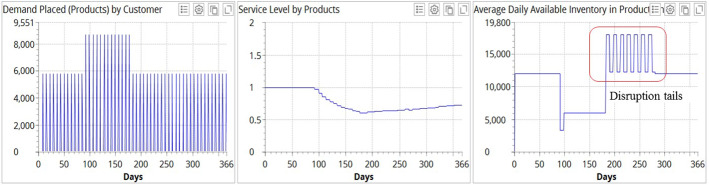
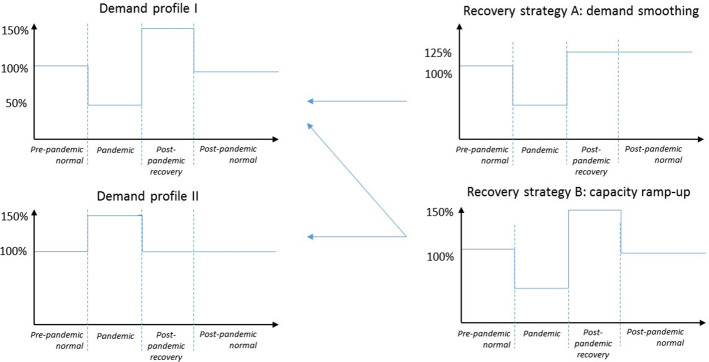
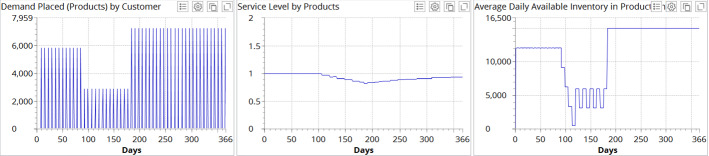
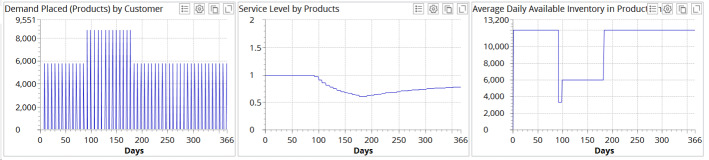
Entering the COVID-19 pandemic wreaked havoc on supply chains. Reacting to the pandemic and adaptation in the "new normal" have been challenging tasks. Exiting the pandemic can lead to some after-shock effects such as "disruption tails." While the research community has undertaken considerable efforts to predict the pandemic's impacts and examine supply chain adaptive behaviors during the pandemic, little is known about supply chain management in the course of pandemic elimination and post-disruption recovery. If capacity and inventory management are unaware of the after-shock risks, this can result in highly destabilized production-inventory dynamics and decreased performance in the post-disruption period causing product deficits in the markets and high inventory costs in the supply chains. In this paper, we use a discrete-event simulation model to investigate some exit strategies for a supply chain in the context of the COVID-19 pandemic. Our model can inform managers about the existence and risk of disruption tails in their supply chains and guide the selection of post-pandemic recovery strategies. Our results show that supply chains with postponed demand and shutdown capacity during the COVID-19 pandemic are particularly prone to disruption tails. We then developed and examined two strategies to avoid these disruption tails. First, we observed a conjunction of recovery and supply chain coordination which mitigates the impact of disruption tails by demand smoothing over time in the post-disruption period. Second, we found a gradual capacity ramp-up prior to expected peaks of postponed demand to be an effective strategy for disruption tail control.
进入新冠疫情大流行对供应链造成了严重破坏。应对疫情以及适应“新常态”一直是具有挑战性的任务。疫情结束可能会导致一些余震效应,如“干扰长尾”。虽然研究界已经付出了相当大的努力来预测疫情的影响并研究疫情期间供应链的适应性行为,但对于疫情消除过程和干扰后恢复阶段的供应链管理却知之甚少。如果产能和库存管理没有意识到余震风险,这可能会导致生产 - 库存动态高度不稳定,并在干扰后时期降低绩效,从而导致市场上产品短缺以及供应链中库存成本高昂。在本文中,我们使用离散事件模拟模型来研究新冠疫情背景下供应链的一些退出策略。我们的模型可以告知管理者其供应链中干扰长尾的存在和风险,并指导大流行后恢复策略的选择。我们的结果表明,在新冠疫情期间需求被推迟且产能关闭的供应链特别容易出现干扰长尾。然后,我们制定并研究了两种策略来避免这些干扰长尾。首先,我们观察到一种恢复与供应链协调相结合的方式,通过在干扰后时期随时间平滑需求来减轻干扰长尾的影响。其次,我们发现,在预期推迟需求高峰之前逐步提高产能是控制干扰长尾的有效策略。