Zhang Jian, Li Houjian, Lei Muchen, Zhang Lichen
College of Economics, Sichuan Agricultural University, Wenjiang District, 611130, Chengdu, Sichuan Province, China.
School of Law, Chongqing University, Shazheng Street, Shapingba District, 40044, Chongqing City, China.
J Clean Prod. 2021 May 10;296:126475. doi: 10.1016/j.jclepro.2021.126475. Epub 2021 Feb 23.
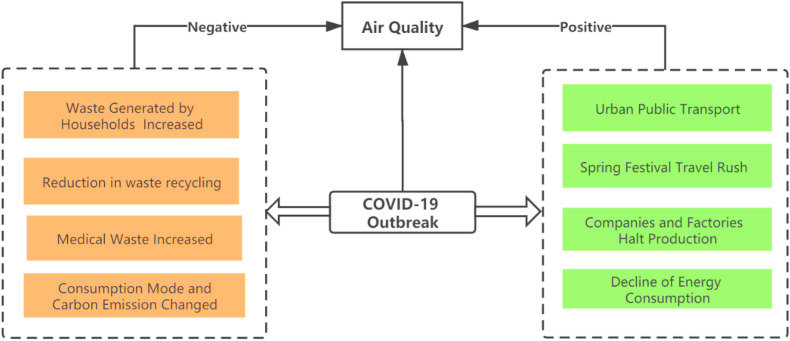
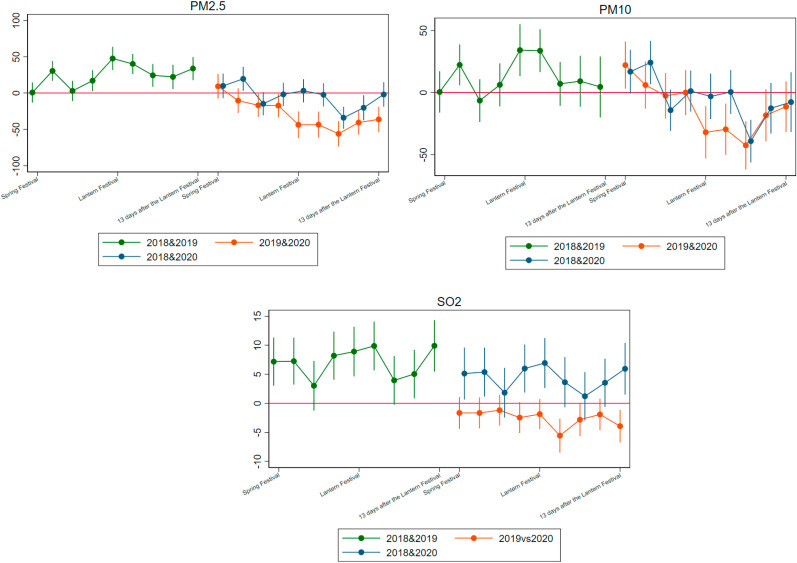
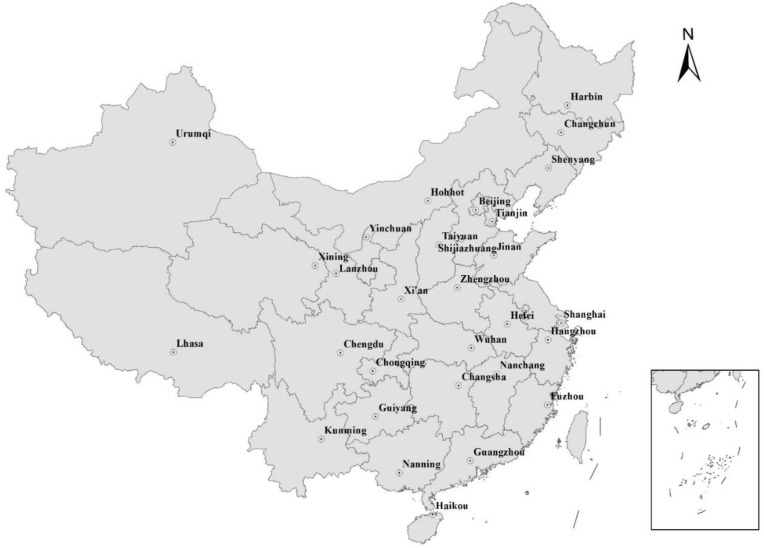
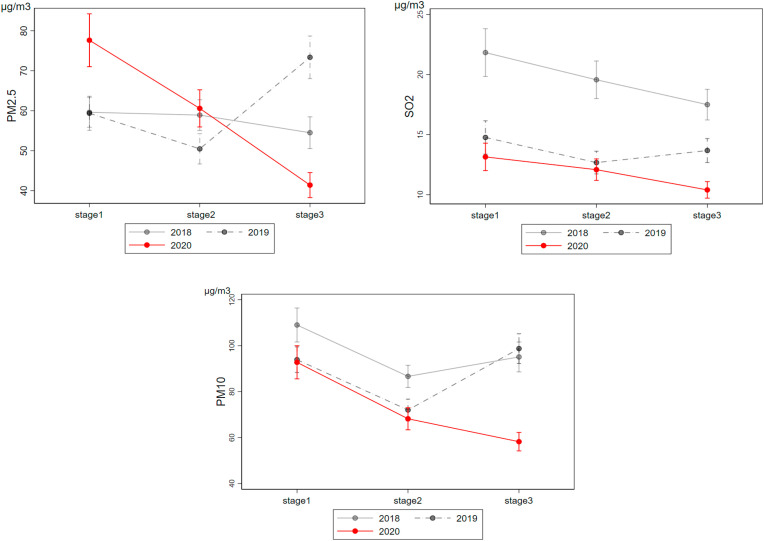
The outbreak of coronavirus (COVID-19) in early 2020 posed a significant threat to people's health and economic sustainability in China and worldwide. This study investigated whether the lockdown measures precipitated by the COVID-19 pandemic affected air pollutants in the short term. Moreover, we investigated the impact of the heterogeneity of cities and regions. Using city-level daily panel data for the 2018-2020 lunar calendar, we employed a two-way fixed effects model and interrupted time-series analysis to inspect the effects of the lockdown measures. Interesting empirical findings emerged from our analysis. First, compared with the base period from 2018 to 2019, the COVID-19 lockdown measures significantly reduced air pollutants. In 2020, compared to 2018, PM and SO dropped by 15.28 μg/m and 6.55 μg/m, and compared to 2019, PM, PM, and SO declined by 7.4 μg/m, 19.34 μg/m, and 1.41 μg/m, respectively. Second, our dynamic analysis showed that as more time elapsed since the start of the lockdown, the associated reduction in air pollution became more significant. Third, the proportion of secondary industries and the cumulative number of confirmed cases had a considerable heterogeneity impact on lockdown measures. Policymakers should encourage investment in new infrastructure and initiatives to boost efficiency and enhance environmental outcomes.
2020年初冠状病毒(COVID-19)的爆发对中国乃至全球人民的健康和经济可持续性构成了重大威胁。本研究调查了COVID-19大流行引发的封锁措施在短期内是否影响了空气污染物。此外,我们还研究了城市和地区异质性的影响。利用2018 - 2020农历年的城市层面每日面板数据,我们采用双向固定效应模型和中断时间序列分析来考察封锁措施的效果。我们的分析得出了有趣的实证结果。首先,与2018年至2019年的基期相比,COVID-19封锁措施显著降低了空气污染物。2020年,与2018年相比,PM和SO分别下降了15.28μg/m和6.55μg/m,与2019年相比,PM、PM和SO分别下降了7.4μg/m、19.34μg/m和1.41μg/m。其次,我们的动态分析表明,自封锁开始以来经过的时间越长,空气污染的相关降幅就越显著。第三,第二产业的比重和确诊病例累计数对封锁措施有相当大的异质性影响。政策制定者应鼓励对新基础设施和举措进行投资,以提高效率并改善环境成果。