Collaborative Innovation Center for Western Ecological Safety, Lanzhou University, Lanzhou 730000, China.
Collaborative Innovation Center for Western Ecological Safety, Lanzhou University, Lanzhou 730000, China; CAS Center for Excellence in Tibetan Plateau Earth Sciences, Beijing 100101, China.
Sci Total Environ. 2020 Nov 10;742:140556. doi: 10.1016/j.scitotenv.2020.140556. Epub 2020 Jun 30.
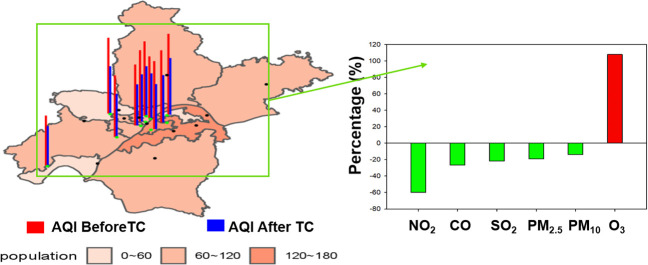
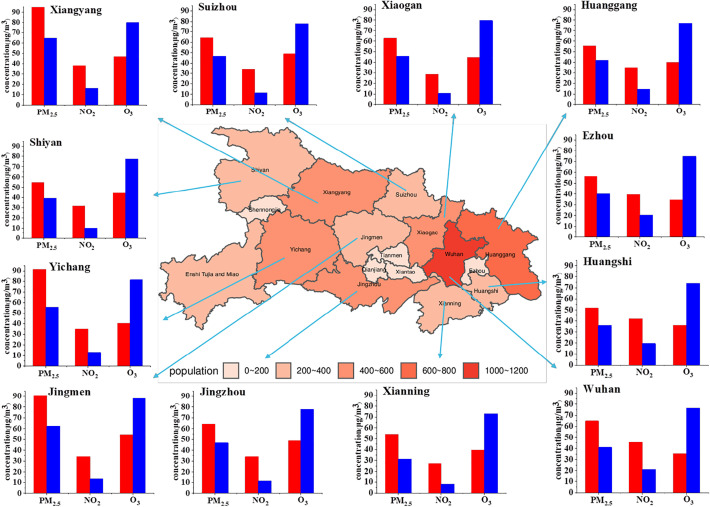
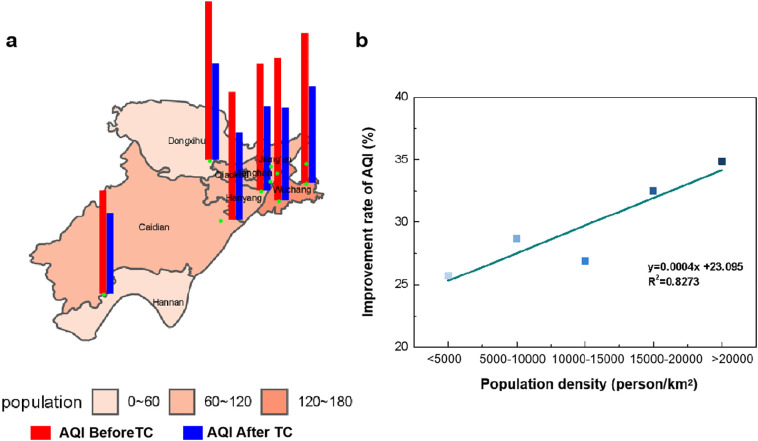
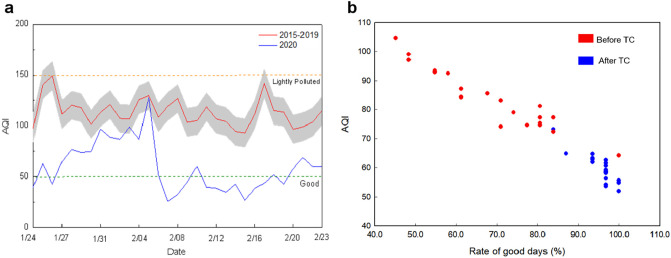
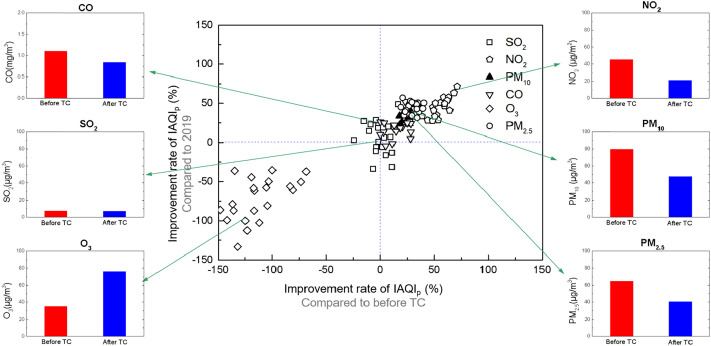
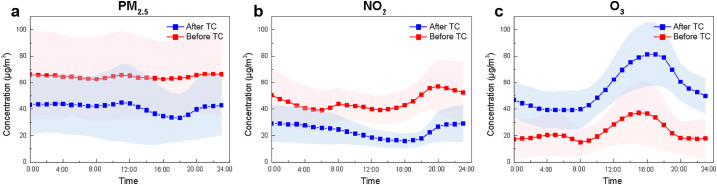
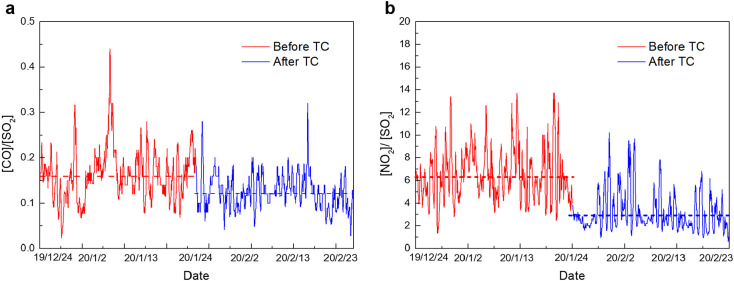
A series of strict lockdown measures were implemented in the areas of China worst affected by coronavirus disease 19, including Wuhan, to prevent the disease spreading. The lockdown had a substantial environmental impact, because traffic pollution and industrial emissions are important factors affecting air quality and public health in the region. After the lockdown, the average monthly air quality index (AQI) in Wuhan was 59.7, which is 33.9% lower than that before the lockdown (January 23, 2020) and 47.5% lower than that during the corresponding period (113.6) from 2015 to 2019. Compared with the conditions before the lockdown, fine particulate matter (PM) decreased by 36.9% and remained the main pollutant. Nitrogen dioxide (NO) showed the largest decrease of approximately 53.3%, and ozone (O) increased by 116.6%. The proportions of fixed-source emissions and transported external-source emissions in this area increased. After the lockdown, O pollution was highly negatively correlated with the NO concentration, and the radiation increase caused by the PM reduction was not the main reason for the increase in O. This indicates that the generation of secondary pollutants is influenced by multiple factors and is not only governed by emission reduction.
中国受新冠疫情影响最严重的地区(包括武汉)实施了一系列严格的封锁措施,以防止疫情传播。封锁对环境产生了重大影响,因为交通污染和工业排放是影响该地区空气质量和公众健康的重要因素。封锁后,武汉的平均月度空气质量指数(AQI)为 59.7,比封锁前(2020 年 1 月 23 日)低 33.9%,比 2015 年至 2019 年同期(113.6)低 47.5%。与封锁前的情况相比,细颗粒物(PM)减少了 36.9%,仍是主要污染物。二氧化氮(NO)下降幅度最大,约为 53.3%,臭氧(O)增加了 116.6%。该地区固定源排放和传输外源排放的比例增加。封锁后,O 污染与 NO 浓度呈高度负相关,PM 减少引起的辐射增加并不是 O 增加的主要原因。这表明二次污染物的产生受多种因素影响,不仅取决于减排。