Maamoun Amal A, El-Akkad Radwa H, Farag Mohamed A
Department of Pharmacognosy, National Research Centre, 33 El Buhouth St., P.O. 12622 (ID:60014618), Cairo, Egypt.
Pharmacognosy Department, College of Pharmacy, Cairo University, Kasr el Aini St., P.B. 11562, Cairo, Egypt.
J Adv Res. 2019 Oct 24;29:179-189. doi: 10.1016/j.jare.2019.10.009. eCollection 2021 Mar.
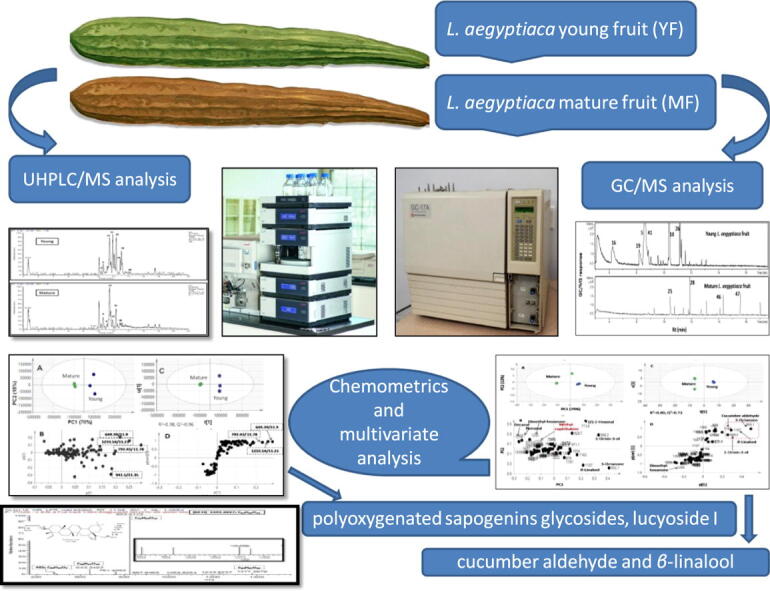
Mill, sponge gourd or Egyptian cucumber, is grown worldwide for its edible fruit consumed as a vegetable like cucumber. Unlike young fruit (YF), the fully mature ripened fruit (MF) is strongly fibrous and is used as a cleanser to make scrubbing bath sponges. YF undergoes a complex series of physiological and biochemical changes during fruit ripening. However, the chemical compositional differences between YF and MF in have not been distinguished to date.
Comprehensively compare the metabolites profile of YF and MF to give insight on how maturation stage affects chemical composition.
Mass-based metabolomics comprising GC/MS and UHPLC/MS were adopted in this study targeting its volatile and non-volatile metabolites coupled with chemometrics to rationalize for the differences.
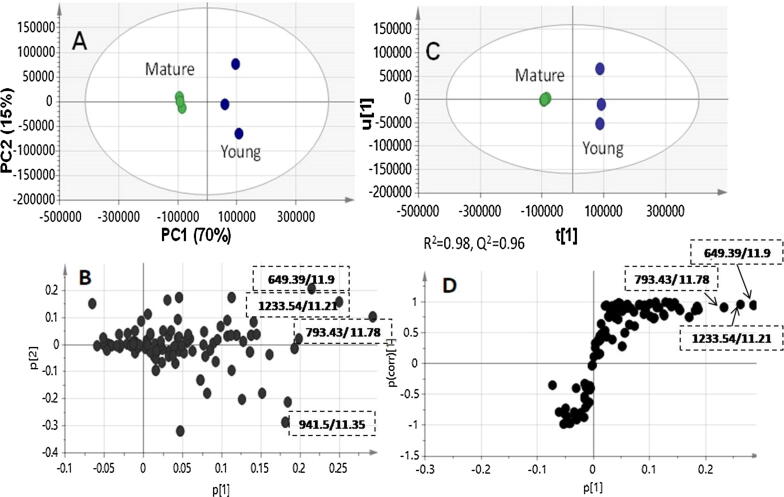
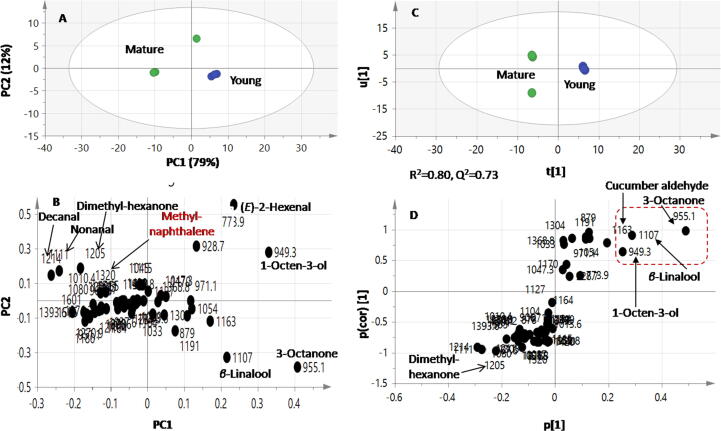
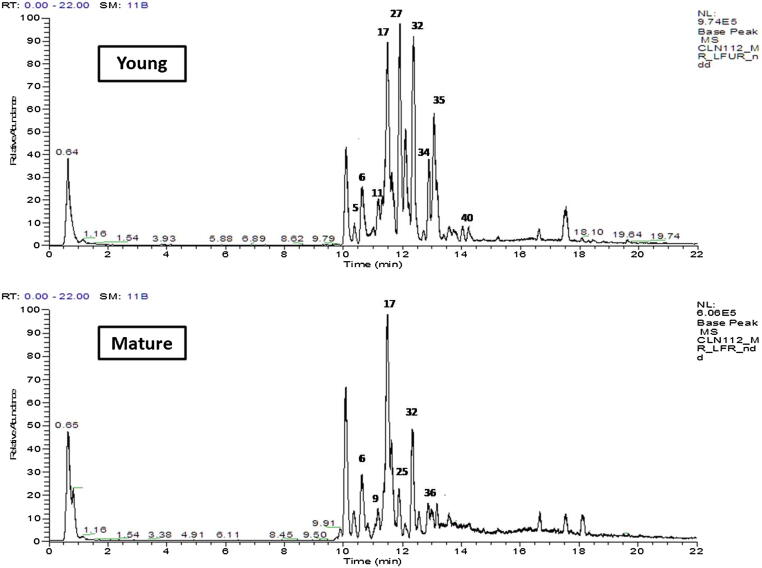
A total of 53 volatile metabolites were identified via headspace solid phase microextraction (SPME) comprising 66.2% aldehydes/furans, 51.6% alcohols, 38.2% ketones, 15.1% acids and 10.1% aromatics of which aldehydes/ furans were dominant at both fruit stages. Young fruit was in general more erniched in metabolites as revealed from UHPLC/MS and GC/MS analyses. The YF group encompassed higher levels of short chain alcohols (1-octen-3-ol) and aldehydes ((E)-2-hexenal and cucumber aldehyde) in addition to terpenoids (linalool). In contrast, fatty acids (octanoic acid) predominated MF specimens. UHPLC/MS analysis revealed for several oleanene triterpene glycosides as major secondary bioactive compounds, dihydroxy-oxo-oleanenoic acid glycoside found more abundant in YF versus MF as revealed from multivariate data analyses.
Our results reveal for the distinct metabolite changes in fruit in its different stages and to rationalize for its different usage.
丝瓜,又称菜瓜或埃及黄瓜,在全球范围内种植,其可食用果实作为蔬菜食用,类似黄瓜。与幼果(YF)不同,完全成熟的果实(MF)纤维质很强,用作清洁剂制作擦洗沐浴海绵。幼果在果实成熟过程中会经历一系列复杂的生理和生化变化。然而,迄今为止,幼果和成熟果在化学成分上的差异尚未得到区分。
全面比较幼果和成熟果的代谢物谱,以深入了解成熟阶段如何影响化学成分。
本研究采用基于质谱的代谢组学方法,包括气相色谱/质谱联用(GC/MS)和超高效液相色谱/质谱联用(UHPLC/MS),针对其挥发性和非挥发性代谢物,并结合化学计量学来解释差异。
通过顶空固相微萃取(SPME)共鉴定出53种挥发性代谢物,其中醛类/呋喃类占66.2%,醇类占51.6%,酮类占38.2%,酸类占15.1%,芳烃类占10.1%,醛类/呋喃类在两个果实阶段均占主导地位。超高效液相色谱/质谱联用(UHPLC/MS)和气相色谱/质谱联用(GC/MS)分析表明,幼果总体上代谢物更丰富。幼果组除了萜类化合物(芳樟醇)外,还含有较高水平的短链醇(1-辛烯-3-醇)和醛类((E)-2-己烯醛和黄瓜醛)。相比之下,脂肪酸(辛酸)在成熟果样本中占主导地位。超高效液相色谱/质谱联用(UHPLC/MS)分析显示,几种齐墩果烷三萜糖苷是主要的次生生物活性化合物,多元数据分析表明,二羟基-氧代-齐墩果酸糖苷在幼果中比成熟果中含量更高。
我们的结果揭示了丝瓜果实不同阶段独特的代谢物变化,并解释了其不同的用途。