Janowski Jennifer A, Phelan-Smith Deanna M L, Kroat Brady Maria N, Michels Kelsey L, Timm Alexandra H, Boucher Nicole M, Casteen Kedron D, Village David, Sleeper Mark D
Andrews University.
Northwestern University.
Int J Sports Phys Ther. 2021 Apr 1;16(2):418-430. doi: 10.26603/001c.21475.
There is convincing evidence that dancers suffer injuries to the triceps surae musculature. Research on the immediate effects of dry needling (DN) is limited, and it is important to understand the acute effects of this treatment prior to performance.
The purpose of this pilot study was to assess the immediate effects of DN on myofascial trigger points in terms of skin surface temperature, pain, active and passive range of motion, and torque production in the triceps surae of ballet dancers.
Randomized, double-blinded pilot study.
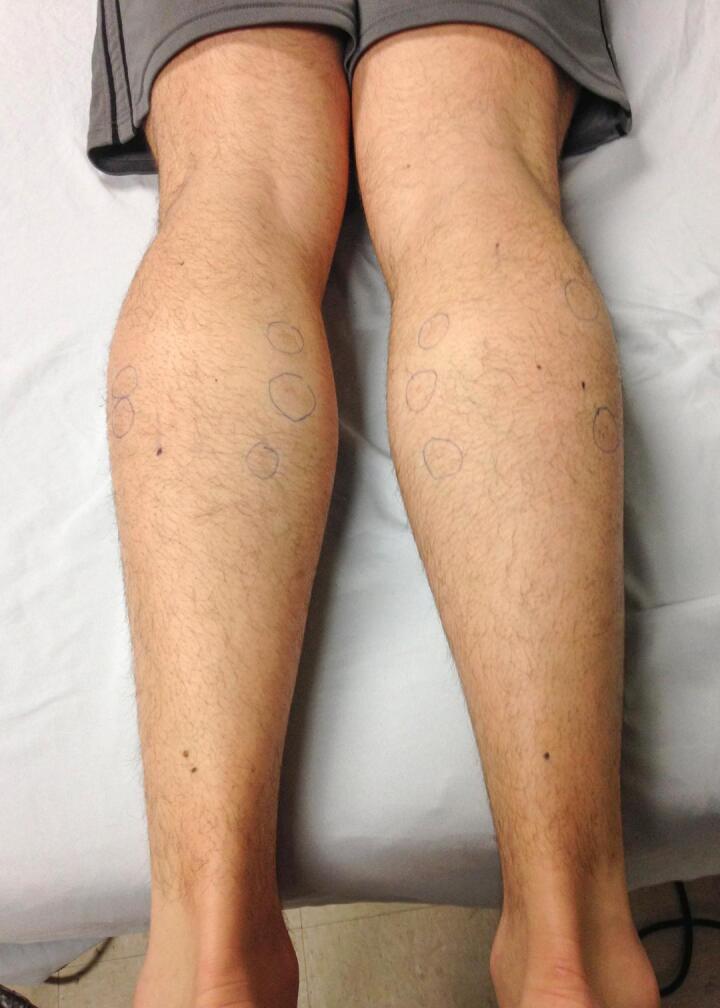
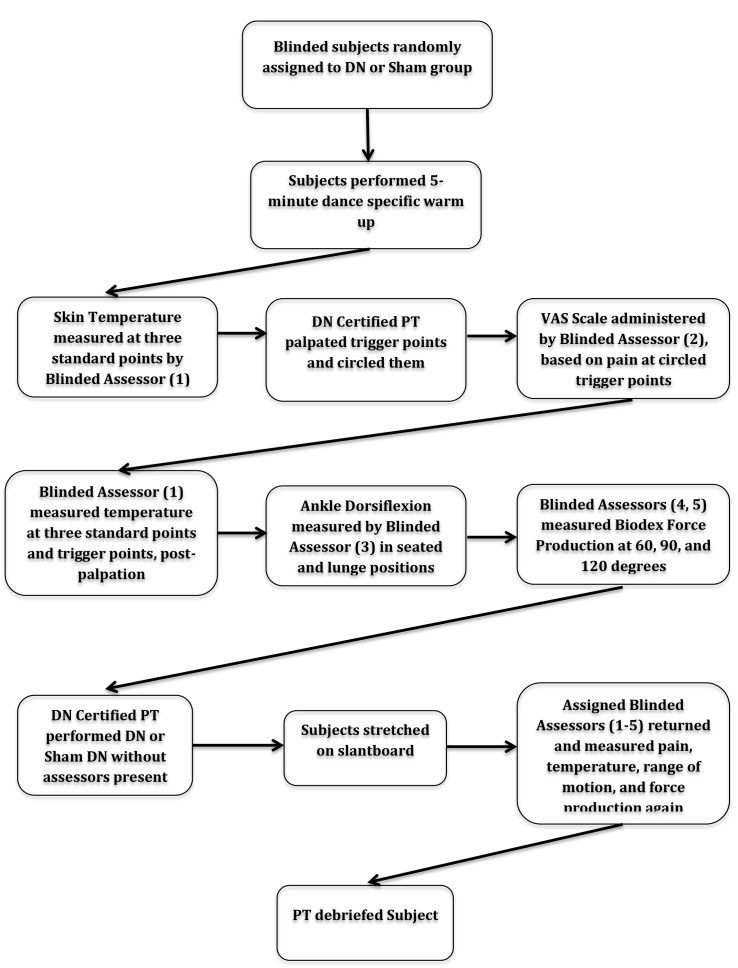
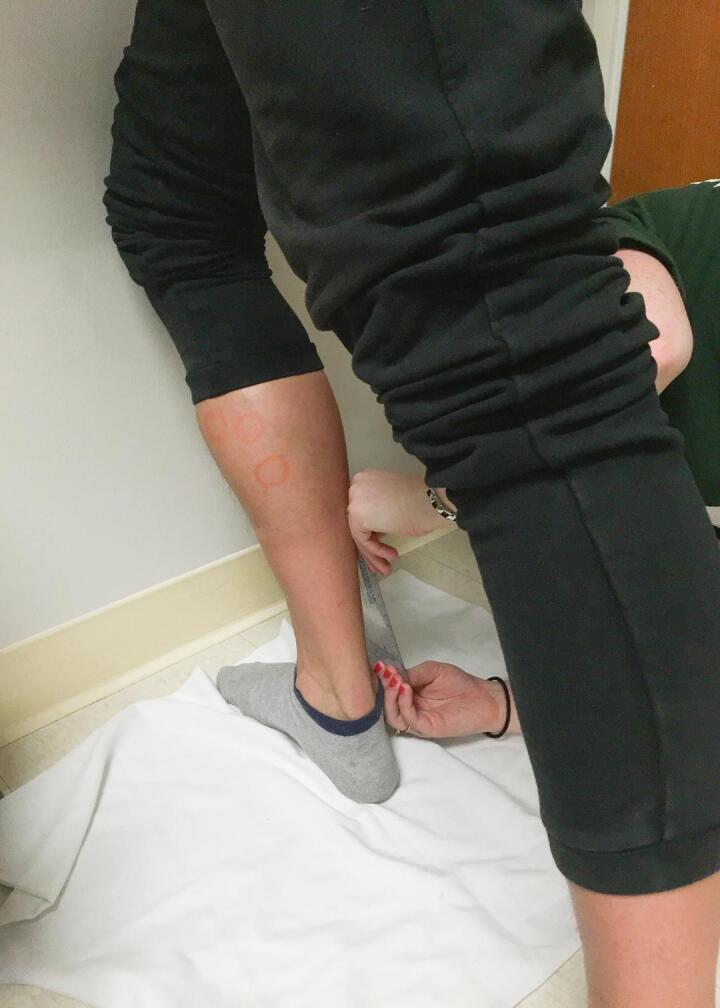
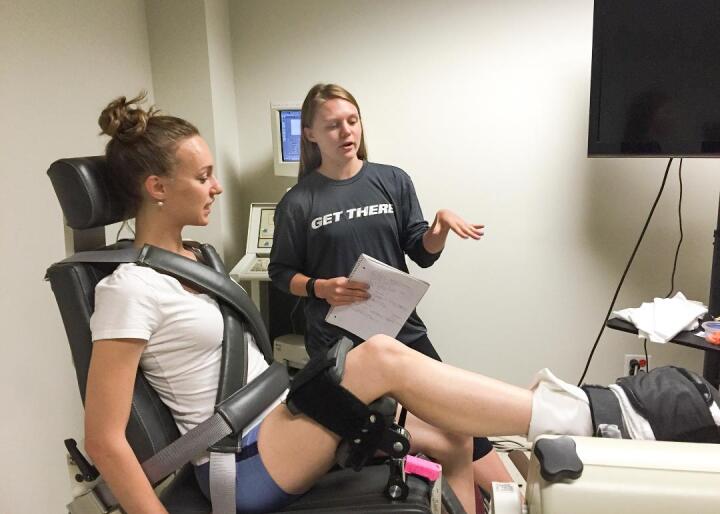
Professional ballet dancers that fit inclusion and exclusion criteria (n=11) were randomly assigned to an experimental or control group. The dancers had three pre-determined standard point (SP) measurement spots that were used as a baseline for surface temperature comparisons. The dancers were also palpated for trigger point (TP) spots. Both SP and TP spots were marked for future measurements. The experimental group received DN, while the control group received sham DN (SHAM) to their bilateral calves at the TP spots. Immediately prior to and following treatment, both DN and SHAM groups were tested for skin surface temperature, pain, range of motion, and plantar flexion torque by blinded assessors. Paired t-tests and independent t-tests were performed to examine for differences between groups.
The surface temperature for the TP was higher than the SP measurements prior to intervention (Right calf p= .014; Left calf p= .031). There were no significant changes in VAS scale reported pain and ROM. The plantar flexion torque measurements showed an increase in the DN group of the left calf at the angular velocity of 60 degrees/sec.
This was a unique pilot study examining the acute effects of DN on professional ballet dancers. The results were limited due to low sample size. However, the methodology for this study and surface temperature results invites future research.
Level 1b.
有确凿证据表明舞者的小腿三头肌会受伤。关于干针疗法(DN)即时效果的研究有限,在表演前了解这种治疗的急性效果很重要。
本初步研究的目的是评估干针疗法对芭蕾舞者小腿三头肌肌筋膜触发点在皮肤表面温度、疼痛、主动和被动活动范围以及扭矩产生方面的即时效果。
随机、双盲初步研究。
符合纳入和排除标准的专业芭蕾舞者(n = 11)被随机分配到实验组或对照组。舞者有三个预先确定的标准点(SP)测量部位,用作表面温度比较的基线。还对舞者进行触发点(TP)部位的触诊。SP和TP部位都做了标记以便后续测量。实验组接受干针疗法,而对照组在其双侧小腿的TP部位接受假干针疗法(SHAM)。在治疗前和治疗后,由不知情的评估者对DN组和SHAM组进行皮肤表面温度、疼痛、活动范围和跖屈扭矩测试。进行配对t检验和独立t检验以检查组间差异。
干预前TP部位的表面温度高于SP测量值(右小腿p = 0.014;左小腿p = 0.031)。视觉模拟评分量表报告的疼痛和活动范围没有显著变化。跖屈扭矩测量显示,在60度/秒的角速度下,DN组左小腿的扭矩增加。
这是一项独特的初步研究,考察了干针疗法对专业芭蕾舞者的急性效果。由于样本量小,结果有限。然而,本研究的方法和表面温度结果值得未来进一步研究。
1b级。