Li Qingtao, Xu Sheng, Feng Qi, Dai Qiyuan, Yao Longtao, Zhang Yichen, Gao Huichang, Dong Hua, Chen Dafu, Cao Xiaodong
National Engineering Research Center for Tissue Restoration and Reconstruction (NERC-TRR), South China University of Technology, Guangzhou, GuangDong, 510641, China.
School of Medicine, South China University of Technology, Guangzhou, GuangDong, 510641, China.
Bioact Mater. 2021 Mar 19;6(10):3396-3410. doi: 10.1016/j.bioactmat.2021.03.013. eCollection 2021 Oct.
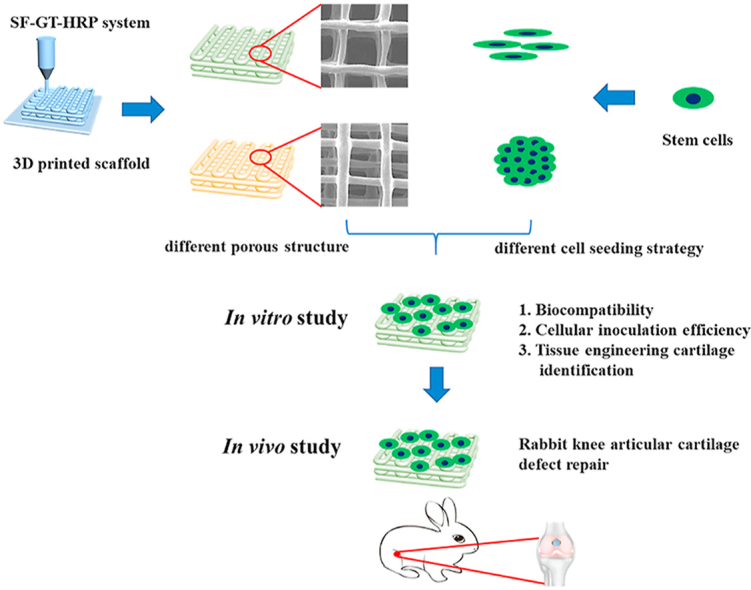
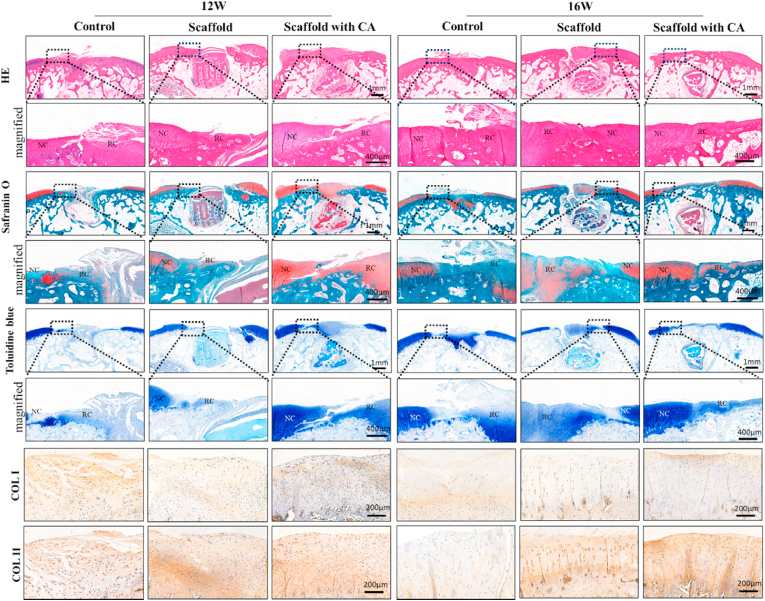
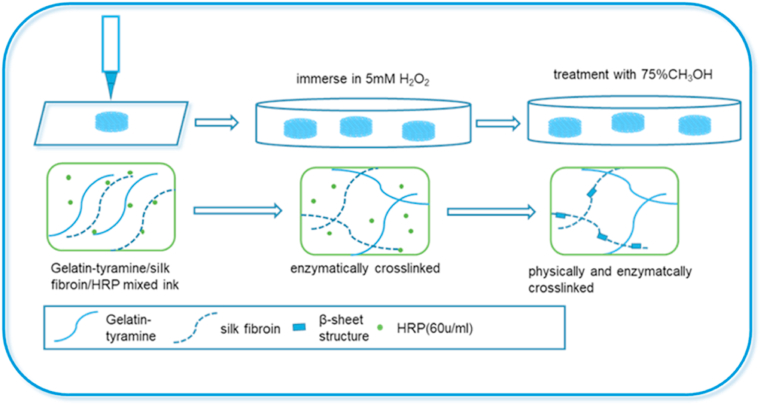
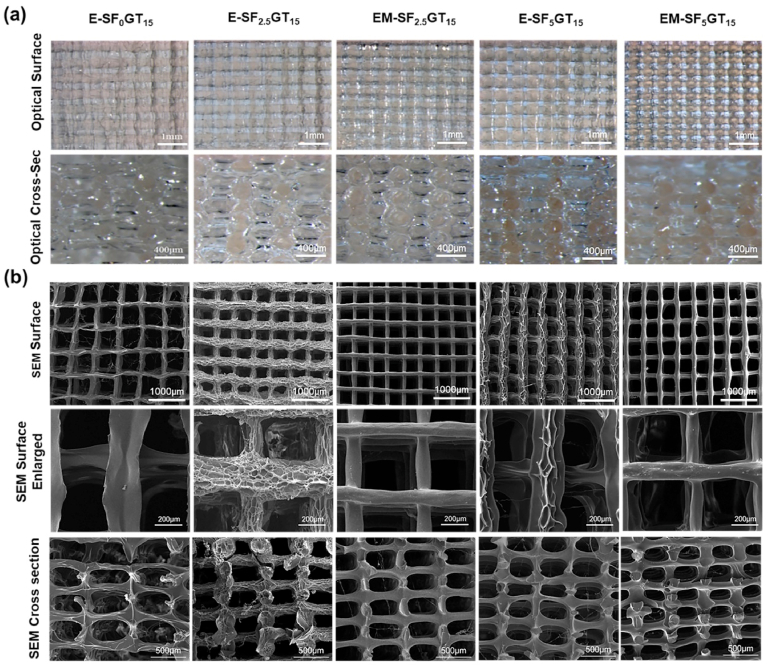
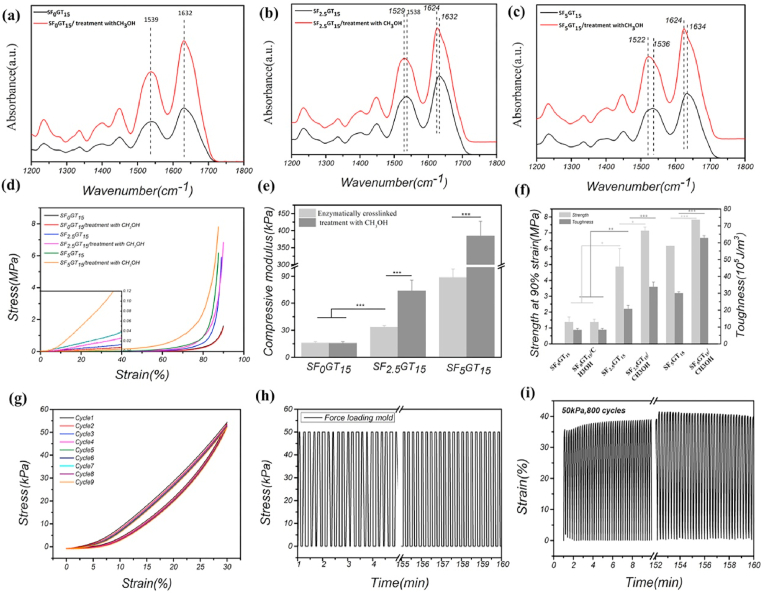
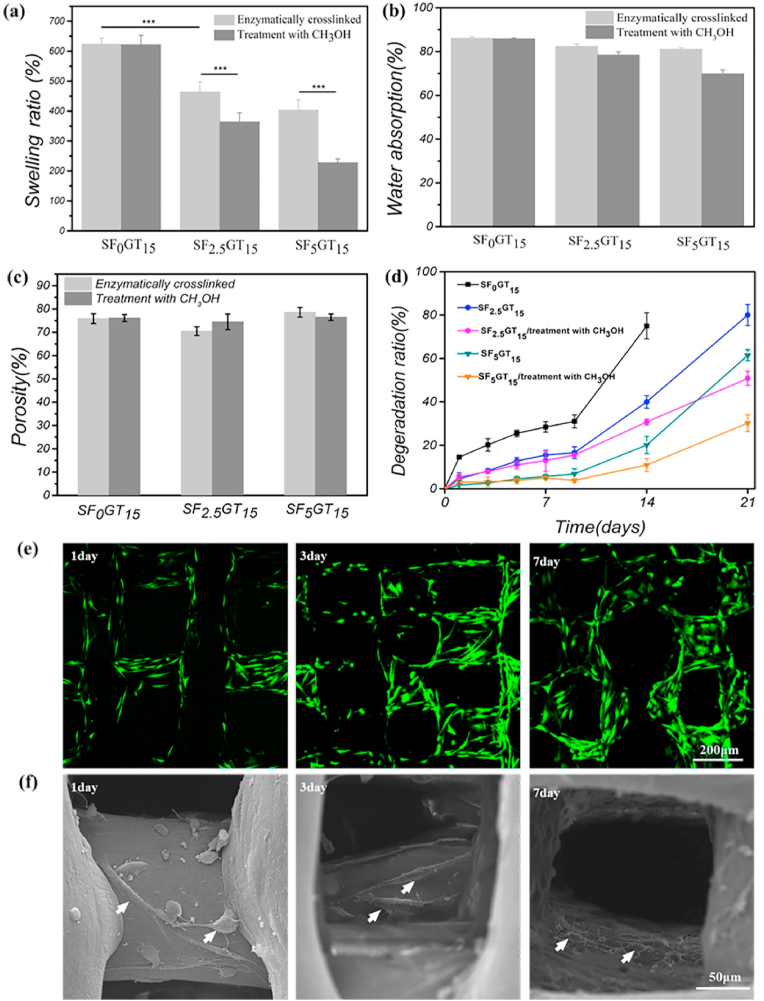
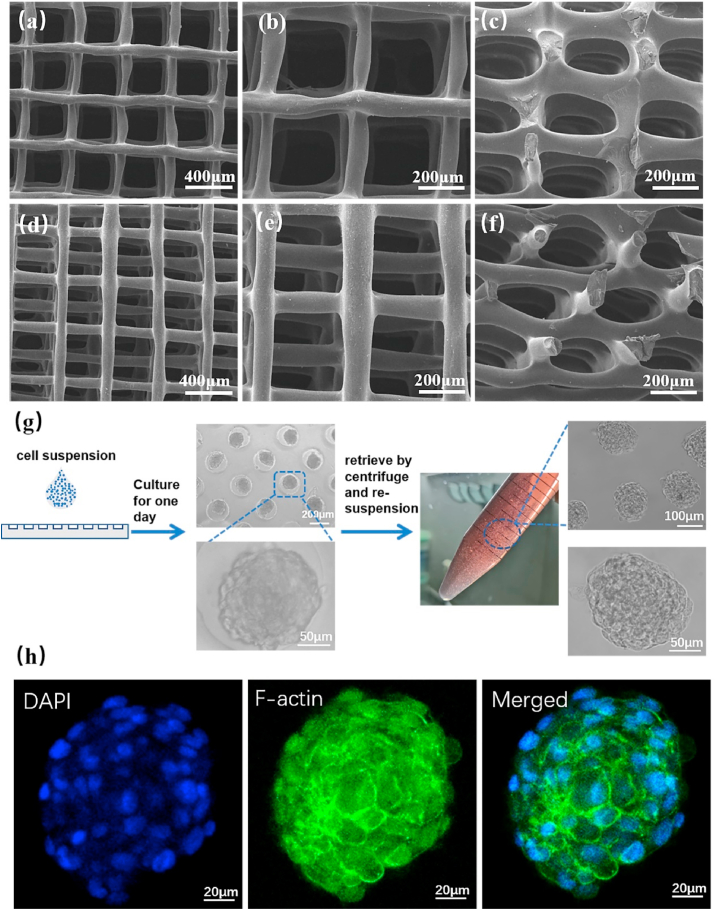
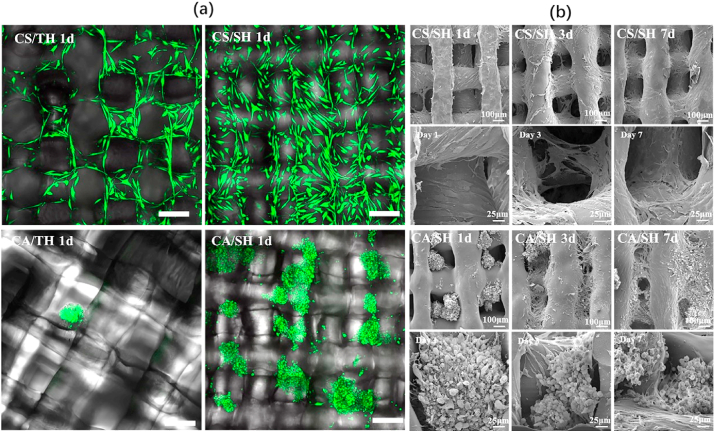
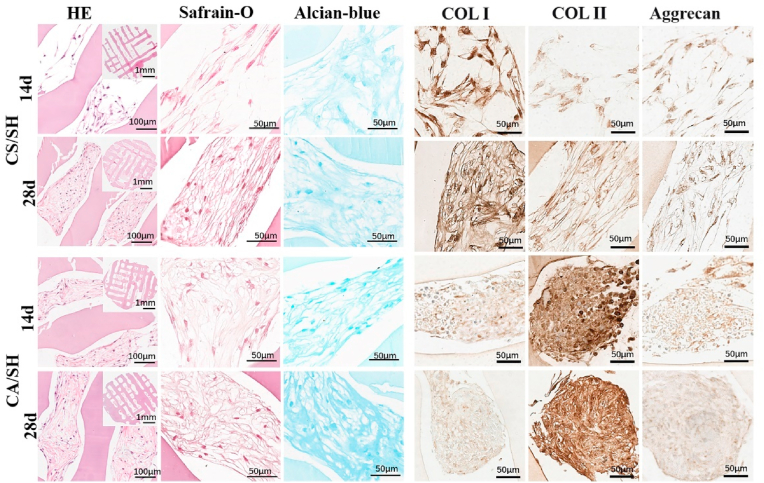
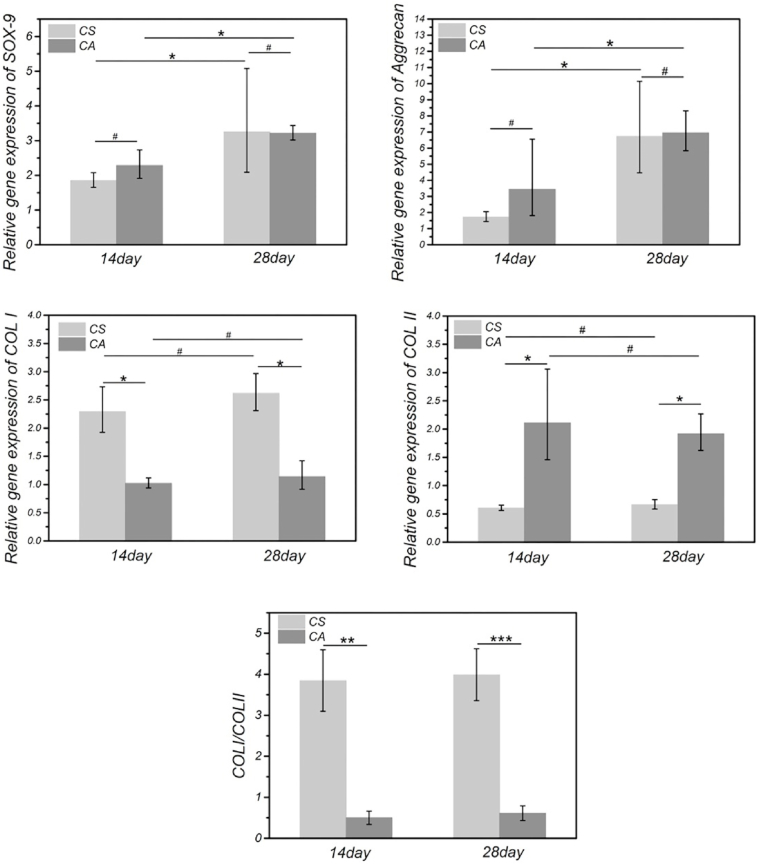
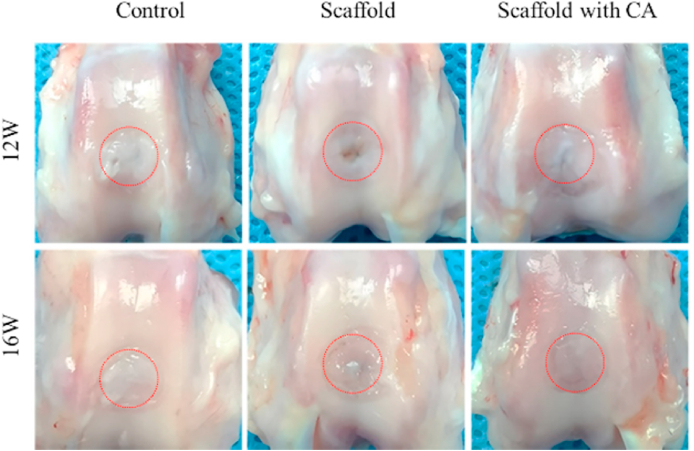
Hydrogel scaffolds are attractive for tissue defect repair and reorganization because of their human tissue-like characteristics. However, most hydrogels offer limited cell growth and tissue formation ability due to their submicron- or nano-sized gel networks, which restrict the supply of oxygen, nutrients and inhibit the proliferation and differentiation of encapsulated cells. In recent years, 3D printed hydrogels have shown great potential to overcome this problem by introducing macro-pores within scaffolds. In this study, we fabricated a macroporous hydrogel scaffold through horseradish peroxidase (HRP)-mediated crosslinking of silk fibroin (SF) and tyramine-substituted gelatin (GT) by extrusion-based low-temperature 3D printing. Through physicochemical characterization, we found that this hydrogel has excellent structural stability, suitable mechanical properties, and an adjustable degradation rate, thus satisfying the requirements for cartilage reconstruction. Cell suspension and aggregate seeding methods were developed to assess the inoculation efficiency of the hydrogel. Moreover, the chondrogenic differentiation of stem cells was explored. Stem cells in the hydrogel differentiated into hyaline cartilage when the cell aggregate seeding method was used and into fibrocartilage when the cell suspension was used. Finally, the effect of the hydrogel and stem cells were investigated in a rabbit cartilage defect model. After implantation for 12 and 16 weeks, histological evaluation of the sections was performed. We found that the enzymatic cross-linked and methanol treatment SFGT hydrogel combined with cell aggregates promoted articular cartilage regeneration. In summary, this 3D printed macroporous SF-GT hydrogel combined with stem cell aggregates possesses excellent potential for application in cartilage tissue repair and regeneration.
水凝胶支架因其类似人体组织的特性而在组织缺损修复和重建方面具有吸引力。然而,大多数水凝胶由于其亚微米或纳米尺寸的凝胶网络,提供有限的细胞生长和组织形成能力,这限制了氧气和营养物质的供应,并抑制了包封细胞的增殖和分化。近年来,3D打印水凝胶通过在支架内引入大孔,显示出克服这一问题的巨大潜力。在本研究中,我们通过基于挤出的低温3D打印,利用辣根过氧化物酶(HRP)介导的丝素蛋白(SF)和酪胺取代明胶(GT)交联制备了一种大孔水凝胶支架。通过物理化学表征,我们发现这种水凝胶具有优异的结构稳定性、合适的力学性能和可调节的降解速率,从而满足软骨重建的要求。开发了细胞悬液和聚集体接种方法来评估水凝胶的接种效率。此外,还探索了干细胞的软骨分化。当使用细胞聚集体接种方法时,水凝胶中的干细胞分化为透明软骨,而当使用细胞悬液时,分化为纤维软骨。最后,在兔软骨缺损模型中研究了水凝胶和干细胞的效果。植入12周和16周后,对切片进行组织学评估。我们发现酶交联和甲醇处理的SFGT水凝胶与细胞聚集体相结合促进了关节软骨再生。总之,这种3D打印的大孔SF-GT水凝胶与干细胞聚集体相结合在软骨组织修复和再生中具有优异的应用潜力。