Long Christopher P, Chan Alison X, Bakhoum Christine Y, Toomey Christopher B, Madala Samantha, Garg Anupam K, Freeman William R, Goldbaum Michael H, DeMaria Anthony N, Bakhoum Mathieu F
School of medicine, University of California San Diego, La Jolla, CA USA.
Division of Pediatric Nephrology, Rady Children's Hospital San Diego, University of California San Diego, San Diego, California USA.
EClinicalMedicine. 2021 Mar 2;33:100775. doi: 10.1016/j.eclinm.2021.100775. eCollection 2021 Mar.
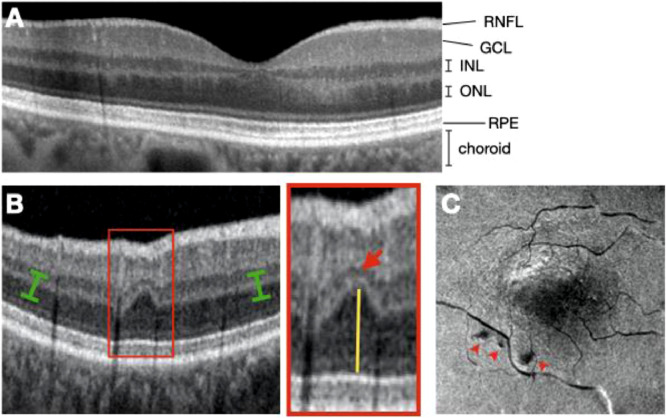
Cardiovascular disease is the leading cause of mortality and disability worldwide. A noninvasive test that can detect underlying cardiovascular disease has the potential to identify patients at risk prior to the occurrence of adverse cardiovascular events. We sought to determine whether an easily observed imaging finding indicative of retinal ischemia, which we term ' (RIPLs), could serve as a biomarker for cardiovascular disease.
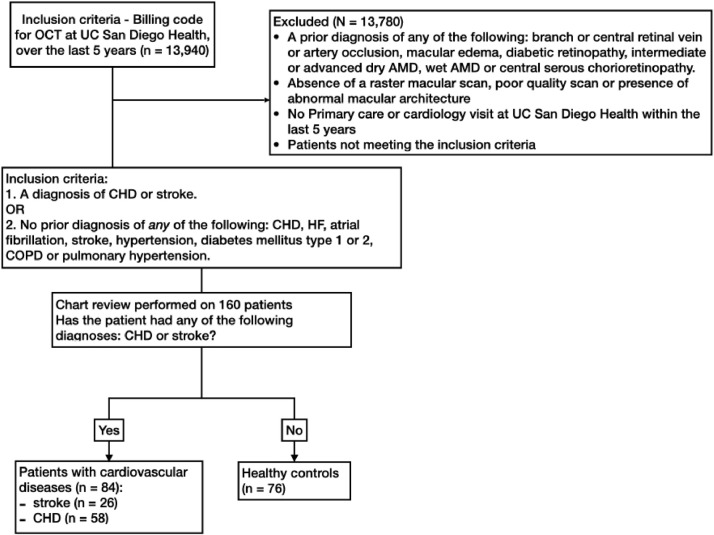
We reviewed optical coherence tomography (OCT) scans of individuals, with no underlying retinal pathology, obtained at UC San Diego Health from July 2014 to July 2019. We identified 84 patients with documented cardiovascular disease and 76 healthy controls. OCT scans were assessed for evidence of RIPLs. In addition, the 10-year atherosclerotic cardiovascular disease (ASCVD) risk calculator was used to risk-stratify the subjects into four different categories.
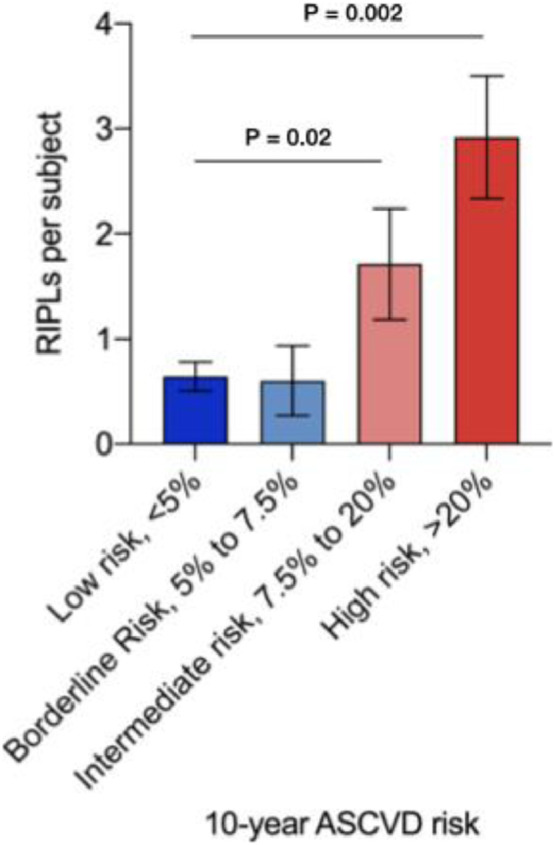
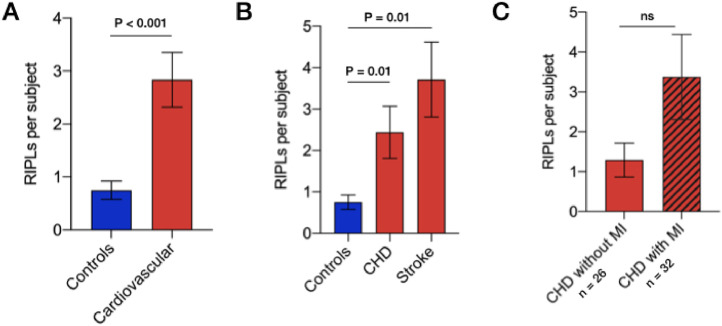
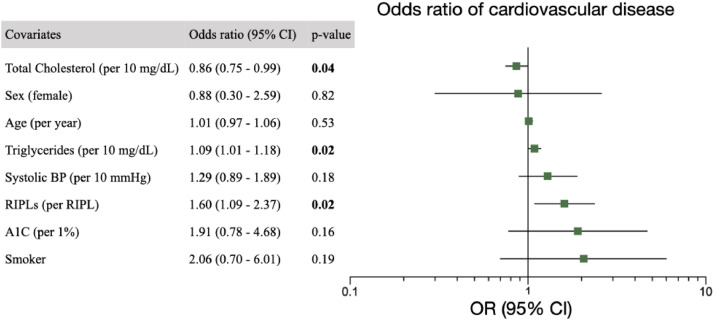
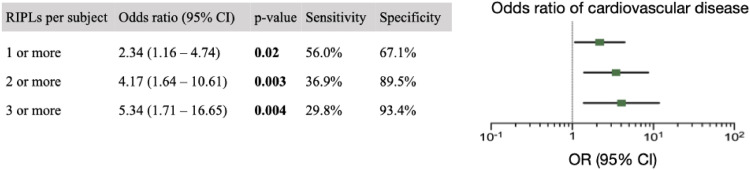
Patients with documented cardiovascular disease had higher number of RIPLs compared to healthy controls (2.8 vs 0.8, < 0.001). After adjusting for age, sex, smoking history, systolic blood pressure and triglycerides, cholesterol and hemoglobin A1C levels, each RIPL was associated with an odds ratio of having cardiovascular disease of 1·60 (1.09-2>37). The number of RIPLs in individuals with intermediate and high 10-year ASCVD risk scores was higher than in those with low ASCVD risk scores (1.7 vs 0.64, = 0.02 and 2.9 vs 0.64, p 0.002, respectively).
The presence of RIPLs, which are anatomical markers of prior retinal ischemic infarcts, is suggestive of coexisting cardiovascular disease. RIPLs detection, obtained from routine retinal scans, may thus provide an additional biomarker to identify patients at risk of developing adverse cardiovascular events.
None.
心血管疾病是全球死亡和残疾的主要原因。一种能够检测潜在心血管疾病的非侵入性检测方法,有潜力在不良心血管事件发生之前识别出有风险的患者。我们试图确定一种易于观察到的、指示视网膜缺血的影像学表现,即我们所称的“视网膜缺血性灌注损失(RIPLs)”,是否可作为心血管疾病的生物标志物。
我们回顾了2014年7月至2019年7月在加州大学圣地亚哥分校健康中心获取的、无潜在视网膜病变个体的光学相干断层扫描(OCT)图像。我们确定了84例有心血管疾病记录的患者和76例健康对照。对OCT图像进行评估以寻找RIPLs的证据。此外,使用10年动脉粥样硬化性心血管疾病(ASCVD)风险计算器将受试者分为四个不同风险类别。
有心血管疾病记录的患者与健康对照相比,RIPLs数量更多(2.8对0.8,<0.001)。在调整年龄、性别、吸烟史、收缩压、甘油三酯、胆固醇和糖化血红蛋白水平后,每一个RIPL与患心血管疾病的比值比为1.60(1.09 - 2.37)。10年ASCVD风险评分中等和高的个体中RIPLs数量高于低ASCVD风险评分的个体(分别为1.7对0.64,=0.02和2.9对0.64,p = 0.002)。
RIPLs作为先前视网膜缺血性梗死的解剖学标志物,其存在提示并存心血管疾病。因此,通过常规视网膜扫描检测RIPLs,可能为识别有发生不良心血管事件风险的患者提供一种额外的生物标志物。
无。