Department of Biological Sciences, Universidad de los Andes, Bogotá, Colombia.
Max Planck Tandem Group in Computational Biology, Universidad de los Andes, Bogotá, Colombia.
Microbiome. 2021 Apr 12;9(1):88. doi: 10.1186/s40168-021-01043-8.
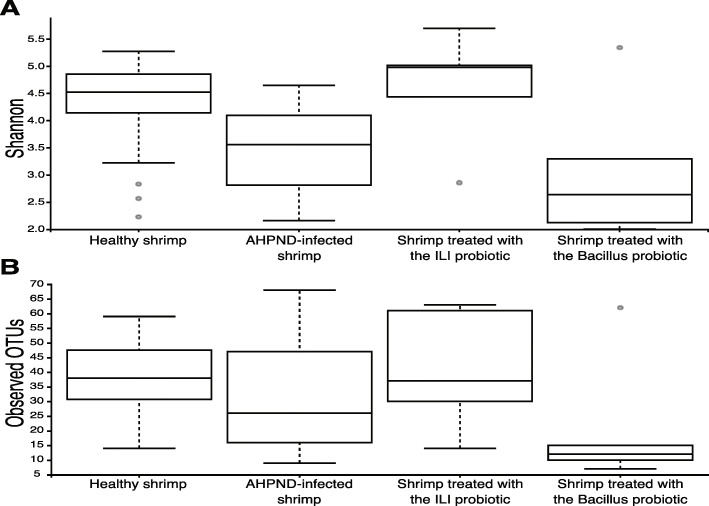
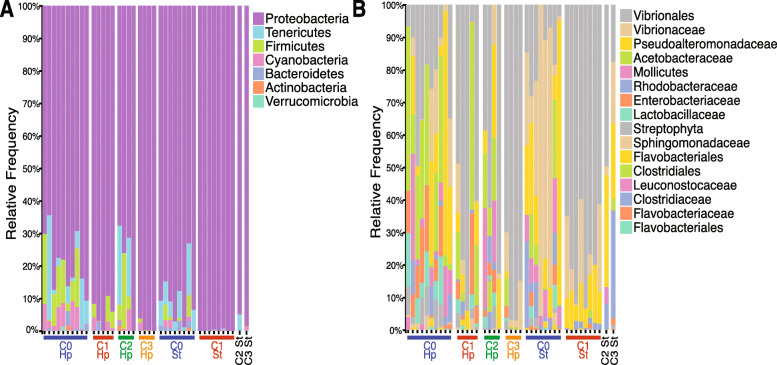
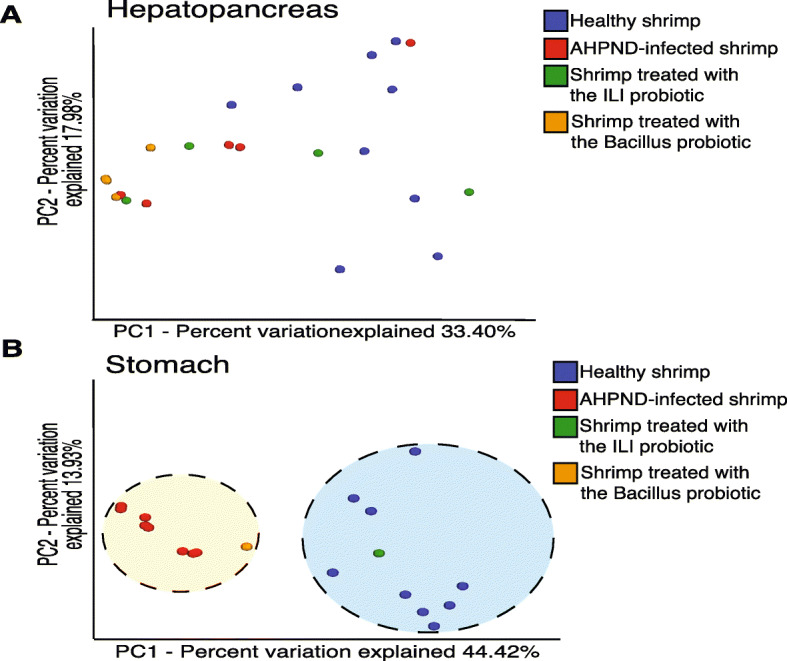
Acute hepatopancreatic necrosis disease (AHPND) is an important shrimp bacterial disease caused by some Vibrio species. The severity of the impact of this disease on aquaculture worldwide has made it necessary to develop alternatives to prophylactic antibiotics use, such as the application of probiotics. To assess the potential to use probiotics in order to limit the detrimental effects of AHNPD, we evaluated the effect of the ILI strain, a Vibrio sp. bacterium and efficient shrimp probiotic, using metabarcoding (16S rRNA gene) on the gastrointestinal microbiota of shrimp after being challenged with AHPND-causing V. parahaemolyticus.
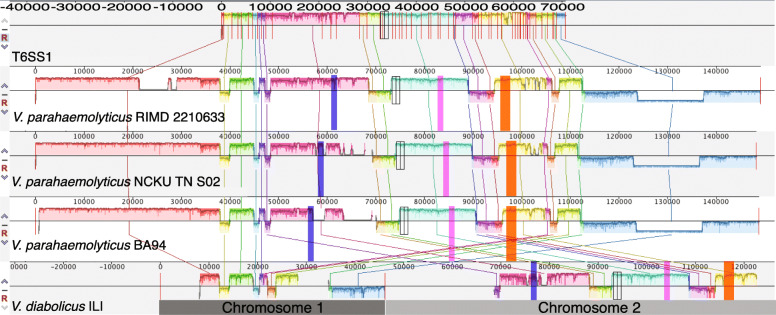
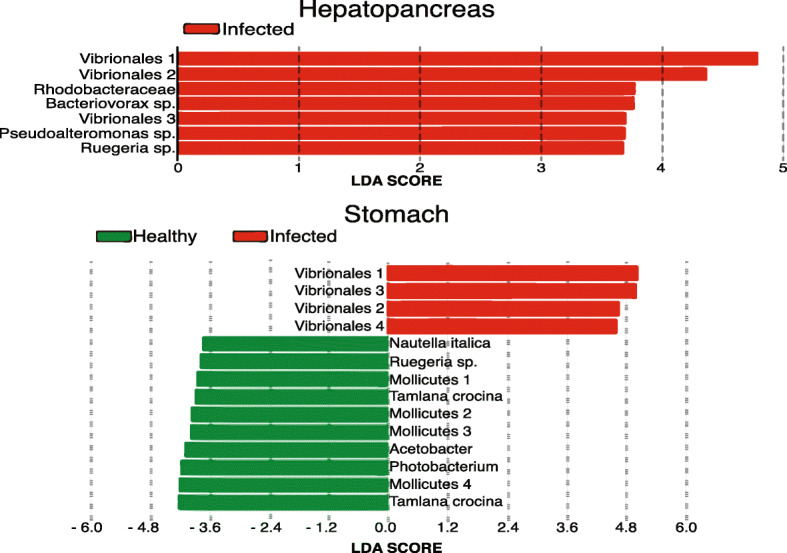
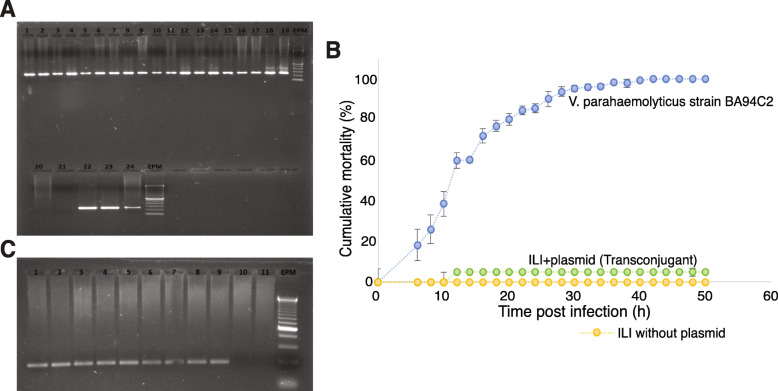
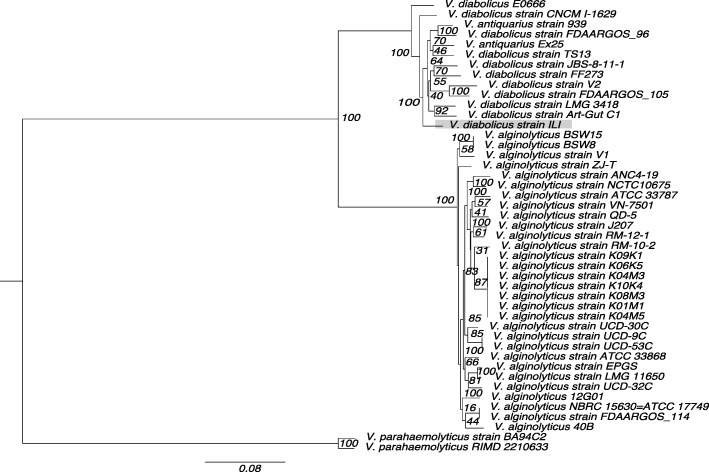
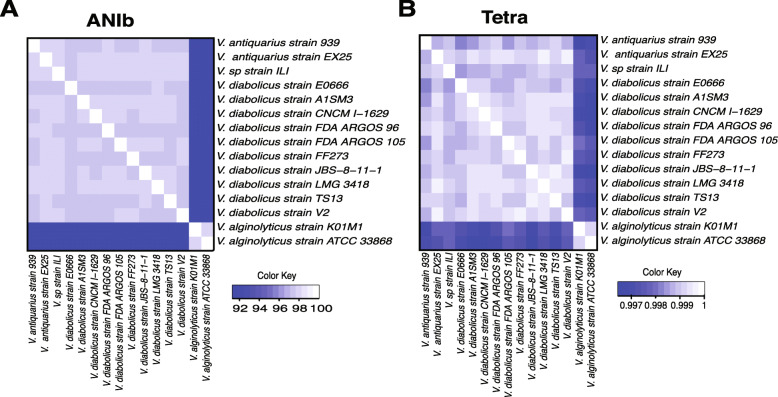
We showed how the gastrointestinal microbiome of shrimp varied between healthy and infected organisms. Nevertheless, a challenge of working with AHPND-causing Vibrio pathogens and Vibrio-related bacteria as probiotics is the potential risk of the probiotic strain becoming pathogenic. Consequently, we evaluated whether ILI strain can acquire the plasmid pV-AHPND via horizontal transfer and further cause the disease in shrimp. Conjugation assays were performed resulting in a high frequency (70%) of colonies harboring the pv-AHPND. However, no shrimp mortality was observed when transconjugant colonies of the ILI strain were used in a challenge test using healthy shrimp. We sequenced the genome of the ILI strain and performed comparative genomics analyses using AHPND and non-AHPND Vibrio isolates. Using available phylogenetic and phylogenomics analyses, we reclassified the ILI strain as Vibrio diabolicus. In summary, this work represents an effort to study the role that probiotics play in the normal gastrointestinal shrimp microbiome and in AHPND-infected shrimp, showing that the ILI probiotic was able to control pathogenic bacterial populations in the host's gastrointestinal tract and stimulate the shrimp's survival. The identification of probiotic bacterial species that are effective in the host's colonization is important to promote animal health and prevent disease.
This study describes probiotic bacteria capable of controlling pathogenic populations of bacteria in the shrimp gastrointestinal tract. Our work provides new insights into the complex dynamics between shrimp and the changes in the microbiota. It also addresses the practical application of probiotics to solve problems with pathogens that cause high mortality-rate in shrimp farming around the world. Video Abstract.
急性肝胰腺坏死病(AHPND)是一种由某些弧菌引起的重要虾类细菌性疾病。这种疾病对全球水产养殖的影响的严重程度使得有必要开发替代预防性抗生素使用的方法,例如应用益生菌。为了评估益生菌在限制 AHPND 有害影响方面的潜力,我们使用宏基因组学(16S rRNA 基因)评估了 ILI 菌株(一种弧菌细菌和高效虾类益生菌)在受到引起 AHPND 的副溶血弧菌挑战后对虾类胃肠道微生物群的影响。
我们展示了虾类的胃肠道微生物组在健康和感染生物之间如何变化。然而,用引起 AHPND 的弧菌病原体和与弧菌相关的细菌作为益生菌进行挑战的一个挑战是益生菌菌株可能变得致病的潜在风险。因此,我们评估了 ILI 菌株是否可以通过水平转移获得质粒 pV-AHPND 并进一步导致虾类患病。进行了接合实验,导致携带 pv-AHPND 的菌落的高频率(70%)。然而,当在使用健康虾的挑战测试中使用 ILI 菌株的转导菌落时,没有观察到虾的死亡。我们对 ILI 菌株的基因组进行了测序,并使用 AHPND 和非 AHPND 弧菌分离株进行了比较基因组学分析。使用现有的系统发育和系统基因组学分析,我们将 ILI 菌株重新分类为食酸菌。总之,这项工作代表了研究益生菌在正常虾类胃肠道微生物组和感染 AHPND 的虾类中的作用的努力,表明 ILI 益生菌能够控制宿主胃肠道中致病性细菌种群并刺激虾的存活。鉴定在宿主定植中有效的益生菌细菌种类对于促进动物健康和预防疾病非常重要。
本研究描述了能够控制虾类胃肠道中致病性细菌种群的益生菌细菌。我们的工作为虾类与微生物群变化之间的复杂动态提供了新的见解。它还解决了益生菌在解决全球水产养殖中导致高死亡率的病原体问题方面的实际应用。视频摘要。