Miricescu Alexandra, Byrne Tomás, Doorly Catherine M, Ng Carl K Y, Barth Susanne, Graciet Emmanuelle
Department of Biology, Maynooth University, Maynooth, Kildare, Ireland.
Crop Science Department, Teagasc Crops, Environment and Land Use Program, Oak Park, Carlow, R93XE12, Ireland.
Plant Methods. 2021 Apr 13;17(1):40. doi: 10.1186/s13007-021-00742-5.
Crop yield is dependent on climate conditions, which are becoming both more variable and extreme in some areas of the world as a consequence of global climate change. Increased precipitation and flooding events are the cause of important yield losses due to waterlogging or (partial) submergence of crops in the field. Our ability to screen efficiently and quickly for varieties that have increased tolerance to waterlogging or (partial) submergence is important. Barley, a staple crop worldwide, is particularly sensitive to waterlogging. Screening for waterlogging tolerant barley varieties has been ongoing for many years, but methods used to screen vary greatly, from the type of soil used to the time at which the treatment is applied. This variation makes it difficult to cross-compare results.
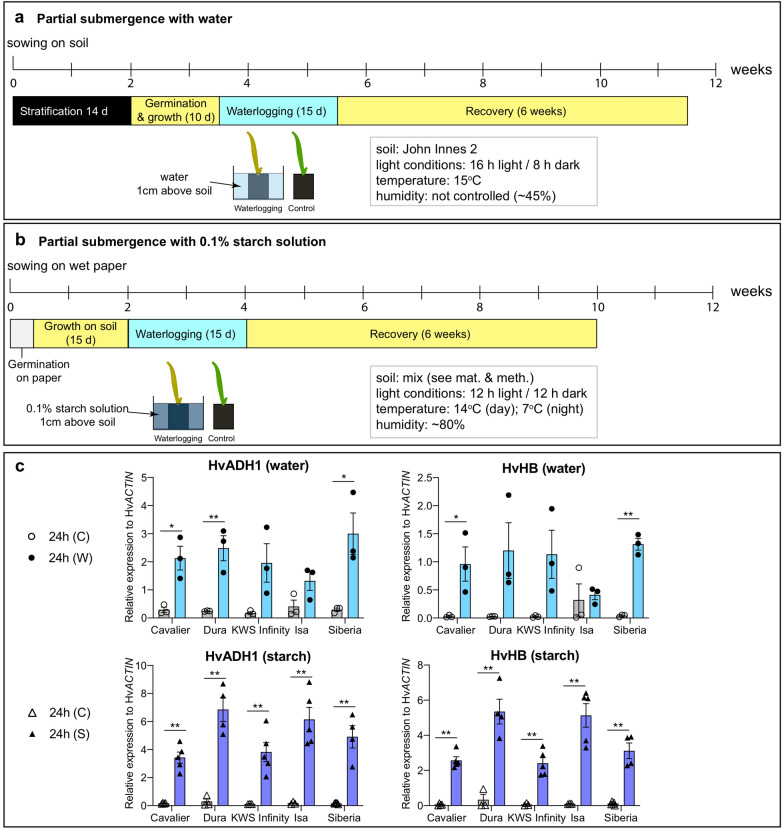
Here, we have devised a scoring system to assess barley tolerance to waterlogging and compare two different methods when partial submergence is applied with either water or a starch solution at an early developmental stage, which is particularly sensitive to waterlogging or partial submergence. The use of a starch solution has been previously shown to result in more reducing soil conditions and has been used to screen for waterlogging tolerance.
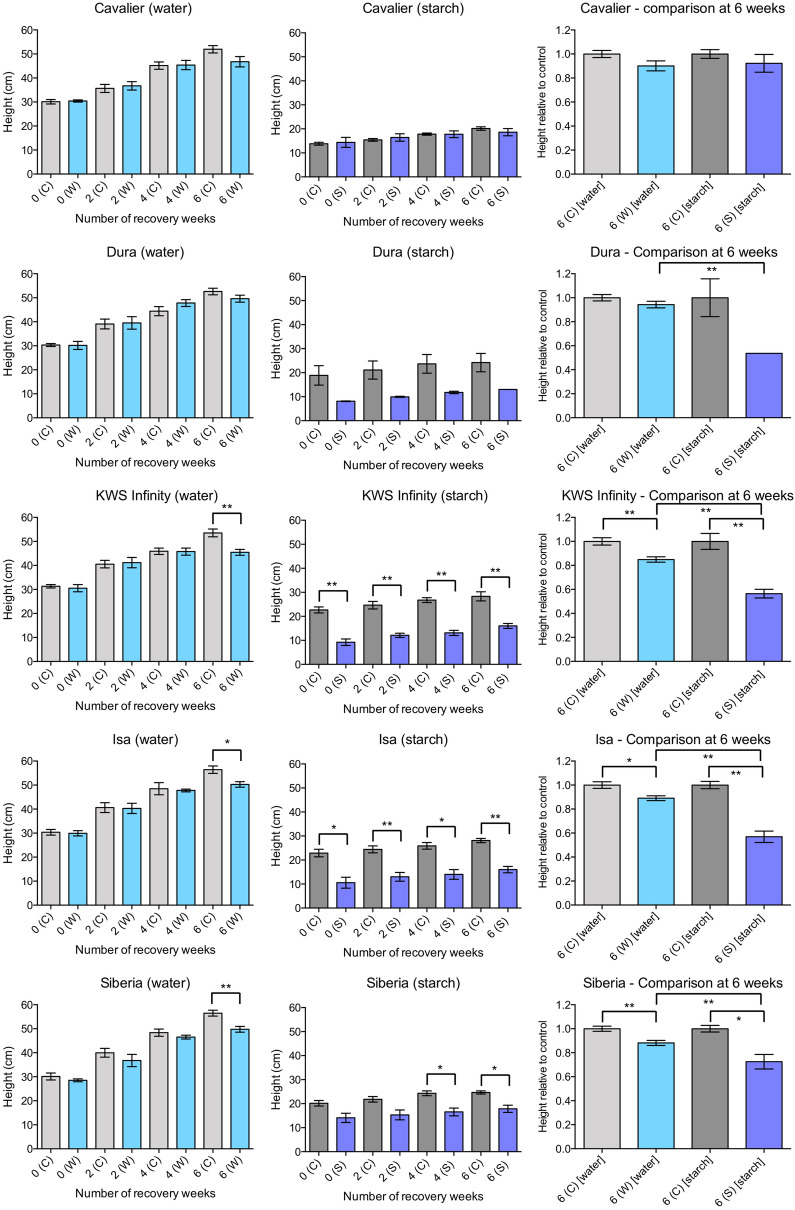
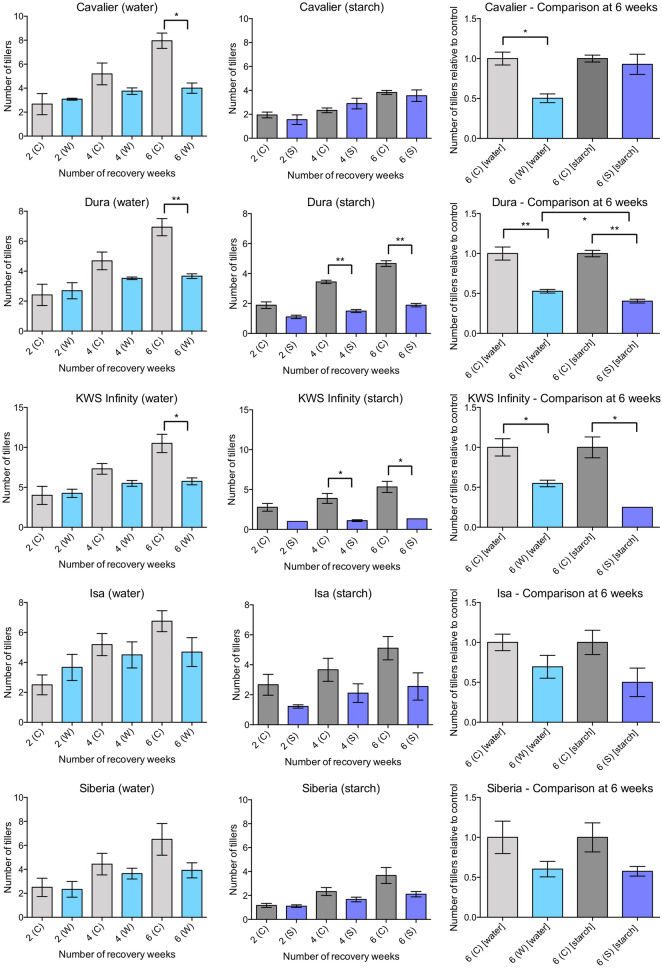
Our results show that the two methods provide similar results to qualitatively rank varieties as tolerant or sensitive, while also affecting plants differently, in that application of a starch solution results in stronger and earlier symptoms than applying partial submergence with water.
作物产量取决于气候条件,而由于全球气候变化,世界上一些地区的气候条件正变得更加多变和极端。降水增加和洪水事件是导致田间作物因涝渍或(部分)淹没而减产的重要原因。我们高效快速筛选出对涝渍或(部分)淹没耐受性增强的品种的能力至关重要。大麦是全球主要作物,对涝渍特别敏感。多年来一直在筛选耐涝大麦品种,但所使用的筛选方法差异很大,从使用的土壤类型到处理施加的时间。这种差异使得结果难以相互比较。
在此,我们设计了一种评分系统来评估大麦对涝渍的耐受性,并比较在发育早期对大麦进行部分淹没处理时,使用水或淀粉溶液这两种不同方法的效果,发育早期对涝渍或部分淹没特别敏感。先前已表明使用淀粉溶液会导致土壤还原性更强,并已用于筛选耐涝性。
我们的结果表明,这两种方法在定性地将品种列为耐受或敏感方面提供了相似的结果,同时对植物的影响也不同,即使用淀粉溶液比用水进行部分淹没处理会导致更强烈和更早出现的症状。