Division of Plastic Surgery, Peking Union Medical College Hospital, Chinese Academy of Medical Sciences and Peking Union Medical College, Beijing, China.
Department of Neurosurgery, Beijing Hospital, Beijing, China.
Aesthet Surg J. 2022 Feb 15;42(3):NP162-NP175. doi: 10.1093/asj/sjab193.
With the growth in the popularity of facial filler injections, increased numbers of severe adverse events, such as cerebral embolism, have been reported.
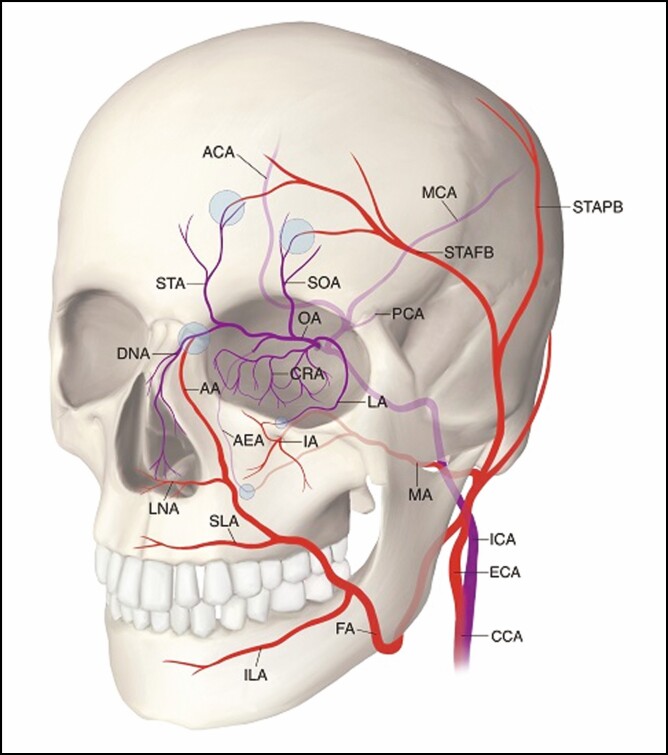
The aim of this article was to summarize the clinical manifestations and proposed mechanisms of filler-induced cerebral embolism (FICE).
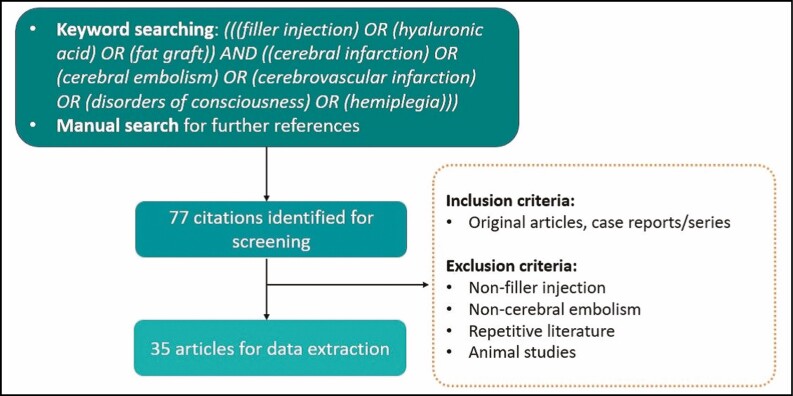
A literature review was performed with the search keywords "filler injection," "hyaluronic acid," "fat graft," "cerebral infarction," "cerebral embolism," "stroke," "cerebrovascular infarction," "disorders of consciousness," and "hemiplegia."
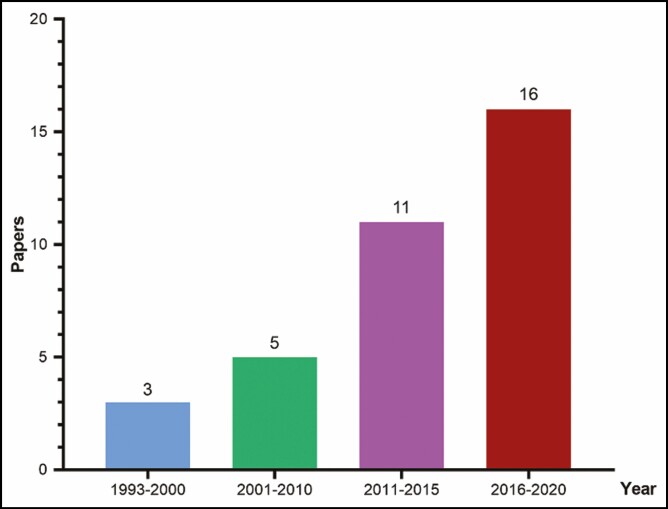
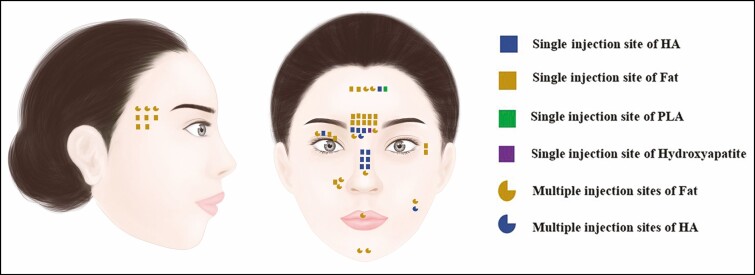
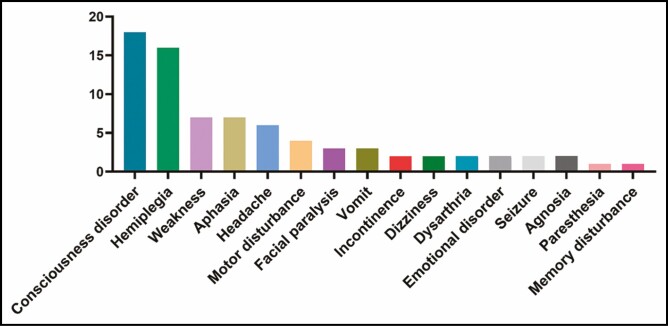
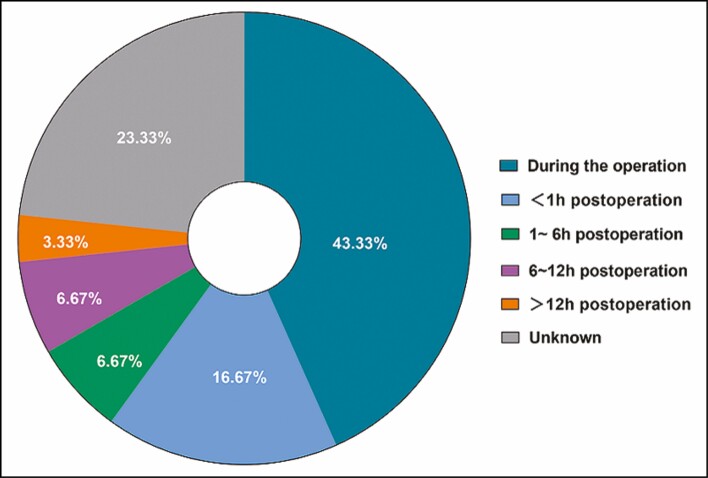
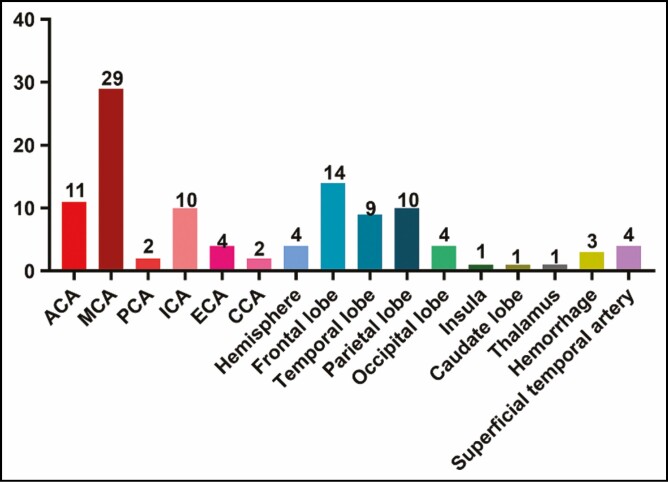
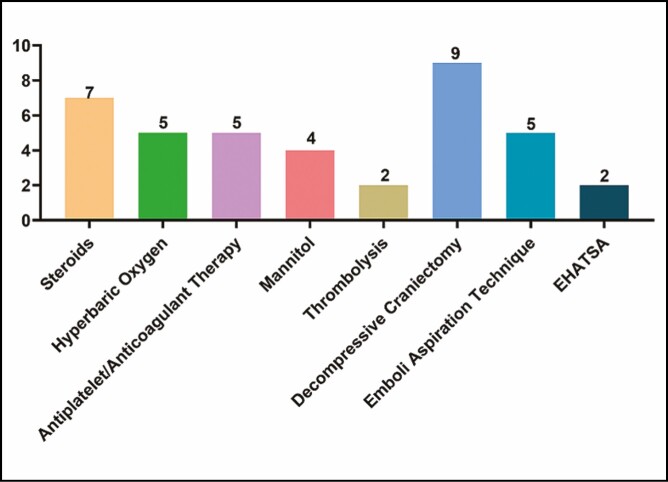
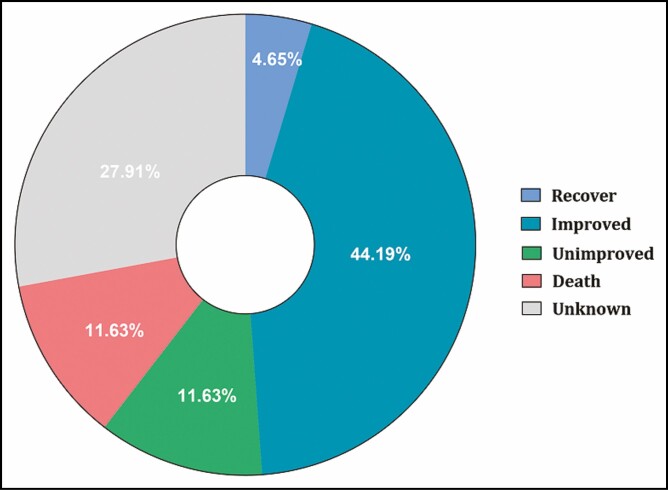
Among the 43 cases of FICE enrolled from 35 articles, 37 patients were female, and 6 were male. Twenty-nine of these patients had received fat grafting, and 12 hyaluronic acid injection. Most FICE patients had been injected in the glabella, followed by the temporal, forehead, and nasal areas. Among 30 patients injected under local anesthesia, 43.33% presented with neurologic symptoms during the procedure. The main symptoms were consciousness disorders and hemiplegia. Most of the embolization sites were in the middle cerebral artery, followed by frontal lobe infarction and anterior cerebral artery infarction. Three patients developed cerebral hemorrhage after embolism. Twenty-six patients presented with newly acquired vision loss. The management for FICE cases included embolectomy, thrombolysis, decompressive craniectomy, antiplatelet/anticoagulant therapy, and symptomatic and nutritional treatment. Nearly half of the patients recovered or exhibited improved neurologic manifestations but not visual loss. Five patients died.
FICE is a severe complication following facial filler injection. Careful prevention, timely identification, and treatment are crucial to decreasing the morbidity and mortality of FICE.
随着面部填充物注射的普及,越来越多的严重不良反应,如脑栓塞,已经被报道。
本文旨在总结填充物引起的脑栓塞(FICE)的临床表现和提出的发病机制。
使用关键词“填充物注射”、“透明质酸”、“脂肪移植”、“脑梗死”、“脑栓塞”、“中风”、“脑血管梗死”、“意识障碍”和“偏瘫”进行文献回顾。
从 35 篇文章中纳入的 43 例 FICE 患者中,37 例为女性,6 例为男性。其中 29 例患者接受了脂肪移植,12 例接受了透明质酸注射。大多数 FICE 患者在眉间接受了注射,其次是颞部、额部和鼻部。在 30 例接受局部麻醉的患者中,43.33%在手术过程中出现了神经系统症状。主要症状为意识障碍和偏瘫。大多数栓塞部位在大脑中动脉,其次是额叶梗死和前脑动脉梗死。3 例栓塞后发生脑出血。26 例患者出现新发视力丧失。FICE 病例的治疗包括取栓术、溶栓治疗、减压性颅骨切除术、抗血小板/抗凝治疗以及对症和营养治疗。近一半的患者恢复或表现出神经功能改善,但视力未恢复。5 例患者死亡。
FICE 是面部填充物注射后的严重并发症。仔细预防、及时识别和治疗对于降低 FICE 的发病率和死亡率至关重要。