Radiology Department, Beijing Chao-Yang Hospital, Capital Medical University, No. 8, South Gongti Road, Chaoyang District, Beijing, 100020, P.R. China.
Neurology Department, Beijing Chao-Yang Hospital, Capital Medical University, No. 8, South Gongti Road, Chaoyang District, Beijing, P.R. China.
BMC Neurol. 2021 Apr 15;21(1):159. doi: 10.1186/s12883-021-02189-6.
Blood-brain barrier (BBB) breakdown, as an early biomarker for vascular mild cognitive impairment (vMCI), has only been validated by a few studies. The aim of this study was to investigate whether compromised BBB integrity is involved in vMCI patients, and detect the relationship between BBB breakdown and cognitive function. BBB leakage in vMCI was explored, and the relationship between BBB leakage and cognitive function was discussed in this study.
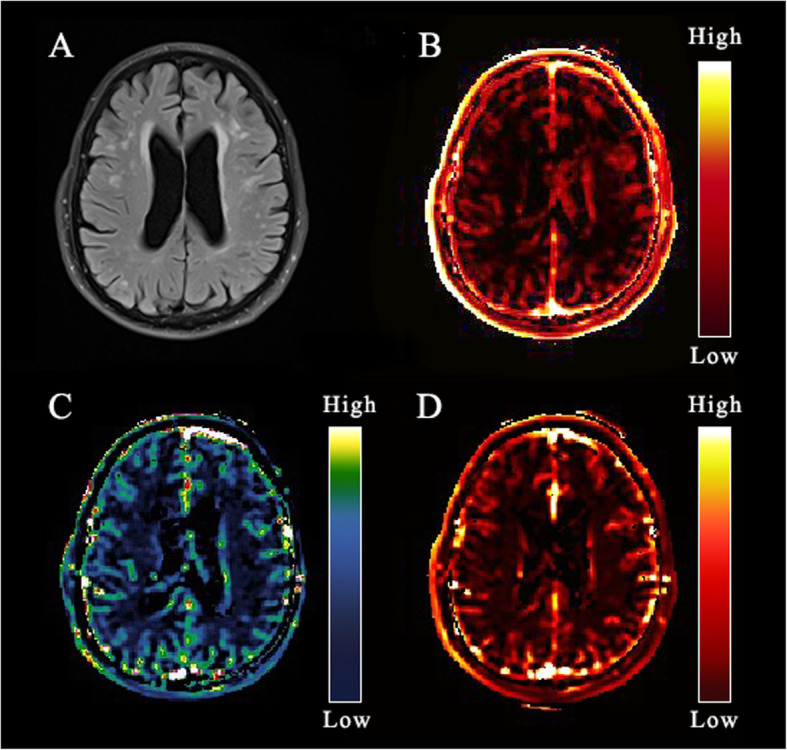
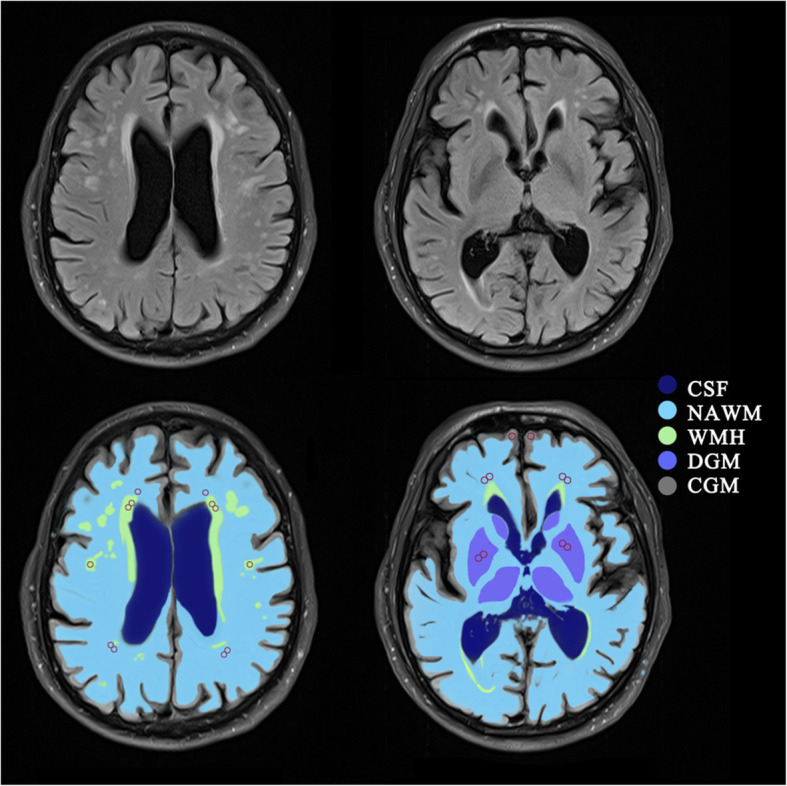
This is a cross-sectional study involving 26 vMCI patients and 21 sex- and age-matched healthy controls. Dynamic contrast-enhanced-magnetic resonance imaging was performed for all participants, to determine BBB leakage. Leakage volume, leakage rate, and fractional blood plasma volume (Vp) in the grey and white matter were evaluated. Neuropsychological tests were used to determine cognitive function. Leakage rate, leakage volume, and Vp in different brain locations, including deep grey matter, cortical grey matter, white matter hyperintensity, and normal-appearing white matter were compared between the two groups.
Multivariable linear regression analyses revealed that in all regions of interest, the leakage rate was significantly higher in vMCI patients relative to controls. Leakage volume in normal-appearing white matter and white matter hyperintensity were significantly higher, while Vp in normal-appearing white matter, deep grey matter, and cortical grey matter were significantly lower in vMCI patients. Moreover, Montreal Cognitive Assessment scores decreased with the increase of leakage rate in white matter hyperintensity.
Increased BBB permeability was detected in vMCI patients and was related to cognitive decline, which suggested that BBB breakdown might be involved in cognitive dysfunction pathogenesis.
血脑屏障(BBB)破坏作为血管性轻度认知障碍(vMCI)的早期生物标志物,仅得到少数研究的验证。本研究旨在探讨 BBB 完整性受损是否与 vMCI 患者有关,并检测 BBB 破坏与认知功能之间的关系。本研究探讨了 vMCI 患者 BBB 渗漏情况,并讨论了 BBB 渗漏与认知功能之间的关系。
这是一项横断面研究,纳入了 26 例 vMCI 患者和 21 名性别和年龄匹配的健康对照者。对所有参与者进行动态对比增强磁共振成像,以确定 BBB 渗漏。评估灰质和白质中的渗漏体积、渗漏率和血容量分数(Vp)。采用神经心理学测试评估认知功能。比较两组患者不同脑区(包括深部灰质、皮质灰质、脑白质高信号和正常表现白质)的渗漏率、渗漏体积和 Vp。
多变量线性回归分析显示,在所有感兴趣区域,vMCI 患者的渗漏率明显高于对照组。正常表现白质和脑白质高信号的渗漏体积明显升高,而正常表现白质、深部灰质和皮质灰质的 Vp 明显降低。此外,蒙特利尔认知评估评分随脑白质高信号中渗漏率的增加而降低。
vMCI 患者的 BBB 通透性增加,与认知下降有关,提示 BBB 破坏可能参与认知功能障碍的发病机制。