Ai Gaoxiang, Huang Ziwei, Cheng Juanjuan, Xie Jianhui, Zeng Huifang, Liu Yuhong, Li Yucui, Huang Xiaoqi, Chen Jiannan, Su Ziren
School of Pharmaceutical Sciences, Guangzhou University of Chinese Medicine, Guangzhou, China.
The First Affiliated Hospital of Chinese Medicine, Guangzhou University of Chinese Medicine, Guangzhou, China.
Front Pharmacol. 2021 Mar 30;12:639020. doi: 10.3389/fphar.2021.639020. eCollection 2021.
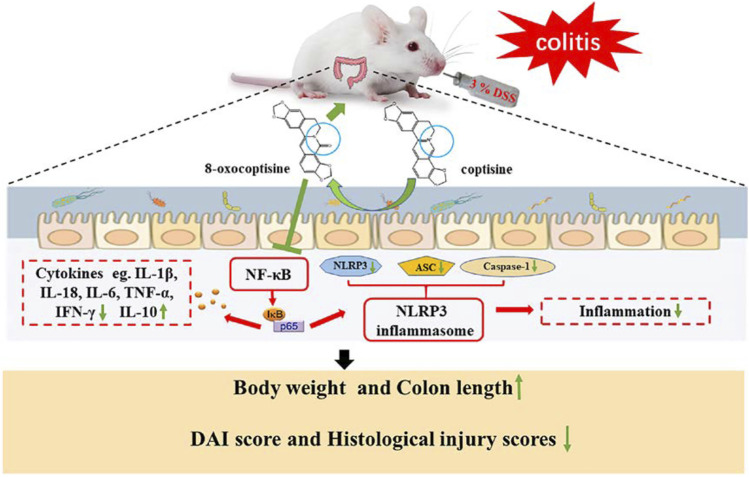
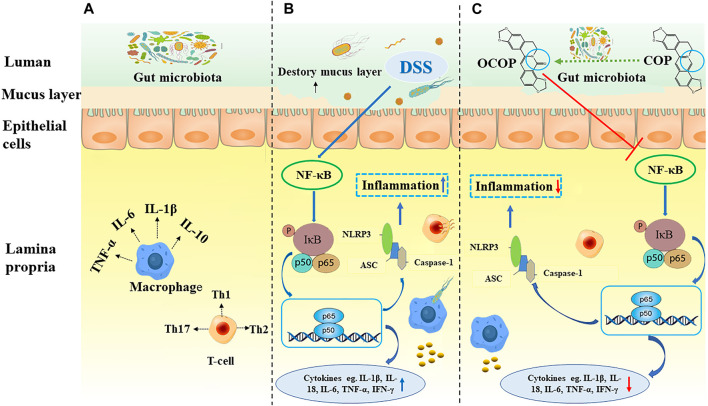
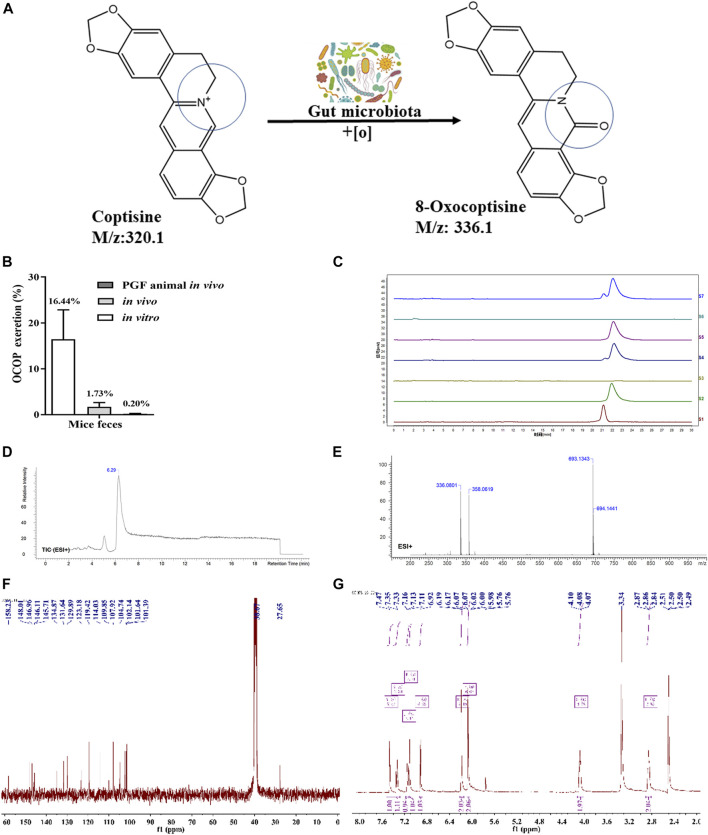
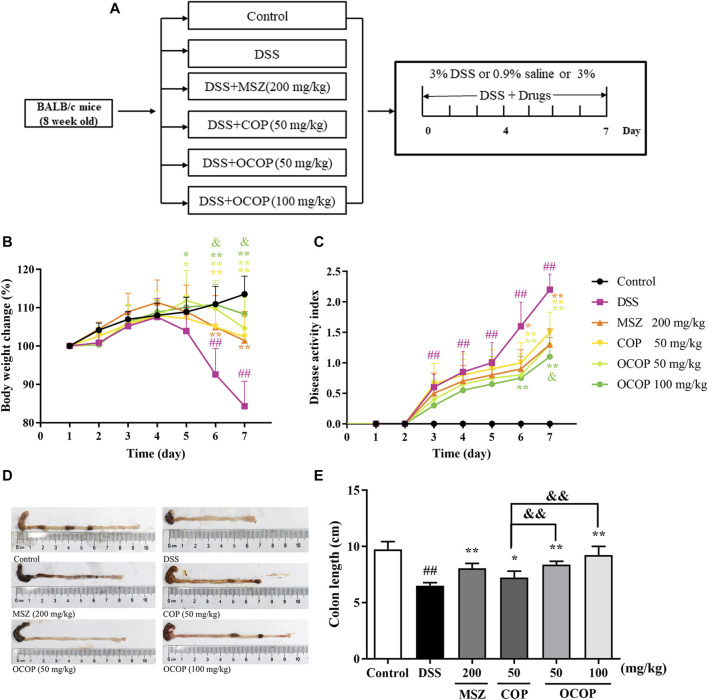
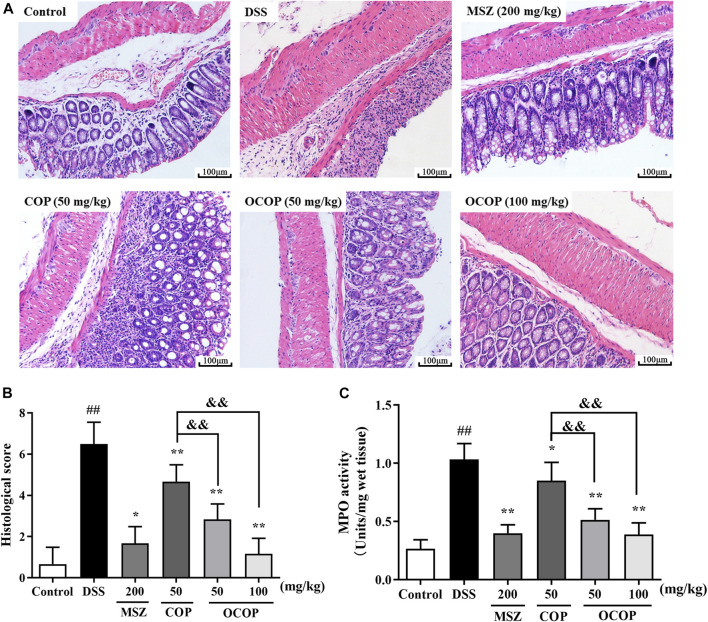
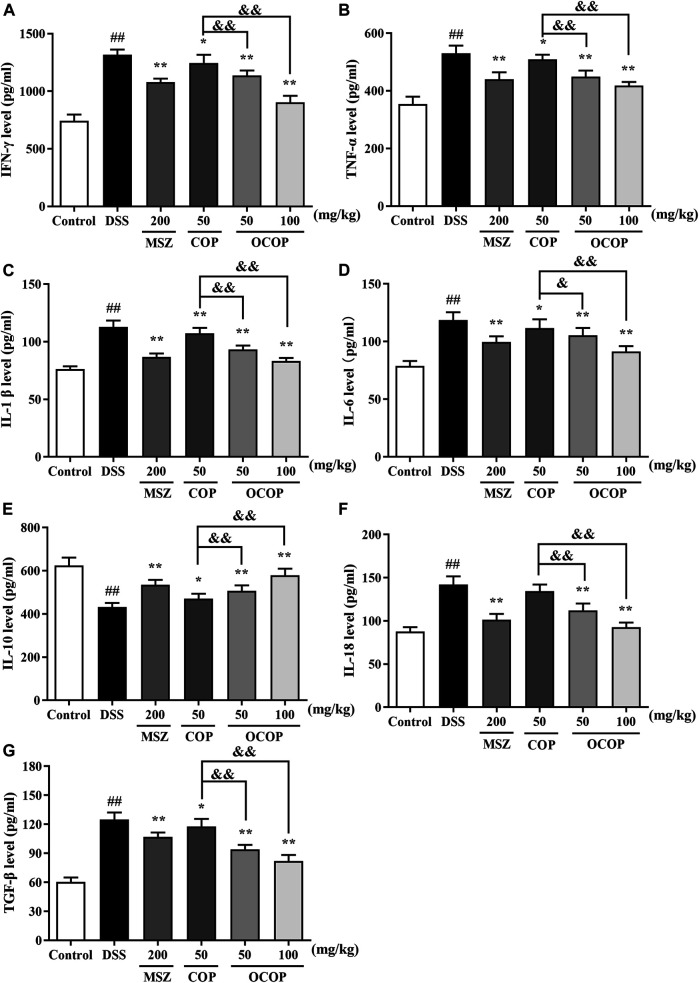
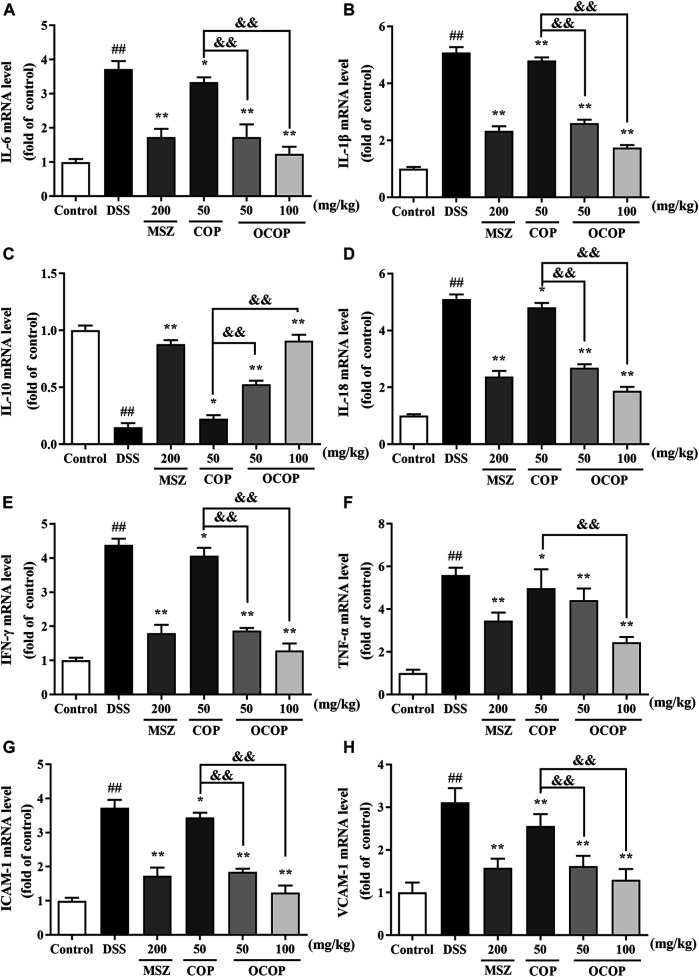
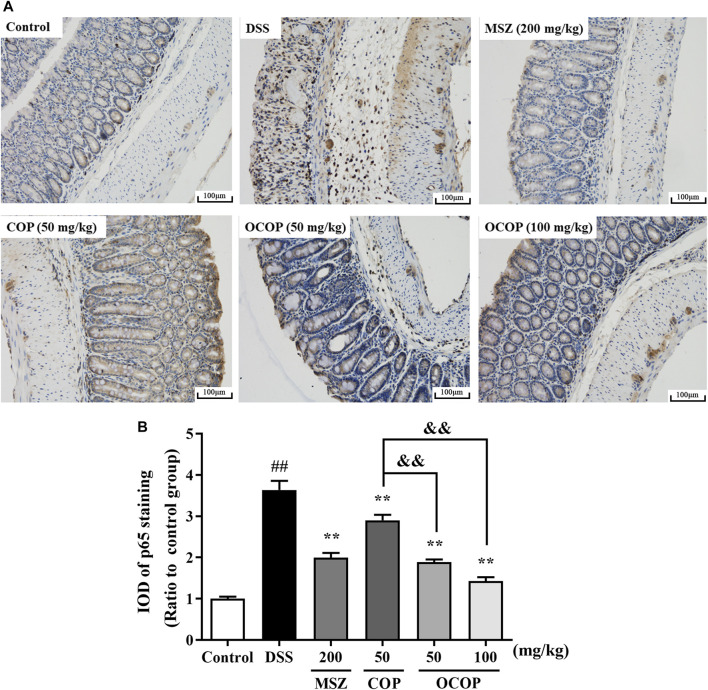
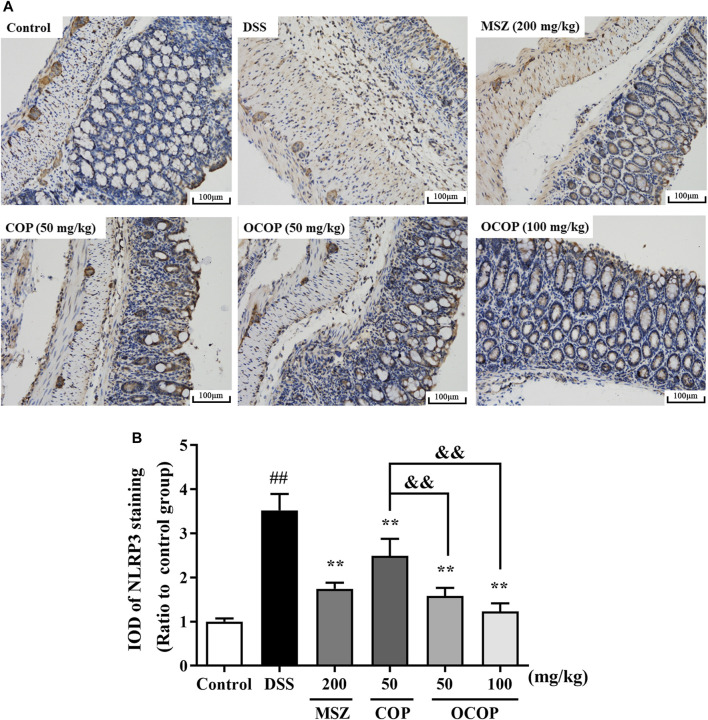
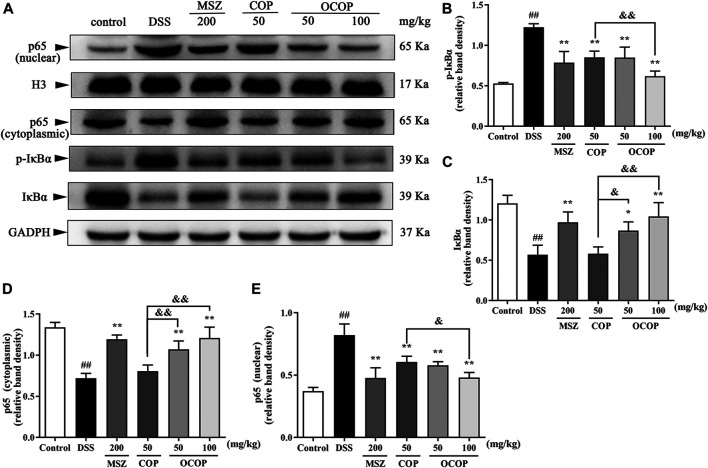
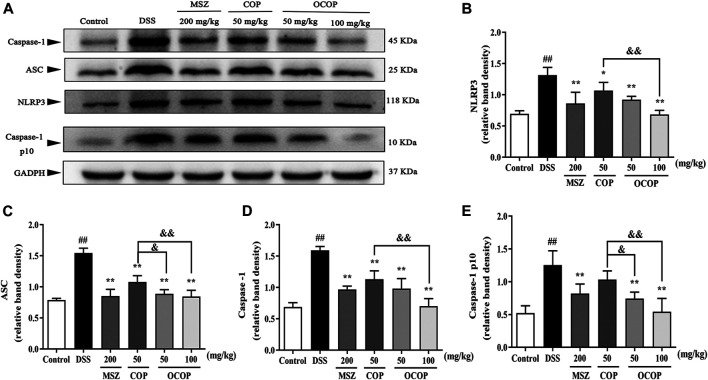
Coptisine (COP) is a bioactive isoquinoline alkaloid derived from Franch, which is traditionally applied for the management of colitis. However, the blood concentration of COP was extremely low, and its gut microbiota-mediated metabolites were thought to contribute to its prominent bioactivities. To comparatively elucidate the protective effect and underlying mechanism of COP and its novel gut microbiota metabolite (8-oxocoptisine, OCOP) against colitis, we used dextran sulfate sodium (DSS) to induce colitis in mice. Clinical symptoms, microscopic alternation, immune-inflammatory parameters for colitis were estimated. The results indicated that OCOP dramatically ameliorated disease activity index (DAI), the shortening of colon length and colonic histopathological deteriorations. OCOP treatment also suppressed the mRNA expression and release of inflammatory mediators (TGF-β, TNF-α, IL-6, IL-18, IL-1β and IFN-γ) and elevated the transcriptional and translational levels of anti-inflammatory cytokine (IL-10) as well as the mRNA expression levels of adhesion molecules ( and ). Besides, the activation of NF-κB pathway and NLRP3 inflammasome was markedly inhibited by OCOP. Furthermore, OCOP displayed superior anti-colitis effect to COP, and was similar to MSZ with much smaller dosage. Taken together, the protective effect of OCOP against DSS-induced colitis might be intimately related to inhibition of NF-κB pathway and NLRP3 inflammasome. And the findings indicated that OCOP might have greater potential than COP to be further exploited as a promising candidate in the treatment of colitis.
黄连碱(COP)是一种从黄连中提取的具有生物活性的异喹啉生物碱,传统上用于治疗结肠炎。然而,COP的血药浓度极低,其肠道微生物群介导的代谢产物被认为对其显著的生物活性有贡献。为了比较阐明COP及其新型肠道微生物群代谢产物(8-氧黄连碱,OCOP)对结肠炎的保护作用及潜在机制,我们用葡聚糖硫酸钠(DSS)诱导小鼠结肠炎。评估了结肠炎的临床症状、微观变化、免疫炎症参数。结果表明,OCOP显著改善了疾病活动指数(DAI)、结肠长度缩短和结肠组织病理学恶化。OCOP治疗还抑制了炎症介质(TGF-β、TNF-α、IL-6、IL-18、IL-1β和IFN-γ)的mRNA表达和释放,提高了抗炎细胞因子(IL-10)的转录和翻译水平以及黏附分子(和)的mRNA表达水平。此外,OCOP显著抑制了NF-κB通路和NLRP3炎性小体的激活。此外,OCOP对结肠炎的抗结肠炎作用优于COP,且与柳氮磺胺吡啶相似,但剂量小得多。综上所述,OCOP对DSS诱导的结肠炎的保护作用可能与抑制NF-κB通路和NLRP3炎性小体密切相关。这些发现表明,OCOP作为治疗结肠炎的有前途的候选药物,可能比COP具有更大的进一步开发潜力。