• 文献检索
  • 文档翻译
  • 深度研究
  • 学术资讯
  • Suppr Zotero 插件Zotero 插件
  • 邀请有礼
  • 套餐&价格
  • 历史记录
应用&插件
Suppr Zotero 插件Zotero 插件浏览器插件Mac 客户端Windows 客户端微信小程序
定价
高级版会员购买积分包购买API积分包
服务
文献检索文档翻译深度研究API 文档MCP 服务
关于我们
关于 Suppr公司介绍联系我们用户协议隐私条款
关注我们

Suppr 超能文献

核心技术专利:CN118964589B侵权必究
粤ICP备2023148730 号-1Suppr @ 2026

文献检索

告别复杂PubMed语法,用中文像聊天一样搜索,搜遍4000万医学文献。AI智能推荐,让科研检索更轻松。

立即免费搜索

文件翻译

保留排版,准确专业,支持PDF/Word/PPT等文件格式,支持 12+语言互译。

免费翻译文档

深度研究

AI帮你快速写综述,25分钟生成高质量综述,智能提取关键信息,辅助科研写作。

立即免费体验

预测学术医疗保健系统中哮喘患者未来的哮喘住院情况:预测模型开发与二次分析研究

Forecasting Future Asthma Hospital Encounters of Patients With Asthma in an Academic Health Care System: Predictive Model Development and Secondary Analysis Study.

作者信息

Tong Yao, Messinger Amanda I, Wilcox Adam B, Mooney Sean D, Davidson Giana H, Suri Pradeep, Luo Gang

机构信息

Department of Biomedical Informatics and Medical Education, University of Washington, Seattle, WA, United States.

The Breathing Institute, Department of Pediatrics, University of Colorado School of Medicine, Children's Hospital Colorado, Aurora, CO, United States.

出版信息

J Med Internet Res. 2021 Apr 16;23(4):e22796. doi: 10.2196/22796.

DOI:10.2196/22796
PMID:33861206
原文链接:https://pmc.ncbi.nlm.nih.gov/articles/PMC8087967/
Abstract

BACKGROUND

Asthma affects a large proportion of the population and leads to many hospital encounters involving both hospitalizations and emergency department visits every year. To lower the number of such encounters, many health care systems and health plans deploy predictive models to prospectively identify patients at high risk and offer them care management services for preventive care. However, the previous models do not have sufficient accuracy for serving this purpose well. Embracing the modeling strategy of examining many candidate features, we built a new machine learning model to forecast future asthma hospital encounters of patients with asthma at Intermountain Healthcare, a nonacademic health care system. This model is more accurate than the previously published models. However, it is unclear how well our modeling strategy generalizes to academic health care systems, whose patient composition differs from that of Intermountain Healthcare.

OBJECTIVE

This study aims to evaluate the generalizability of our modeling strategy to the University of Washington Medicine (UWM), an academic health care system.

METHODS

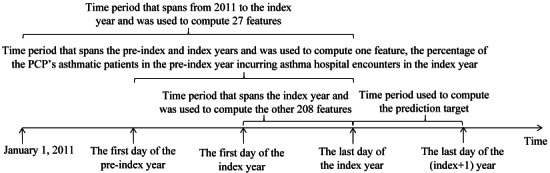
All adult patients with asthma who visited UWM facilities between 2011 and 2018 served as the patient cohort. We considered 234 candidate features. Through a secondary analysis of 82,888 UWM data instances from 2011 to 2018, we built a machine learning model to forecast asthma hospital encounters of patients with asthma in the subsequent 12 months.

RESULTS

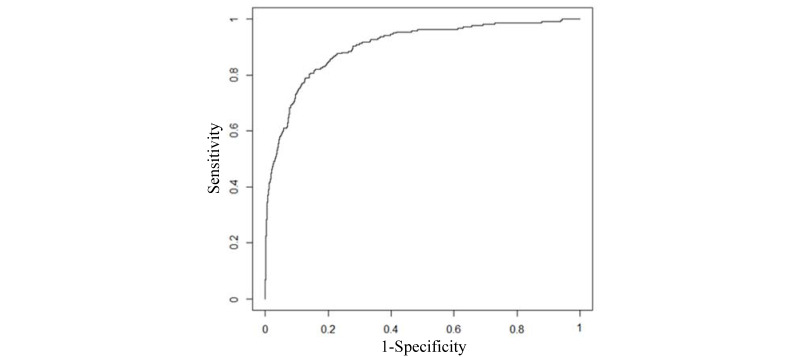
Our UWM model yielded an area under the receiver operating characteristic curve (AUC) of 0.902. When placing the cutoff point for making binary classification at the top 10% (1464/14,644) of patients with asthma with the largest forecasted risk, our UWM model yielded an accuracy of 90.6% (13,268/14,644), a sensitivity of 70.2% (153/218), and a specificity of 90.91% (13,115/14,426).

CONCLUSIONS

Our modeling strategy showed excellent generalizability to the UWM, leading to a model with an AUC that is higher than all of the AUCs previously reported in the literature for forecasting asthma hospital encounters. After further optimization, our model could be used to facilitate the efficient and effective allocation of asthma care management resources to improve outcomes.

INTERNATIONAL REGISTERED REPORT IDENTIFIER (IRRID): RR2-10.2196/resprot.5039.

摘要

背景

哮喘影响着很大一部分人口,每年导致大量涉及住院和急诊科就诊的医院接触。为了减少此类接触的数量,许多医疗保健系统和健康计划部署了预测模型,以前瞻性地识别高危患者,并为他们提供预防保健的护理管理服务。然而,以前的模型在很好地实现这一目的方面没有足够的准确性。采用检查许多候选特征的建模策略,我们构建了一个新的机器学习模型,以预测山间医疗保健公司(一个非学术性医疗保健系统)中哮喘患者未来的哮喘医院接触情况。该模型比以前发表的模型更准确。然而,尚不清楚我们的建模策略在学术性医疗保健系统中的泛化程度如何,学术性医疗保健系统的患者构成与山间医疗保健公司不同。

目的

本研究旨在评估我们的建模策略对华盛顿大学医学中心(UWM,一个学术性医疗保健系统)的泛化性。

方法

2011年至2018年间访问UWM设施的所有成年哮喘患者作为患者队列。我们考虑了234个候选特征。通过对2011年至2018年的82888个UWM数据实例进行二次分析,我们构建了一个机器学习模型,以预测哮喘患者在随后12个月内的哮喘医院接触情况。

结果

我们的UWM模型在受试者工作特征曲线(AUC)下的面积为0.902。当将二元分类的截止点设置为预测风险最大的哮喘患者中的前10%(1464/14644)时,我们的UWM模型的准确率为90.6%(13268/14644),敏感性为70.2%(153/218),特异性为90.91%(13115/14426)。

结论

我们的建模策略对UWM显示出极好的泛化性,产生了一个AUC高于文献中先前报道的所有预测哮喘医院接触情况的AUC的模型。经过进一步优化,我们的模型可用于促进哮喘护理管理资源的高效有效分配,以改善结果。

国际注册报告识别码(IRRID):RR2-10.2196/resprot.5039。
https://cdn.ncbi.nlm.nih.gov/pmc/blobs/e872/8087967/65f3b1041920/jmir_v23i4e22796_fig2.jpg
https://cdn.ncbi.nlm.nih.gov/pmc/blobs/e872/8087967/1928db3f1fc4/jmir_v23i4e22796_fig1.jpg
https://cdn.ncbi.nlm.nih.gov/pmc/blobs/e872/8087967/65f3b1041920/jmir_v23i4e22796_fig2.jpg
https://cdn.ncbi.nlm.nih.gov/pmc/blobs/e872/8087967/1928db3f1fc4/jmir_v23i4e22796_fig1.jpg
https://cdn.ncbi.nlm.nih.gov/pmc/blobs/e872/8087967/65f3b1041920/jmir_v23i4e22796_fig2.jpg

相似文献

1
Forecasting Future Asthma Hospital Encounters of Patients With Asthma in an Academic Health Care System: Predictive Model Development and Secondary Analysis Study.预测学术医疗保健系统中哮喘患者未来的哮喘住院情况:预测模型开发与二次分析研究
J Med Internet Res. 2021 Apr 16;23(4):e22796. doi: 10.2196/22796.
2
Developing a Predictive Model for Asthma-Related Hospital Encounters in Patients With Asthma in a Large, Integrated Health Care System: Secondary Analysis.在一个大型综合医疗保健系统中,为哮喘患者的哮喘相关住院治疗开发预测模型:二次分析。
JMIR Med Inform. 2020 Nov 9;8(11):e22689. doi: 10.2196/22689.
3
Developing a Model to Predict Hospital Encounters for Asthma in Asthmatic Patients: Secondary Analysis.开发预测哮喘患者哮喘住院情况的模型:二次分析
JMIR Med Inform. 2020 Jan 21;8(1):e16080. doi: 10.2196/16080.
4
Generalizability of an Automatic Explanation Method for Machine Learning Prediction Results on Asthma-Related Hospital Visits in Patients With Asthma: Quantitative Analysis.用于哮喘患者相关住院就诊的机器学习预测结果的自动解释方法的可推广性:定量分析。
J Med Internet Res. 2021 Apr 15;23(4):e24153. doi: 10.2196/24153.
5
Error and Timeliness Analysis for Using Machine Learning to Predict Asthma Hospital Visits: Retrospective Cohort Study.使用机器学习预测哮喘患者住院情况的误差与及时性分析:回顾性队列研究
JMIR Med Inform. 2022 Jun 8;10(6):e38220. doi: 10.2196/38220.
6
Ranking Rule-Based Automatic Explanations for Machine Learning Predictions on Asthma Hospital Encounters in Patients With Asthma: Retrospective Cohort Study.基于排名规则的哮喘患者哮喘医院就诊机器学习预测自动解释:回顾性队列研究
JMIR Med Inform. 2021 Aug 11;9(8):e28287. doi: 10.2196/28287.
7
Predicting Continuity of Asthma Care Using a Machine Learning Model: Retrospective Cohort Study.使用机器学习模型预测哮喘护理的连续性:回顾性队列研究。
Int J Environ Res Public Health. 2022 Jan 22;19(3):1237. doi: 10.3390/ijerph19031237.
8
Developing a Machine Learning Model to Predict Severe Chronic Obstructive Pulmonary Disease Exacerbations: Retrospective Cohort Study.开发机器学习模型预测严重慢性阻塞性肺疾病恶化:回顾性队列研究。
J Med Internet Res. 2022 Jan 6;24(1):e28953. doi: 10.2196/28953.
9
Testing the Generalizability of an Automated Method for Explaining Machine Learning Predictions on Asthma Patients' Asthma Hospital Visits to an Academic Healthcare System.测试一种自动方法的通用性,该方法用于解释机器学习对哮喘患者哮喘住院情况的预测,并应用于一个学术医疗系统。
IEEE Access. 2020;8:195971-195979. doi: 10.1109/access.2020.3032683. Epub 2020 Oct 21.
10
Automatically Explaining Machine Learning Prediction Results on Asthma Hospital Visits in Patients With Asthma: Secondary Analysis.自动解释机器学习对哮喘患者哮喘住院就诊情况的预测结果:二次分析
JMIR Med Inform. 2020 Dec 31;8(12):e21965. doi: 10.2196/21965.

引用本文的文献

1
Artificial Intelligence in the Management of Asthma: A Review of a New Frontier in Patient Care.人工智能在哮喘管理中的应用:患者护理新前沿综述
J Asthma Allergy. 2025 Aug 16;18:1179-1191. doi: 10.2147/JAA.S535264. eCollection 2025.
2
Opportunities and challenges with artificial intelligence in allergy and immunology: a bibliometric study.人工智能在过敏与免疫学领域的机遇与挑战:一项文献计量学研究
Front Med (Lausanne). 2025 Apr 9;12:1523902. doi: 10.3389/fmed.2025.1523902. eCollection 2025.
3
Predicting Asthma Exacerbations Using Machine Learning Models.

本文引用的文献

1
Developing a Predictive Model for Asthma-Related Hospital Encounters in Patients With Asthma in a Large, Integrated Health Care System: Secondary Analysis.在一个大型综合医疗保健系统中,为哮喘患者的哮喘相关住院治疗开发预测模型:二次分析。
JMIR Med Inform. 2020 Nov 9;8(11):e22689. doi: 10.2196/22689.
2
Asthma Exacerbation Prediction and Risk Factor Analysis Based on a Time-Sensitive, Attentive Neural Network: Retrospective Cohort Study.基于时敏、关注的神经网络的哮喘恶化预测和风险因素分析:回顾性队列研究。
J Med Internet Res. 2020 Jul 31;22(7):e16981. doi: 10.2196/16981.
3
Developing a Model to Predict Hospital Encounters for Asthma in Asthmatic Patients: Secondary Analysis.
使用机器学习模型预测哮喘急性发作
Adv Ther. 2025 Jan;42(1):362-374. doi: 10.1007/s12325-024-03053-y. Epub 2024 Nov 18.
4
Machine Learning-Based Asthma Attack Prediction Models From Routinely Collected Electronic Health Records: Systematic Scoping Review.基于机器学习的常规收集电子健康记录中的哮喘发作预测模型:系统综述
JMIR AI. 2023 Dec 7;2:e46717. doi: 10.2196/46717.
5
A Roadmap for Using Causal Inference and Machine Learning to Personalize Asthma Medication Selection.使用因果推断和机器学习实现哮喘药物个性化选择的路线图。
JMIR Med Inform. 2024 Apr 17;12:e56572. doi: 10.2196/56572.
6
Primary Care Asthma Attack Prediction Models for Adults: A Systematic Review of Reported Methodologies and Outcomes.成人原发性哮喘发作预测模型:对报告方法和结果的系统评价
J Asthma Allergy. 2024 Mar 14;17:181-194. doi: 10.2147/JAA.S445450. eCollection 2024.
7
Machine Learning Approaches to Predict Asthma Exacerbations: A Narrative Review.预测哮喘急性发作的机器学习方法:一篇叙述性综述。
Adv Ther. 2024 Feb;41(2):534-552. doi: 10.1007/s12325-023-02743-3. Epub 2023 Dec 19.
8
Machine learning for prediction of asthma exacerbations among asthmatic patients: a systematic review and meta-analysis.机器学习在预测哮喘患者哮喘加重中的应用:系统评价和荟萃分析。
BMC Pulm Med. 2023 Jul 28;23(1):278. doi: 10.1186/s12890-023-02570-w.
9
Accurate classification of lung nodules on CT images using the TransUnet.基于 TransUnet 的 CT 图像肺结节精确分类
Front Public Health. 2022 Dec 5;10:1060798. doi: 10.3389/fpubh.2022.1060798. eCollection 2022.
10
A Catalogue of Machine Learning Algorithms for Healthcare Risk Predictions.医疗保健风险预测的机器学习算法目录。
Sensors (Basel). 2022 Nov 8;22(22):8615. doi: 10.3390/s22228615.
开发预测哮喘患者哮喘住院情况的模型:二次分析
JMIR Med Inform. 2020 Jan 21;8(1):e16080. doi: 10.2196/16080.
4
Using Temporal Features to Provide Data-Driven Clinical Early Warnings for Chronic Obstructive Pulmonary Disease and Asthma Care Management: Protocol for a Secondary Analysis.利用时间特征为慢性阻塞性肺疾病和哮喘护理管理提供数据驱动的临床早期预警:二次分析方案
JMIR Res Protoc. 2019 Jun 6;8(6):e13783. doi: 10.2196/13783.
5
A roadmap for semi-automatically extracting predictive and clinically meaningful temporal features from medical data for predictive modeling.用于预测建模的从医学数据中半自动提取预测性和临床意义的时间特征的路线图。
Glob Transit. 2019;1:61-82. doi: 10.1016/j.glt.2018.11.001. Epub 2019 Mar 27.
6
Identifying Patients Who Are Likely to Receive Most of Their Care From a Specific Health Care System: Demonstration via Secondary Analysis.识别可能主要从特定医疗保健系统接受大部分护理的患者:通过二次分析进行论证
JMIR Med Inform. 2018 Nov 5;6(4):e12241. doi: 10.2196/12241.
7
Machine Learning Algorithms for Liquid Crystal-Based Sensors.基于液晶的传感器的机器学习算法。
ACS Sens. 2018 Nov 26;3(11):2237-2245. doi: 10.1021/acssensors.8b00100. Epub 2018 Oct 19.
8
Exacerbations in Adults with Asthma: A Systematic Review and External Validation of Prediction Models.成人哮喘加重:预测模型的系统评价和外部验证。
J Allergy Clin Immunol Pract. 2018 Nov-Dec;6(6):1942-1952.e15. doi: 10.1016/j.jaip.2018.02.004. Epub 2018 Feb 15.
9
Common pitfalls in statistical analysis: Understanding the properties of diagnostic tests - Part 1.统计分析中的常见陷阱:理解诊断试验的特性 - 第1部分。
Perspect Clin Res. 2018 Jan-Mar;9(1):40-43. doi: 10.4103/picr.PICR_170_17.
10
Comparing Statewide and Single-center Data to Predict High-frequency Emergency Department Utilization Among Patients With Asthma Exacerbation.比较全州和单中心数据,预测哮喘加重患者高频急诊利用情况。
Acad Emerg Med. 2018 Jun;25(6):657-667. doi: 10.1111/acem.13342. Epub 2017 Dec 11.