Department of Biomedical Informatics and Medical Education, University of Washington, Seattle, WA, United States.
Medical Service, San Francisco Veterans Affairs Medical Center, San Francisco, CA, United States.
J Med Internet Res. 2022 Jan 6;24(1):e28953. doi: 10.2196/28953.
Chronic obstructive pulmonary disease (COPD) poses a large burden on health care. Severe COPD exacerbations require emergency department visits or inpatient stays, often cause an irreversible decline in lung function and health status, and account for 90.3% of the total medical cost related to COPD. Many severe COPD exacerbations are deemed preventable with appropriate outpatient care. Current models for predicting severe COPD exacerbations lack accuracy, making it difficult to effectively target patients at high risk for preventive care management to reduce severe COPD exacerbations and improve outcomes.
The aim of this study is to develop a more accurate model to predict severe COPD exacerbations.
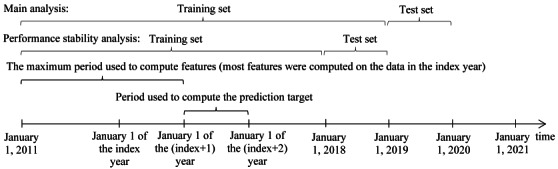
We examined all patients with COPD who visited the University of Washington Medicine facilities between 2011 and 2019 and identified 278 candidate features. By performing secondary analysis on 43,576 University of Washington Medicine data instances from 2011 to 2019, we created a machine learning model to predict severe COPD exacerbations in the next year for patients with COPD.
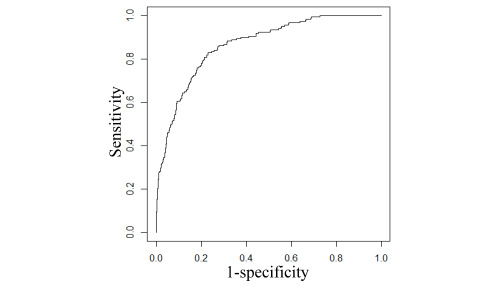
The final model had an area under the receiver operating characteristic curve of 0.866. When using the top 9.99% (752/7529) of the patients with the largest predicted risk to set the cutoff threshold for binary classification, the model gained an accuracy of 90.33% (6801/7529), a sensitivity of 56.6% (103/182), and a specificity of 91.17% (6698/7347).
Our model provided a more accurate prediction of severe COPD exacerbations in the next year compared with prior published models. After further improvement of its performance measures (eg, by adding features extracted from clinical notes), our model could be used in a decision support tool to guide the identification of patients with COPD and at high risk for care management to improve outcomes.
INTERNATIONAL REGISTERED REPORT IDENTIFIER (IRRID): RR2-10.2196/13783.
慢性阻塞性肺疾病(COPD)给医疗保健带来了巨大负担。严重的 COPD 加重需要急诊就诊或住院治疗,通常导致肺功能和健康状况不可逆转地下降,占 COPD 相关总医疗费用的 90.3%。许多严重的 COPD 加重是可以通过适当的门诊护理来预防的。目前预测严重 COPD 加重的模型准确性不足,难以有效针对高风险患者进行预防护理管理,以减少严重 COPD 加重并改善预后。
本研究旨在开发一种更准确的模型来预测严重 COPD 加重。
我们检查了 2011 年至 2019 年期间在华盛顿大学医学中心就诊的所有 COPD 患者,并确定了 278 个候选特征。通过对 2011 年至 2019 年的 43576 个华盛顿大学医学数据实例进行二次分析,我们创建了一个机器学习模型,用于预测 COPD 患者下一年的严重 COPD 加重。
最终模型的接收器工作特征曲线下面积为 0.866。当使用预测风险最大的前 9.99%(752/7529)的患者来设置二进制分类的截止阈值时,该模型的准确率为 90.33%(6801/7529),敏感度为 56.6%(103/182),特异性为 91.17%(6698/7347)。
与之前发表的模型相比,我们的模型对下一年严重 COPD 加重的预测更为准确。在进一步提高其性能指标(例如,通过添加从临床记录中提取的特征)后,我们的模型可以用于决策支持工具,以指导识别 COPD 患者和高风险患者,以进行护理管理,改善预后。
国际注册报告标识符(IRRID):RR2-10.2196/13783。