Department of Bioengineering and Therapeutic Sciences, University of California San Francisco, San Francisco, CA, USA.
Institute for Human Genetics, University of California San Francisco, San Francisco, CA, USA.
Nat Commun. 2021 Apr 16;12(1):2282. doi: 10.1038/s41467-021-22470-z.
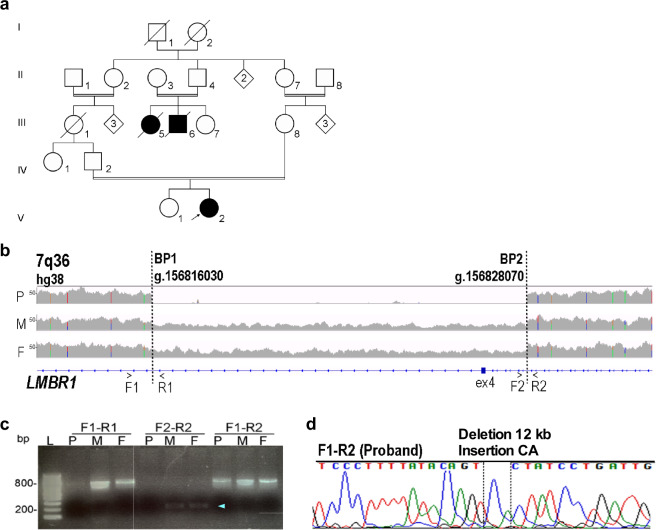
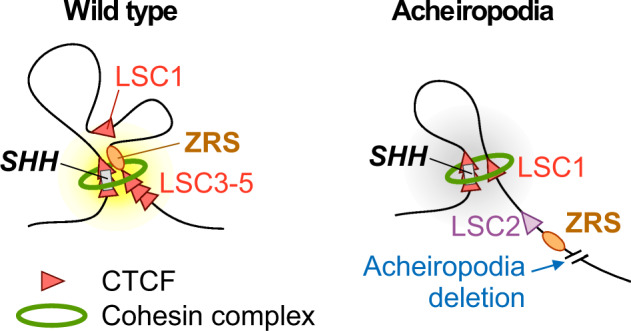
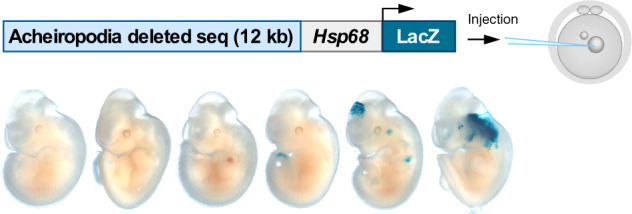
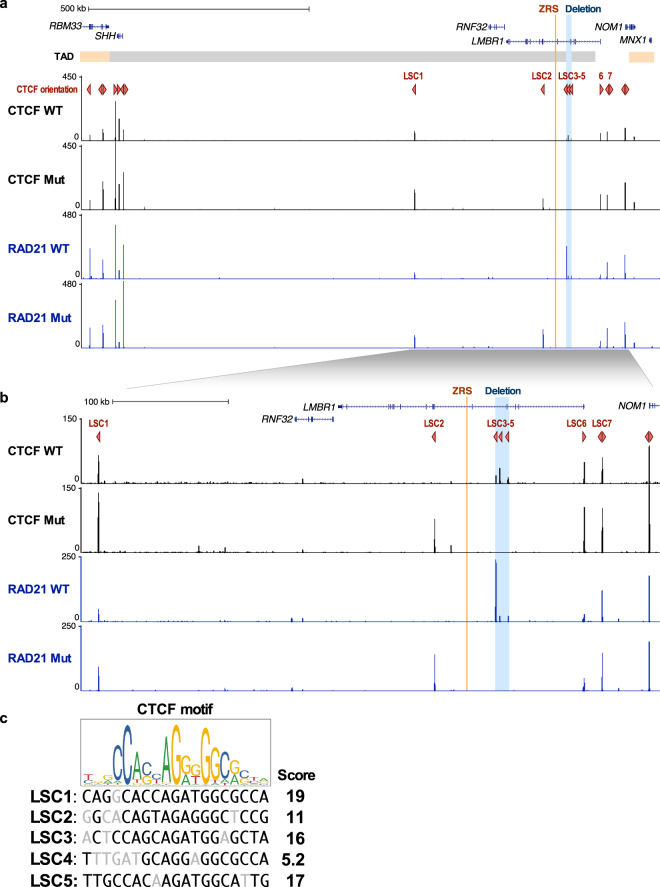
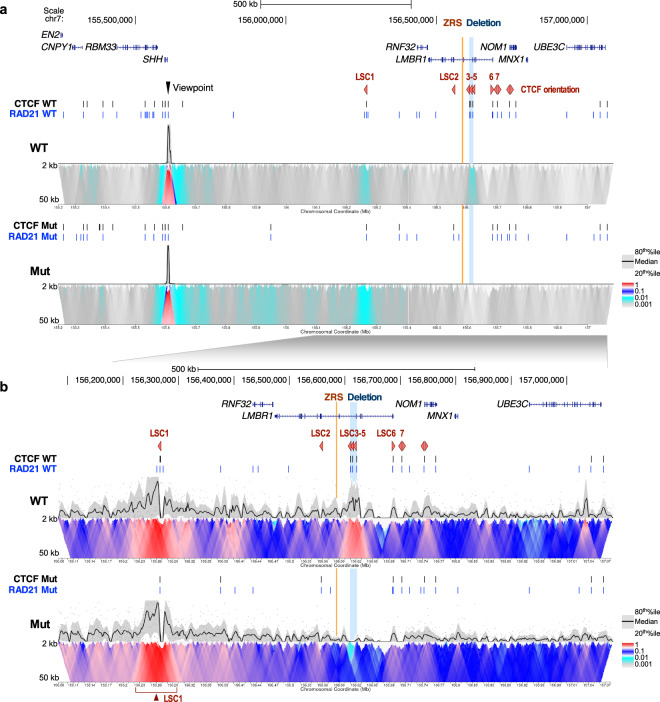
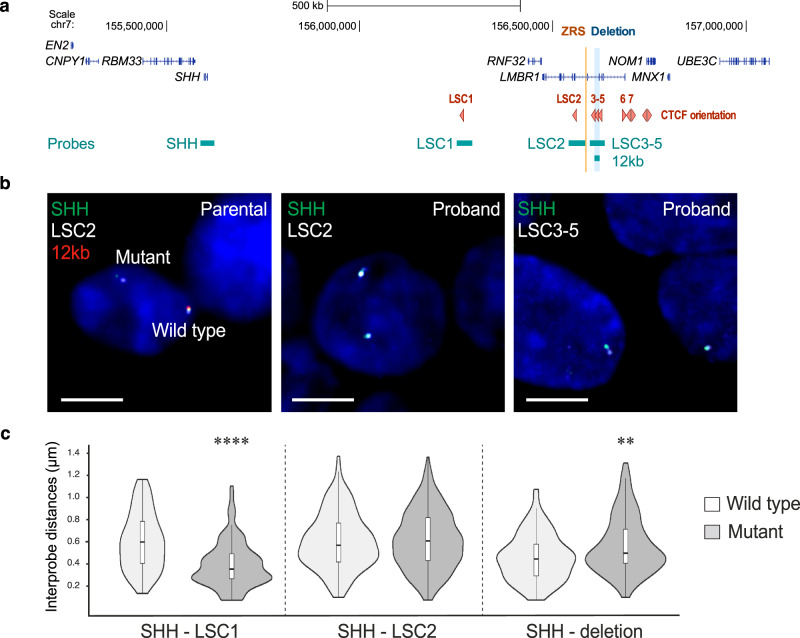
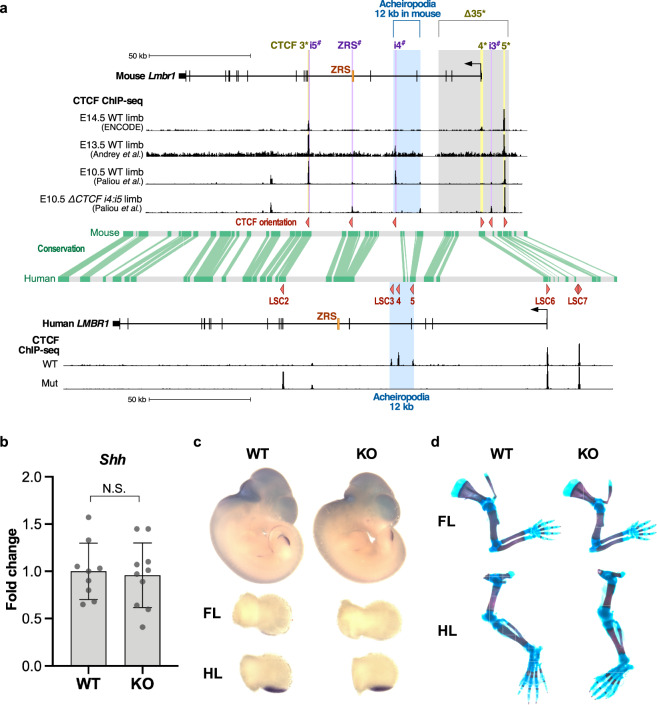
Acheiropodia, congenital limb truncation, is associated with homozygous deletions in the LMBR1 gene around ZRS, an enhancer regulating SHH during limb development. How these deletions lead to this phenotype is unknown. Using whole-genome sequencing, we fine-mapped the acheiropodia-associated region to 12 kb and show that it does not function as an enhancer. CTCF and RAD21 ChIP-seq together with 4C-seq and DNA FISH identify three CTCF sites within the acheiropodia-deleted region that mediate the interaction between the ZRS and the SHH promoter. This interaction is substituted with other CTCF sites centromeric to the ZRS in the disease state. Mouse knockouts of the orthologous 12 kb sequence have no apparent abnormalities, showcasing the challenges in modelling CTCF alterations in animal models due to inherent motif differences between species. Our results show that alterations in CTCF motifs can lead to a Mendelian condition due to altered enhancer-promoter interactions.
先天性肢体缺失(Acheiropodia)与 ZRS 周围 LMBR1 基因的纯合缺失有关,该基因是一个在肢体发育过程中调节 SHH 的增强子。这些缺失如何导致这种表型尚不清楚。我们使用全基因组测序将 acheiropodia 相关区域精细定位到 12kb,并表明它不能作为增强子发挥作用。CTCF 和 RAD21 ChIP-seq 以及 4C-seq 和 DNA FISH 鉴定出 acheiropodia 缺失区域内的三个 CTCF 位点,介导 ZRS 和 SHH 启动子之间的相互作用。在疾病状态下,这种相互作用被 ZRS 着丝粒内的其他 CTCF 位点所取代。与该区域同源的 12kb 序列的小鼠敲除品系没有明显的异常,这表明由于物种之间固有基序差异,在动物模型中模拟 CTCF 改变存在挑战。我们的结果表明,由于增强子-启动子相互作用的改变,CTCF 基序的改变可能导致孟德尔疾病。