Department of Computational Medicine and Bioinformatics, University of Michigan, Ann Arbor, MI, USA.
Department of Human Genetics, University of Michigan, Ann Arbor, MI, USA.
Nat Commun. 2020 Apr 14;11(1):1796. doi: 10.1038/s41467-020-15520-5.
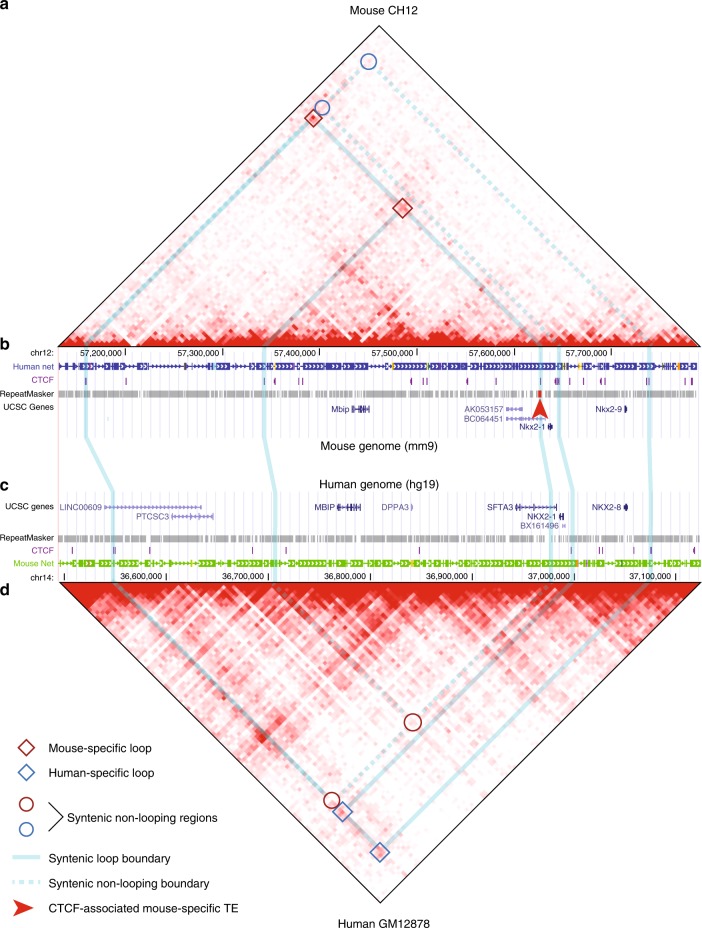
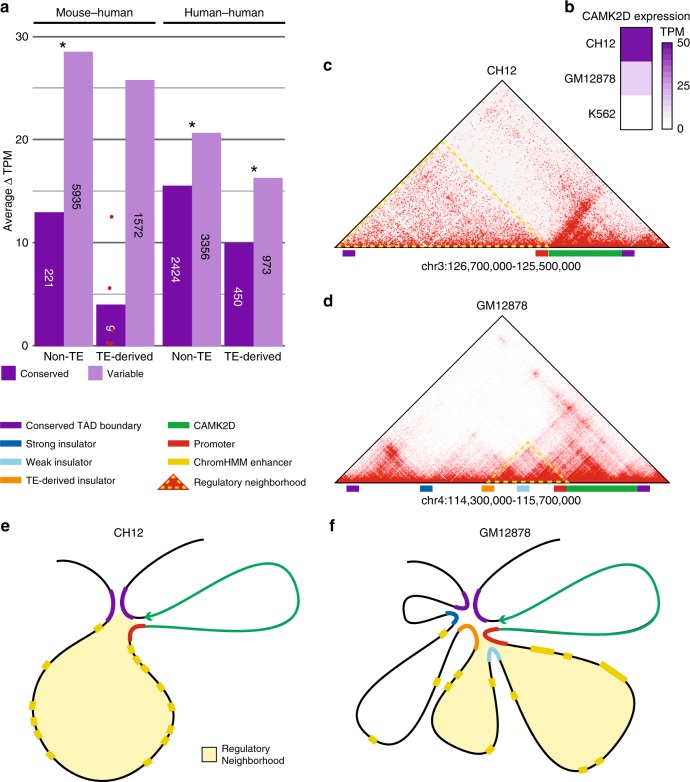
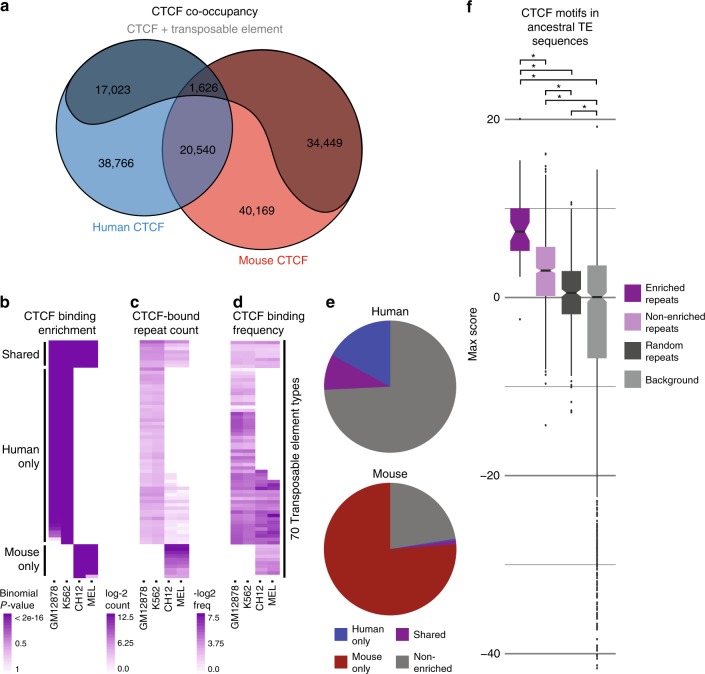
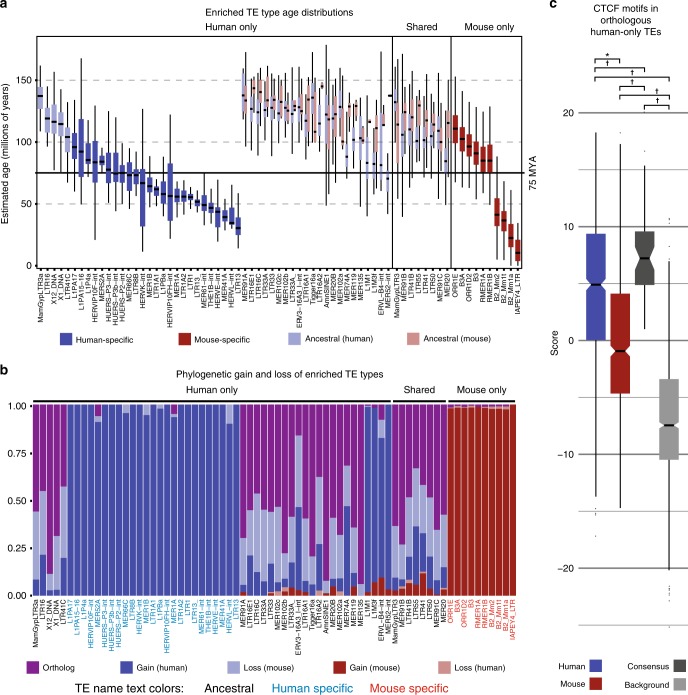
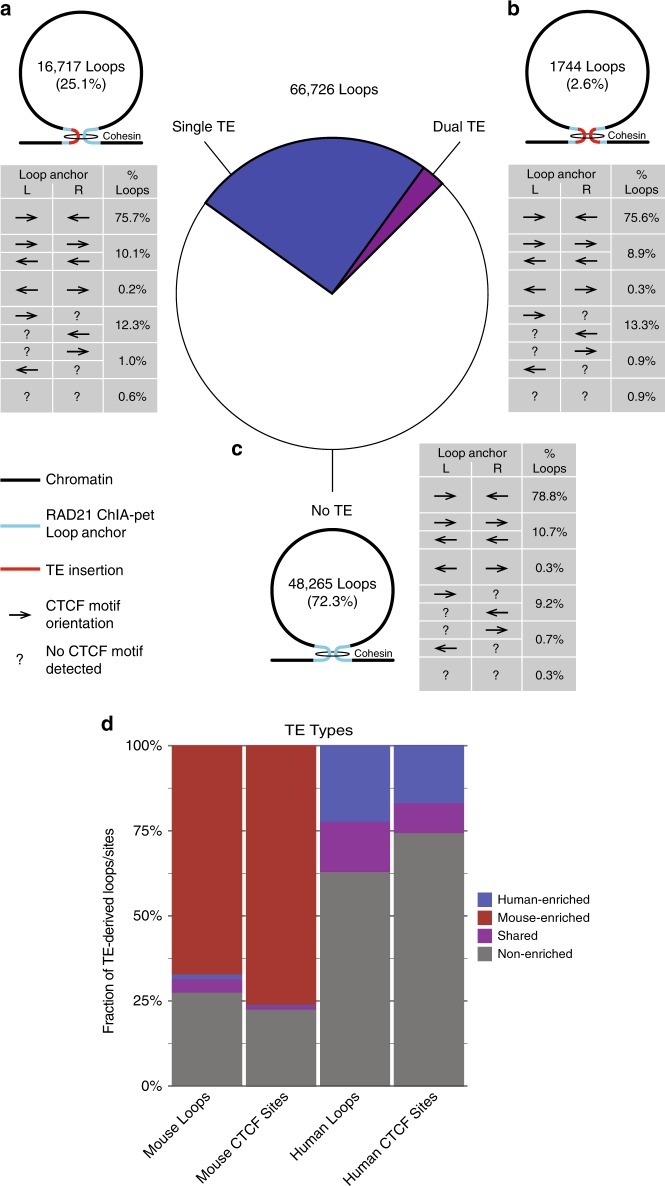
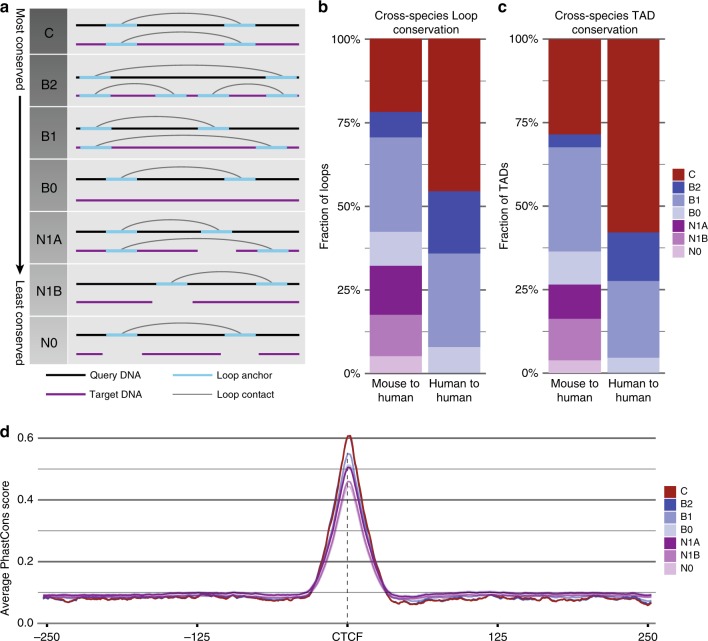
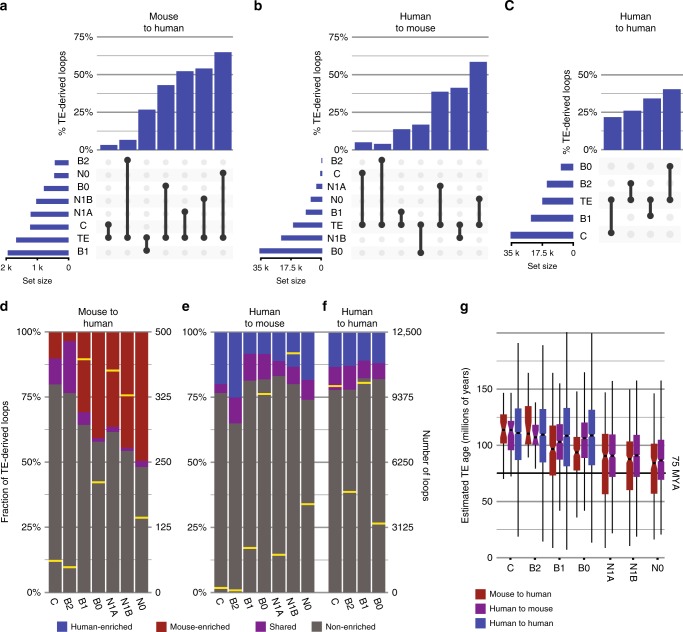
Chromatin looping is important for gene regulation, and studies of 3D chromatin structure across species and cell types have improved our understanding of the principles governing chromatin looping. However, 3D genome evolution and its relationship with natural selection remains largely unexplored. In mammals, the CTCF protein defines the boundaries of most chromatin loops, and variations in CTCF occupancy are associated with looping divergence. While many CTCF binding sites fall within transposable elements (TEs), their contribution to 3D chromatin structural evolution is unknown. Here we report the relative contributions of TE-driven CTCF binding site expansions to conserved and divergent chromatin looping in human and mouse. We demonstrate that TE-derived CTCF binding divergence may explain a large fraction of variable loops. These variable loops contribute significantly to corresponding gene expression variability across cells and species, possibly by refining sub-TAD-scale loop contacts responsible for cell-type-specific enhancer-promoter interactions.
染色质环化对于基因调控很重要,对跨物种和细胞类型的 3D 染色质结构的研究提高了我们对控制染色质环化的原则的理解。然而,3D 基因组进化及其与自然选择的关系在很大程度上仍未得到探索。在哺乳动物中,CTCF 蛋白定义了大多数染色质环的边界,CTCF 占据的变化与环的发散有关。虽然许多 CTCF 结合位点位于转座元件 (TEs) 内,但它们对 3D 染色质结构进化的贡献尚不清楚。在这里,我们报告了 TE 驱动的 CTCF 结合位点扩张对人类和小鼠中保守和发散染色质环化的相对贡献。我们证明,TE 衍生的 CTCF 结合分歧可能解释了很大一部分可变环。这些可变环对细胞和物种之间的相应基因表达变异性有很大贡献,可能是通过细化负责细胞类型特异性增强子-启动子相互作用的亚 TAD 尺度环接触。