Institut de Biologie Intégrative et des Systèmes, Université Laval, Quebec, QC, Canada.
Département de Biologie, Institut de Biologie Intégrative et des Systèmes, Université Laval, Quebec, QC, G1R1V6, Canada.
Sci Rep. 2021 Apr 16;11(1):8413. doi: 10.1038/s41598-021-87906-4.
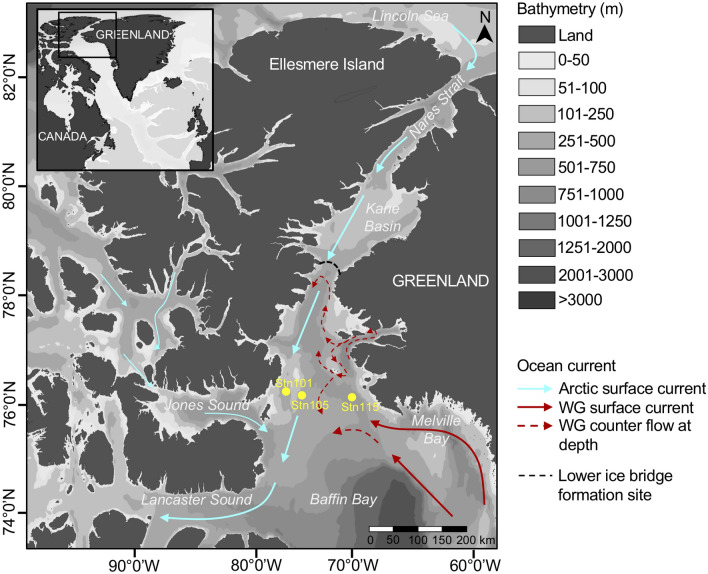
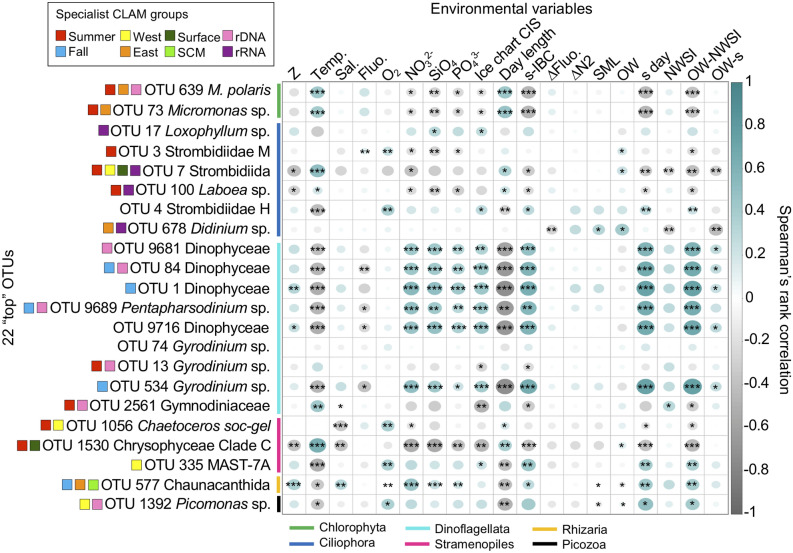
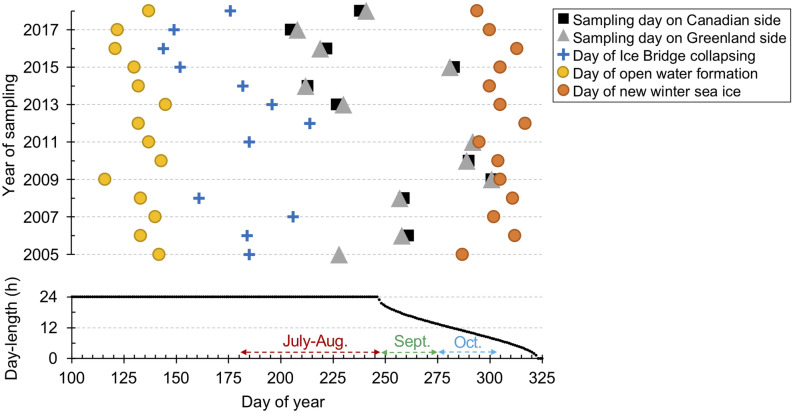
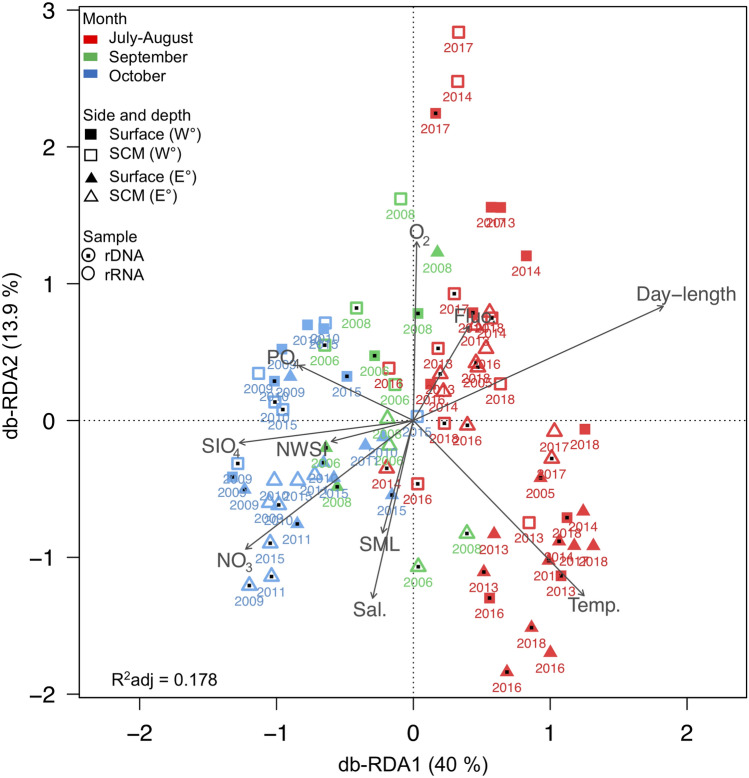
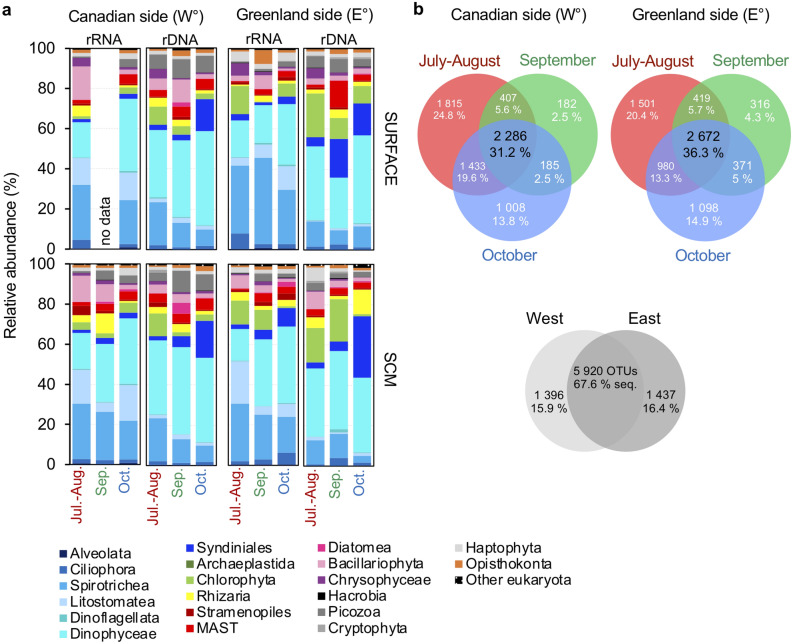
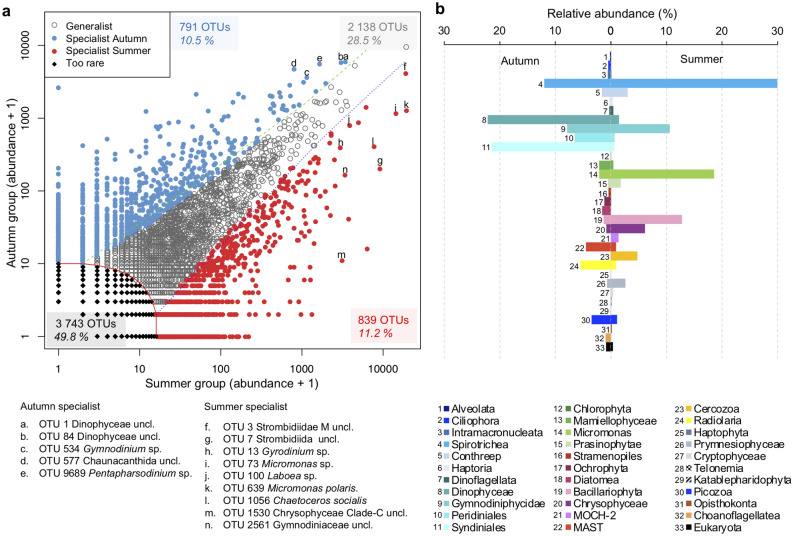
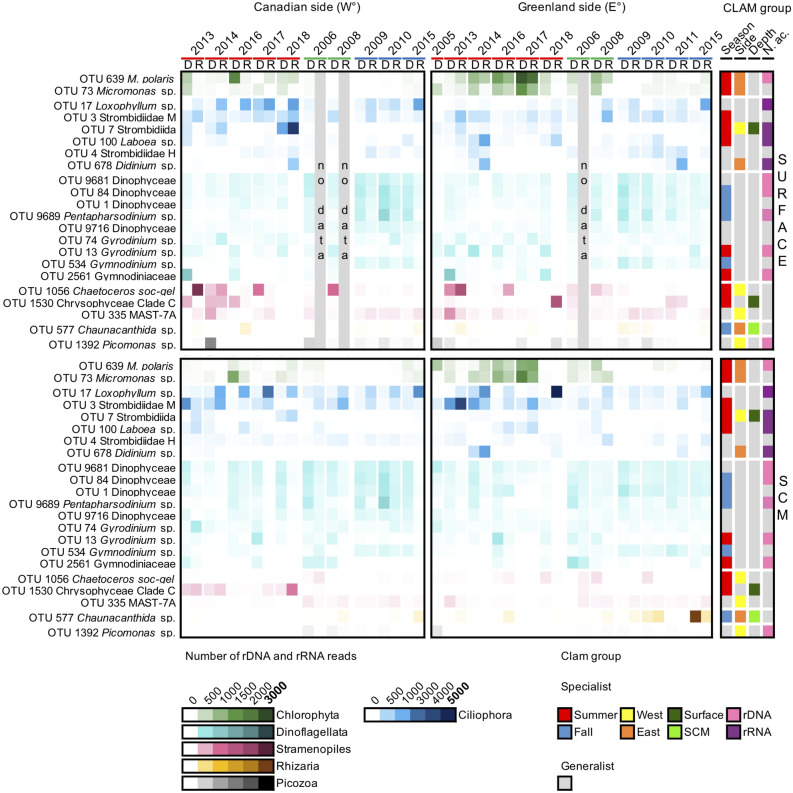
The North Water region, between Greenland and Ellesmere Island, with high populations of marine birds and mammals, is an Arctic icon. Due to climate related changes, seasonal patterns in water column primary production are changing but the implications for the planktonic microbial eukaryote communities that support the ecosystem are unknown. Here we report microbial community phenology in samples collected over 12 years (2005-2018) from July to October and analysed using high throughput 18S rRNA V4 amplicon sequencing. Community composition was tied to seasonality with summer communities more variable than distinct October communities. In summer, sentinel pan-Arctic species, including a diatom in the Chaetoceros socialis-gelidus complex and the picochlorophyte Micromonas polaris dominated phytoplankton and were summer specialists. In autumn, uncultured undescribed open water dinoflagellates were favored, and their ubiquity suggests they are sentinels of arctic autumn conditions. Despite the input of nutrients into surface waters, autumn chlorophyll concentrations remained low, refuting projected scenarios that longer ice-free seasons are synonymous with high autumn production and a diatom dominated bloom. Overall, the summer sentinel microbial taxa are persisting, and a subset oceanic dinoflagellate should be monitored for possible ecosystem shifts as later autumn ice formation becomes prevalent elsewhere.
北极水域,位于格陵兰岛和埃尔斯米尔岛之间,拥有大量的海洋鸟类和哺乳动物,是北极的标志性地区。由于与气候相关的变化,水柱初级生产力的季节性模式正在发生变化,但这对支持生态系统的浮游微生物真核生物群落的影响尚不清楚。在这里,我们报告了在 2005 年至 2018 年的 12 年间从 7 月到 10 月采集的样本中微生物群落物候学的研究结果,这些样本使用高通量 18S rRNA V4 扩增子测序进行了分析。群落组成与季节性有关,夏季群落比 10 月明显的群落更具变异性。在夏季,包括 Chaetoceros socialis-gelidus 复合体中的硅藻和微甲藻 Micromonas polaris 在内的泛北极种作为指示物种,主导着浮游植物,是夏季的专业物种。在秋季,未培养的开放性水甲藻占优势,它们的普遍存在表明它们是北极秋季条件的指示生物。尽管有营养物质输入到地表水,但秋季叶绿素浓度仍然很低,这反驳了预测的假设,即更长的无冰季节等同于高秋季产量和以硅藻为主的水华。总的来说,夏季的指示性微生物类群仍在持续存在,而一组海洋甲藻应该被监测,以了解可能的生态系统变化,因为其他地方的晚秋冰形成变得越来越普遍。