Liu Yuting, Watanabe Mutsumi, Yasukawa Sayuri, Kawamura Yuriko, Aneklaphakij Chaiwat, Fernie Alisdair R, Tohge Takayuki
Graduate School of Biological Science, Nara Institute of Science and Technology (NAIST), Ikoma, Japan.
Department of Pharmacognosy, Faculty of Pharmacy, Mahidol University, Bangkok, Thailand.
Front Plant Sci. 2021 Mar 31;12:640141. doi: 10.3389/fpls.2021.640141. eCollection 2021.
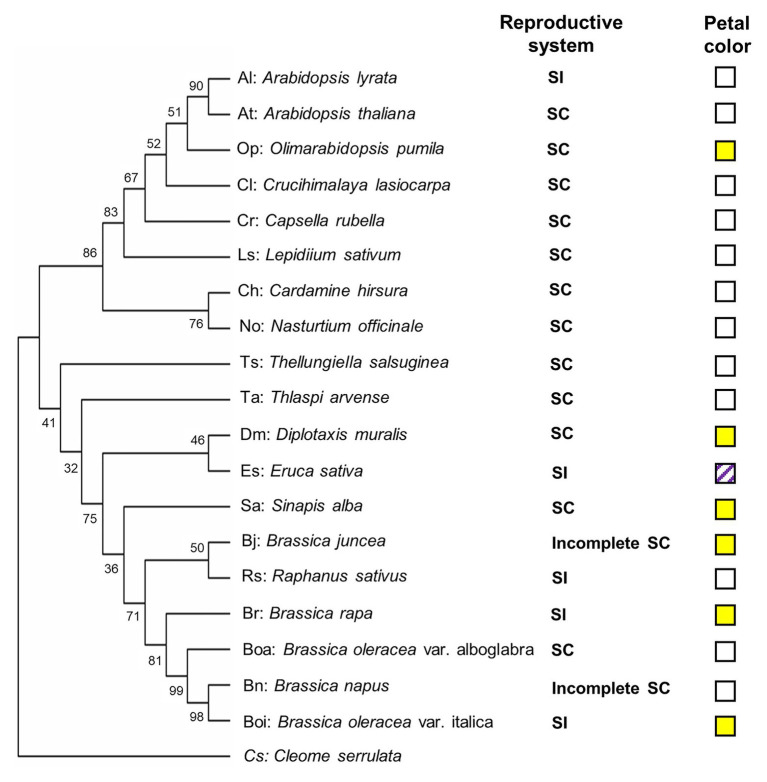
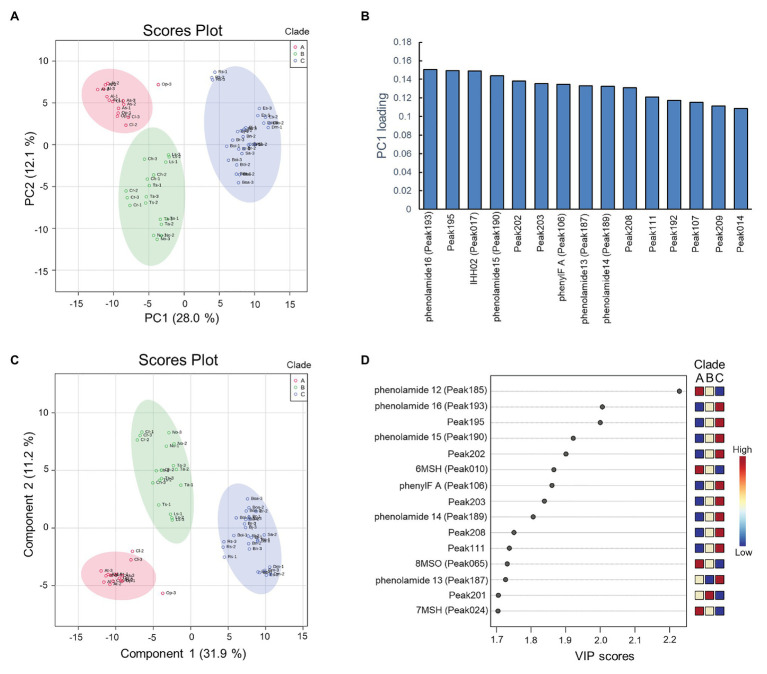
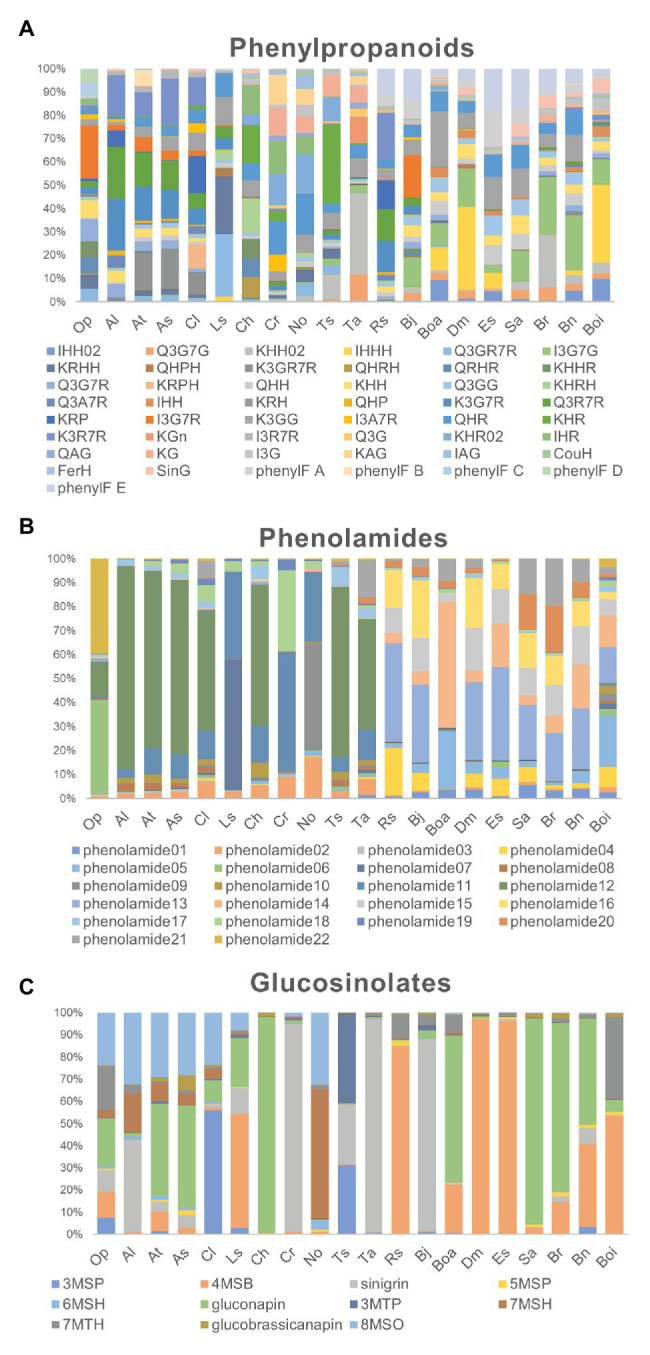
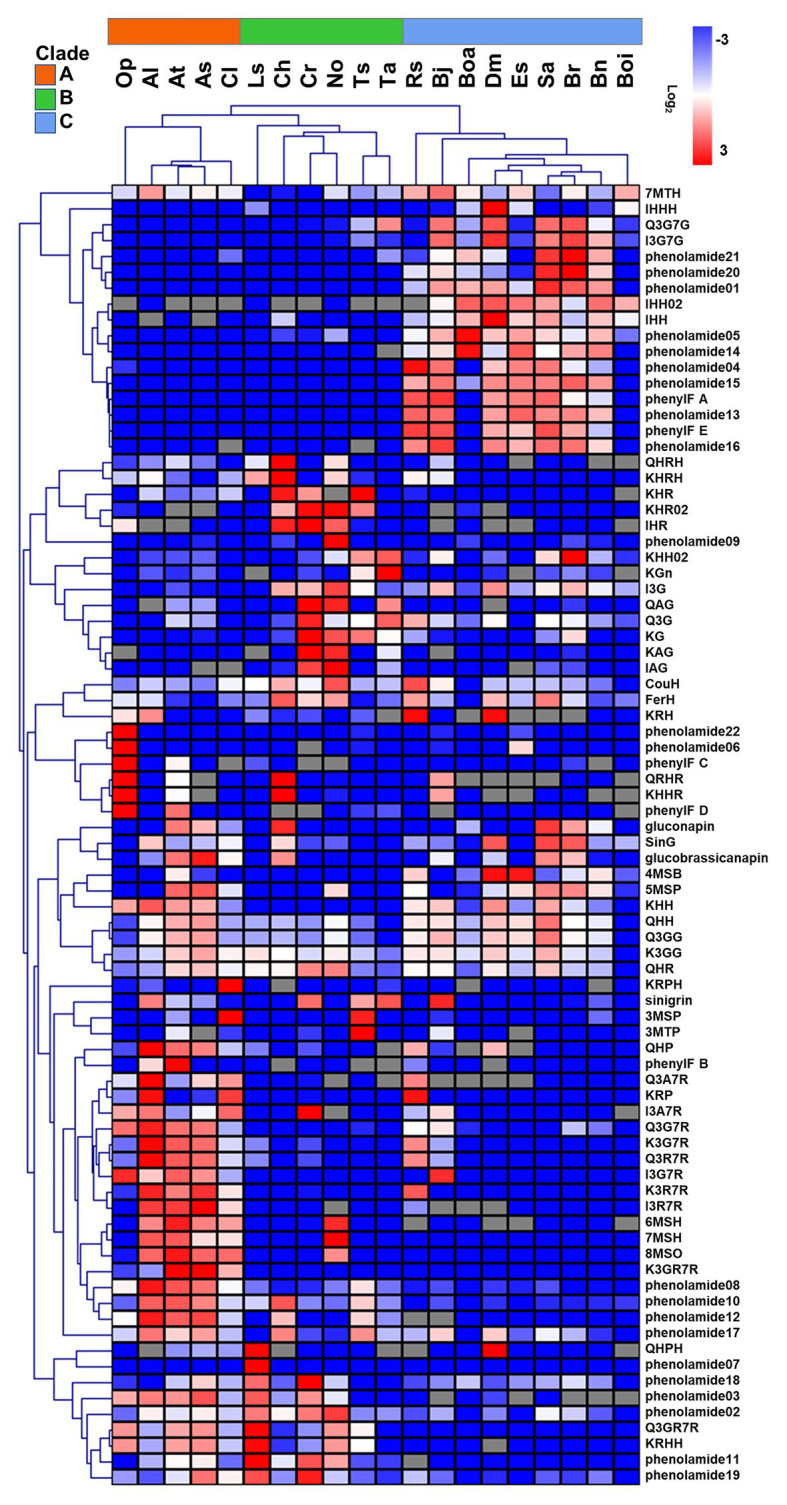
Plants produce a variety of floral specialized (secondary) metabolites with roles in several physiological functions, including light-protection, attraction of pollinators, and protection against herbivores. Pigments and volatiles synthesized in the petal have been focused on and characterized as major chemical factors influencing pollination. Recent advances in plant metabolomics have revealed that the major floral specialized metabolites found in land plant species are hydroxycinnamates, phenolamides, and flavonoids albeit these are present in various quantities and encompass diverse chemical structures in different species. Here, we analyzed numerous floral specialized metabolites in 20 different Brassicaceae genotypes encompassing both different species and in the case of crop species different cultivars including self-compatible (SC) and self-incompatible (SI) species by liquid chromatography-mass spectrometry (LC-MS). Of the 228 metabolites detected in flowers among 20 Brassicaceae species, 15 metabolite peaks including one phenylacyl-flavonoids and five phenolamides were detected and annotated as key metabolites to distinguish SC and SI plant species, respectively. Our results provide a family-wide metabolic framework and delineate signatures for compatible and incompatible genotypes thereby providing insight into evolutionary aspects of floral metabolism in Brassicaceae species.
植物产生多种花的特化(次生)代谢产物,这些产物在多种生理功能中发挥作用,包括光保护、吸引传粉者以及抵御食草动物。花瓣中合成的色素和挥发物已受到关注,并被确定为影响授粉的主要化学因素。植物代谢组学的最新进展表明,陆地植物物种中发现的主要花特化代谢产物是羟基肉桂酸酯、酚酰胺和类黄酮,尽管它们在不同物种中的含量不同,化学结构也多种多样。在这里,我们通过液相色谱-质谱联用(LC-MS)分析了20种不同十字花科基因型中的大量花特化代谢产物,这些基因型涵盖了不同的物种,对于作物物种还包括不同的品种,其中既有自交亲和(SC)物种,也有自交不亲和(SI)物种。在20种十字花科物种的花朵中检测到的228种代谢产物中,检测并注释了15个代谢物峰,其中包括一种苯基酰基类黄酮和五种酚酰胺,它们分别是区分SC和SI植物物种的关键代谢产物。我们的结果提供了一个全家族范围的代谢框架,并描绘了亲和与不亲和基因型的特征,从而深入了解十字花科物种花代谢的进化方面。