Ngo Mai T, Harley Brendan A C
Department of Chemical and Biomolecular Engineering, University of Illinois at Urbana-Champaign, Urbana, Illinois 61801, USA.
APL Bioeng. 2021 Apr 8;5(2):020902. doi: 10.1063/5.0043338. eCollection 2021 Jun.
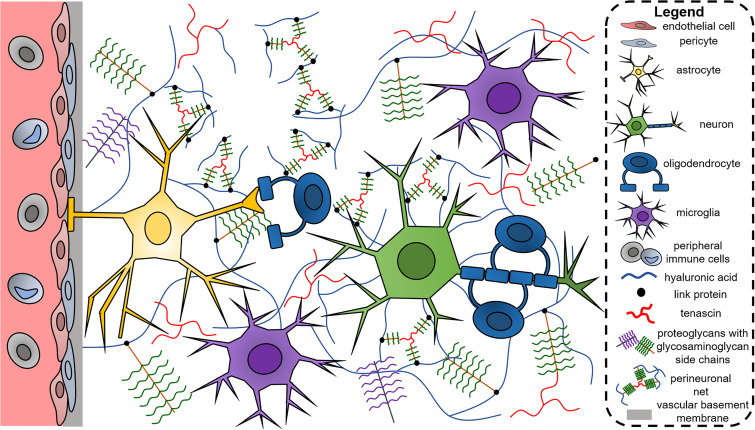
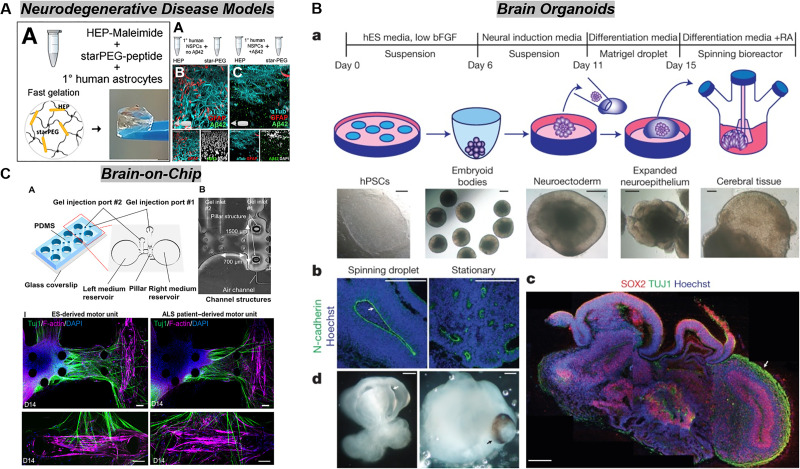
Neurological disorders including traumatic brain injury, stroke, primary and metastatic brain tumors, and neurodegenerative diseases affect millions of people worldwide. Disease progression is accompanied by changes in the brain microenvironment, but how these shifts in biochemical, biophysical, and cellular properties contribute to repair outcomes or continued degeneration is largely unknown. Tissue engineering approaches can be used to develop models to understand how the brain microenvironment contributes to pathophysiological processes linked to neurological disorders and may also offer constructs that promote healing and regeneration . In this Perspective, we summarize features of the brain microenvironment in normal and pathophysiological states and highlight strategies to mimic this environment to model disease, investigate neural stem cell biology, and promote regenerative healing. We discuss current limitations and resulting opportunities to develop tissue engineering tools that more faithfully recapitulate the aspects of the brain microenvironment for both and applications.
包括创伤性脑损伤、中风、原发性和转移性脑肿瘤以及神经退行性疾病在内的神经系统疾病影响着全球数百万人。疾病进展伴随着脑微环境的变化,但这些生物化学、生物物理和细胞特性的改变如何影响修复结果或持续退化在很大程度上尚不清楚。组织工程方法可用于开发模型,以了解脑微环境如何促成与神经系统疾病相关的病理生理过程,还可能提供促进愈合和再生的构建体。在这篇观点文章中,我们总结了正常和病理生理状态下脑微环境的特征,并强调了模拟这种环境以建立疾病模型、研究神经干细胞生物学以及促进再生愈合的策略。我们讨论了当前的局限性以及由此产生的机会,以开发能够更忠实地概括脑微环境各个方面的组织工程工具,用于基础研究和临床应用。