Instituto de Biologia, Universidade Federal da Bahia, Salvador, Bahia, 40170-115, Brazil.
Milner Centre for Evolution and Department of Biology and Biochemistry, University of Bath, Claverton Down, Bath, BA2 7AY, UK.
Mol Biol Evol. 2021 Jul 29;38(8):3247-3266. doi: 10.1093/molbev/msab099.
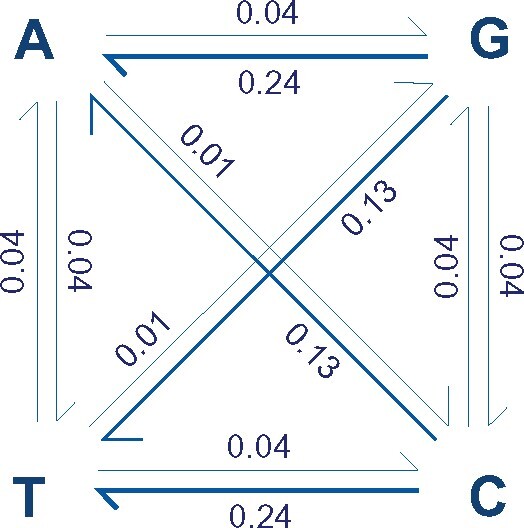
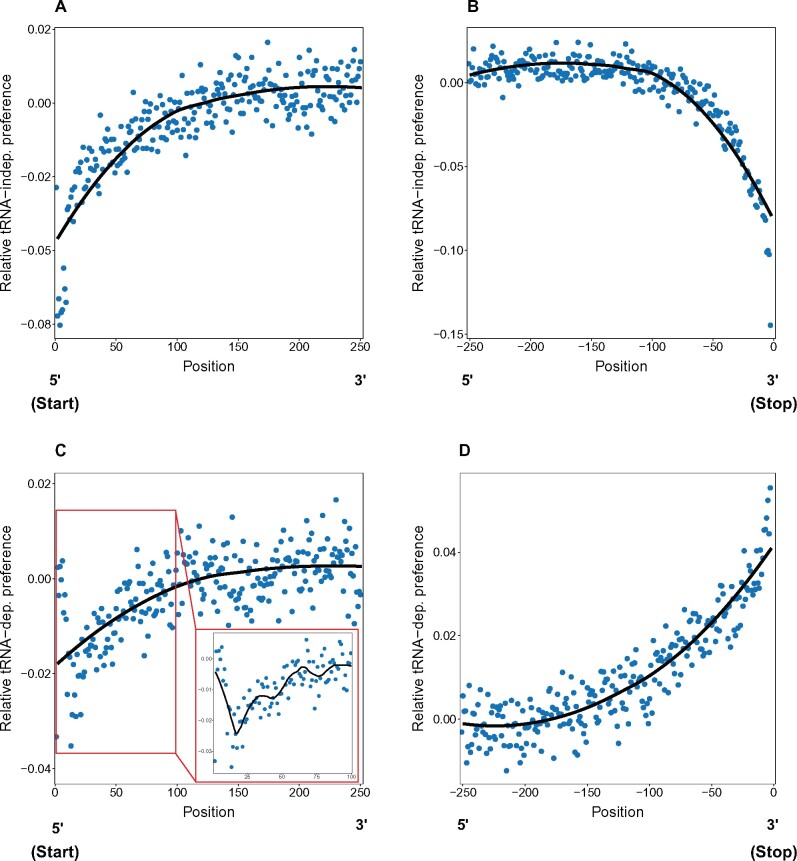
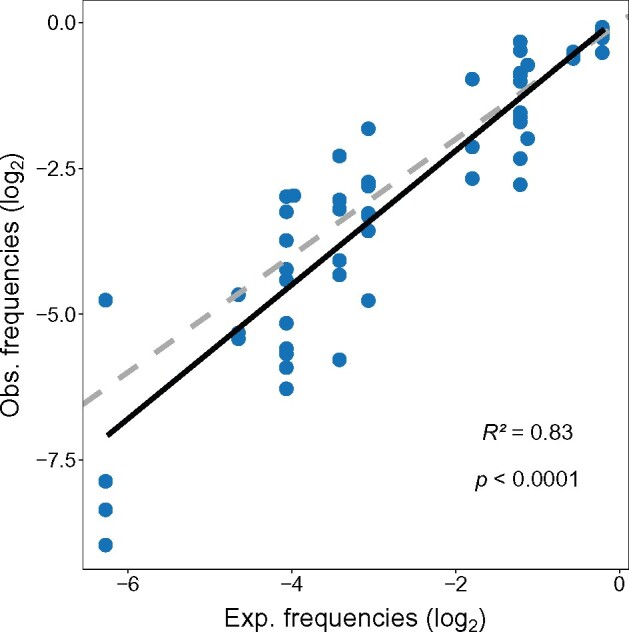
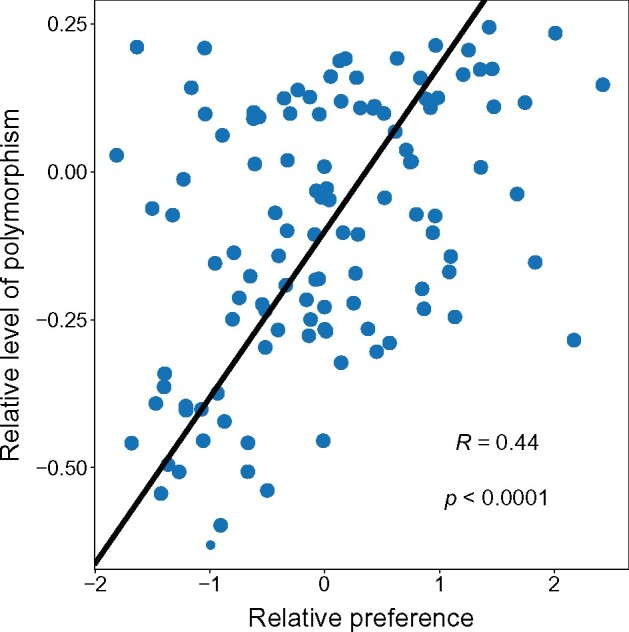
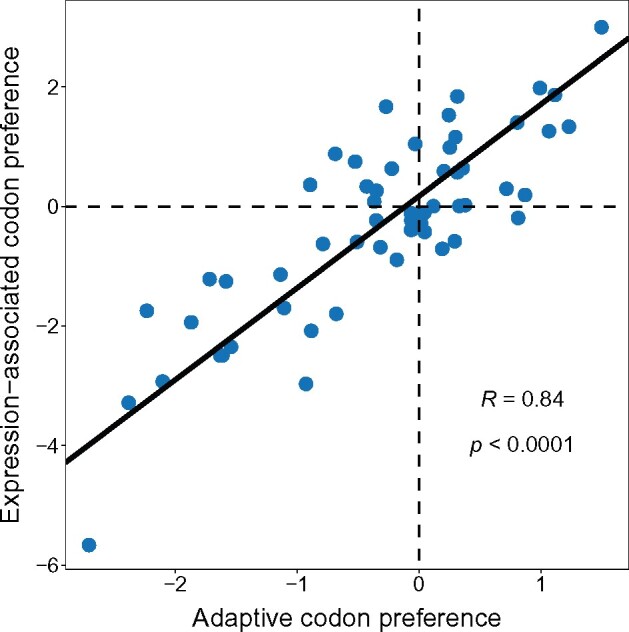
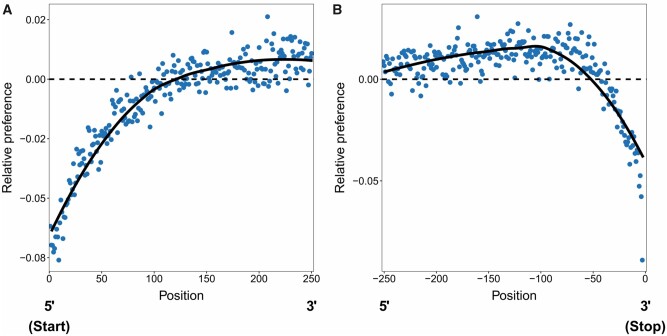
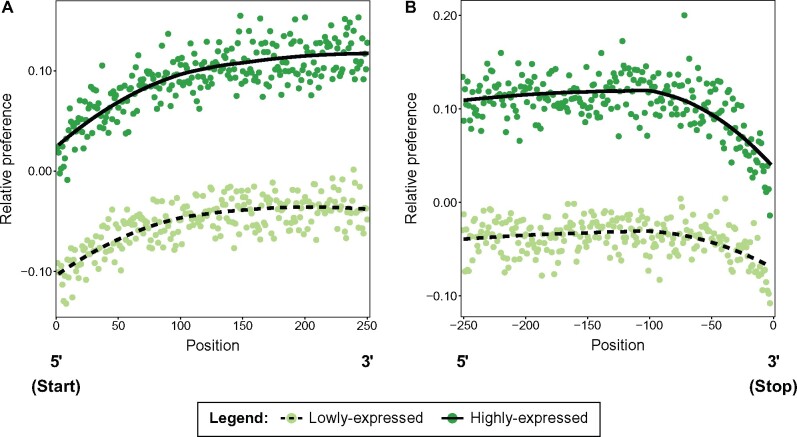
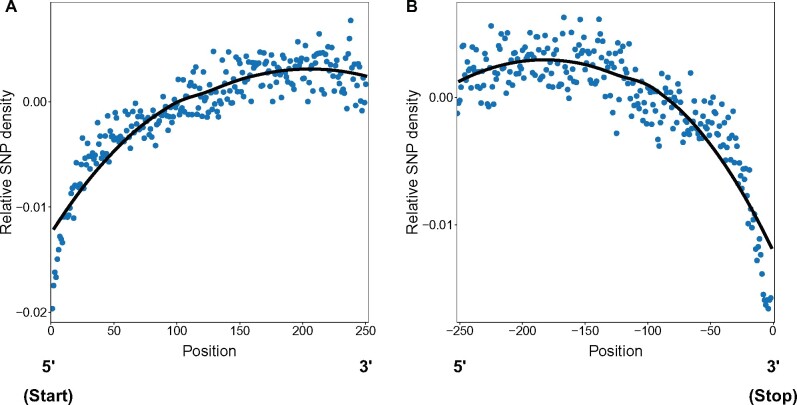
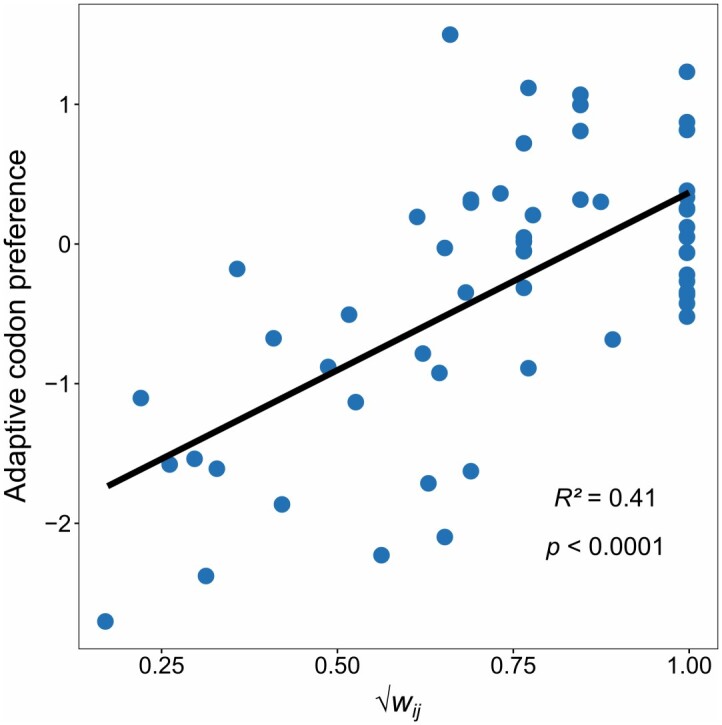
Alternative synonymous codons are often used at unequal frequencies. Classically, studies of such codon usage bias (CUB) attempted to separate the impact of neutral from selective forces by assuming that deviations from a predicted neutral equilibrium capture selection. However, GC-biased gene conversion (gBGC) can also cause deviation from a neutral null. Alternatively, selection has been inferred from CUB in highly expressed genes, but the accuracy of this approach has not been extensively tested, and gBGC can interfere with such extrapolations (e.g., if expression and gene conversion rates covary). It is therefore critical to examine deviations from a mutational null in a species with no gBGC. To achieve this goal, we implement such an analysis in the highly AT rich genome of Dictyostelium discoideum, where we find no evidence of gBGC. We infer neutral CUB under mutational equilibrium to quantify "adaptive codon preference," a nontautologous genome wide quantitative measure of the relative selection strength driving CUB. We observe signatures of purifying selection consistent with selection favoring adaptive codon preference. Preferred codons are not GC rich, underscoring the independence from gBGC. Expression-associated "preference" largely matches adaptive codon preference but does not wholly capture the influence of selection shaping patterns across all genes, suggesting selective constraints associated specifically with high expression. We observe patterns consistent with effects on mRNA translation and stability shaping adaptive codon preference. Thus, our approach to quantifying adaptive codon preference provides a framework for inferring the sources of selection that shape CUB across different contexts within the genome.
同义密码子的使用频率往往不同。经典的研究表明,这种密码子使用偏性(CUB)试图通过假设偏离预测的中性平衡来捕捉选择,从而将中性和选择的影响分开。然而,GC 偏向性基因转换(gBGC)也会导致偏离中性零假设。或者,从高表达基因中的 CUB 推断选择,但这种方法的准确性尚未得到广泛测试,并且 gBGC 会干扰这种推断(例如,如果表达和基因转换率相关)。因此,在没有 gBGC 的物种中检查偏离突变零假设至关重要。为了实现这一目标,我们在富含 AT 的 Dictyostelium discoideum 基因组中实施了这种分析,在该基因组中我们没有发现 gBGC 的证据。我们推断在突变平衡下的中性 CUB,以量化“适应性密码子偏好”,这是一种非同源基因组范围内相对选择强度驱动 CUB 的定量衡量标准。我们观察到与选择有利于适应性密码子偏好一致的净化选择的特征。偏好的密码子不是 GC 丰富的,这强调了它与 gBGC 的独立性。与表达相关的“偏好”在很大程度上与适应性密码子偏好相匹配,但并没有完全捕捉到选择塑造所有基因中模式的影响,这表明与高表达相关的选择限制。我们观察到与影响 mRNA 翻译和稳定性塑造适应性密码子偏好一致的模式。因此,我们量化适应性密码子偏好的方法为推断塑造基因组中不同背景下 CUB 的选择来源提供了一个框架。