Laboratory of Crop Evolution, Graduate School of Agriculture, Kyoto University, Mozume, Muko, Kyoto 617-0001, Japan.
The Sainsbury Laboratory, University of East Anglia, Norwich Research Park, Norwich NR4 7UH, UK.
G3 (Bethesda). 2021 Jul 14;11(7). doi: 10.1093/g3journal/jkab130.
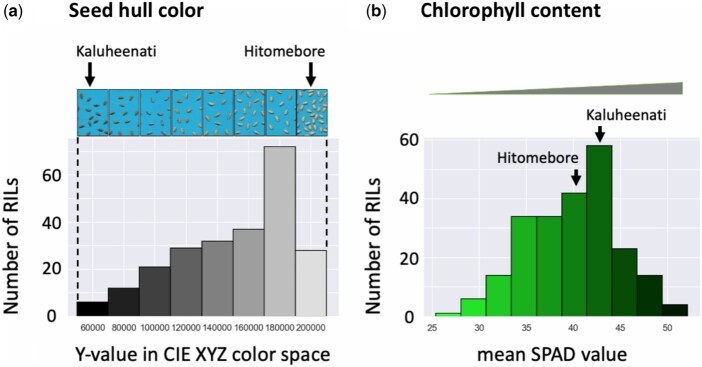
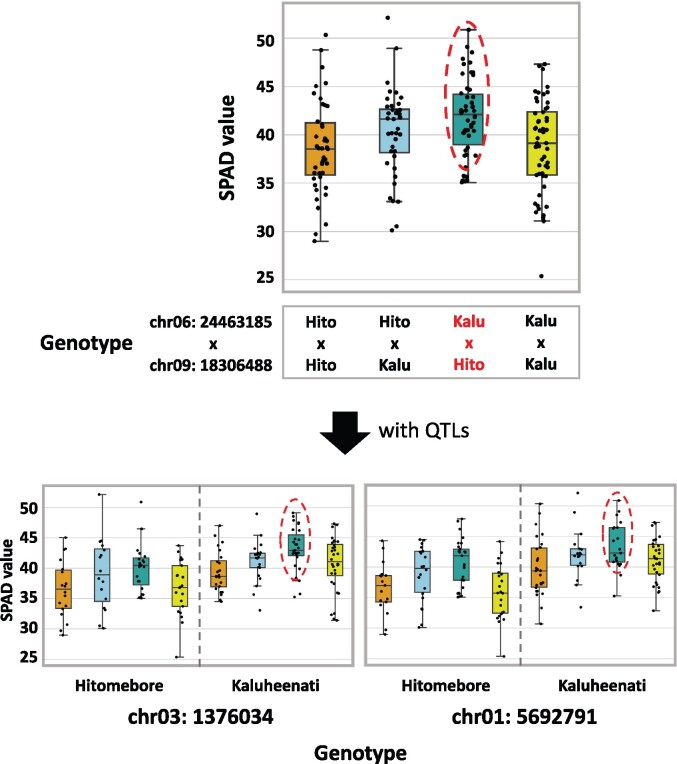
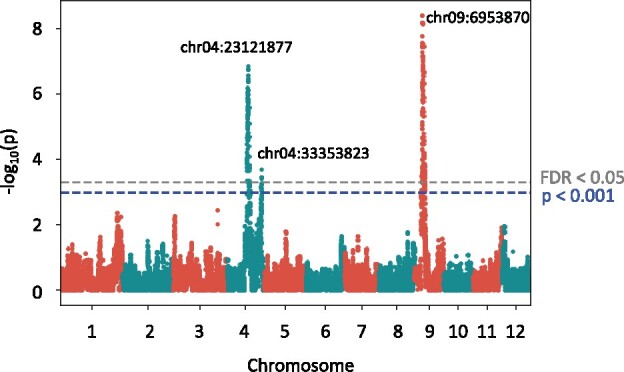
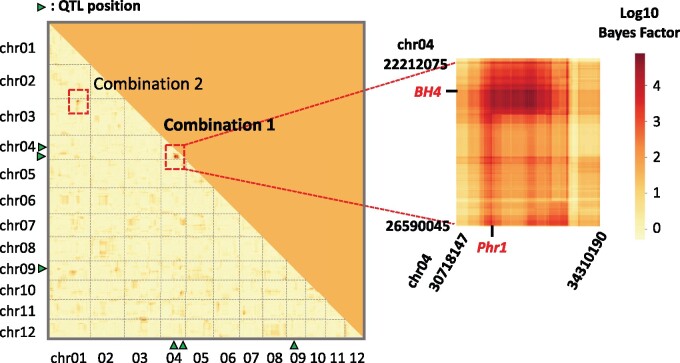
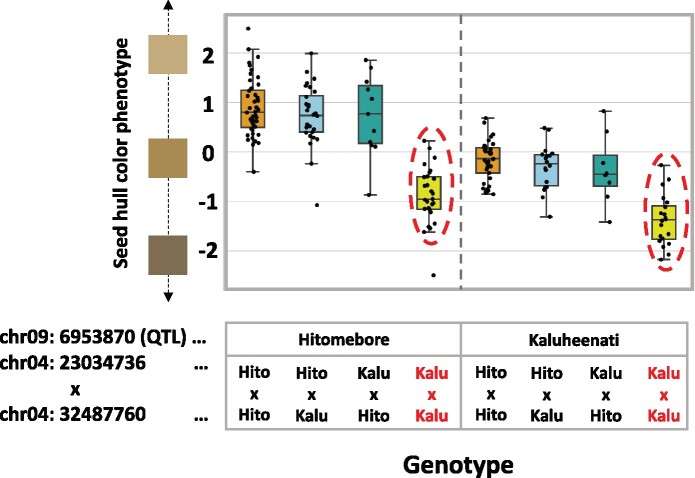
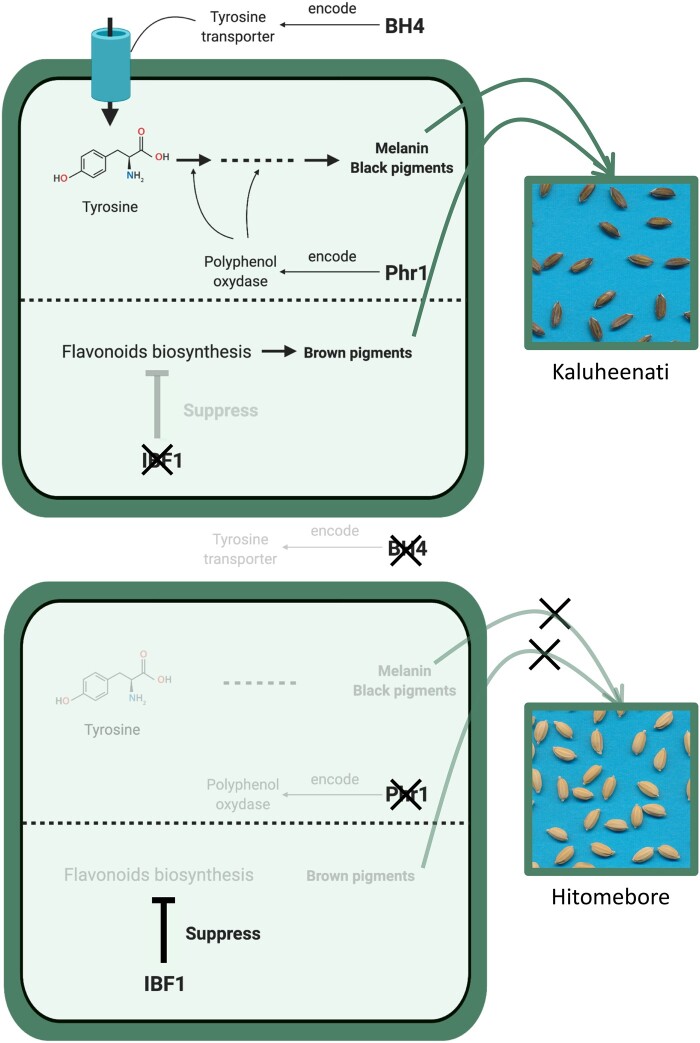
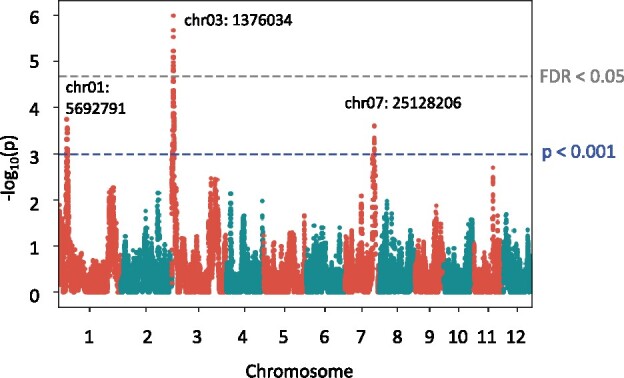
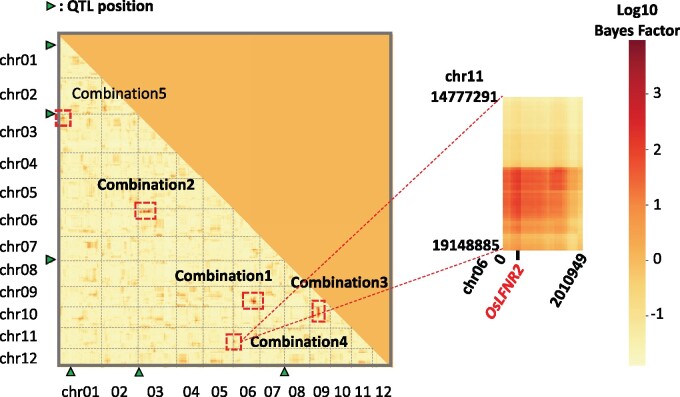
Characterizing epistatic gene interactions is fundamental for understanding the genetic architecture of complex traits. However, due to the large number of potential gene combinations, detecting epistatic gene interactions is computationally demanding. A simple, easy-to-perform method for sensitive detection of epistasis is required. Due to their homozygous nature, use of recombinant inbred lines excludes the dominance effect of alleles and interactions involving heterozygous genotypes, thereby allowing detection of epistasis in a simple and interpretable model. Here, we present an approach called RIL-StEp (recombinant inbred lines stepwise epistasis detection) to detect epistasis using single-nucleotide polymorphisms in the genome. We applied the method to reveal epistasis affecting rice (Oryza sativa) seed hull color and leaf chlorophyll content and successfully identified pairs of genomic regions that presumably control these phenotypes. This method has the potential to improve our understanding of the genetic architecture of various traits of crops and other organisms.
鉴定上位基因相互作用对于理解复杂性状的遗传结构至关重要。然而,由于潜在的基因组合数量众多,检测上位基因相互作用在计算上具有挑战性。需要一种简单、易于执行的方法来灵敏地检测上位性。由于重组近交系的纯合性质,使用它们排除了等位基因的显性效应以及涉及杂合基因型的相互作用,从而可以在简单且可解释的模型中检测上位性。在这里,我们提出了一种称为 RIL-StEp(重组近交系逐步上位性检测)的方法,利用基因组中的单核苷酸多态性来检测上位性。我们应用该方法揭示了影响水稻(Oryza sativa)种皮颜色和叶片叶绿素含量的上位性,并成功鉴定了可能控制这些表型的基因组区域对。这种方法有可能提高我们对作物和其他生物体各种性状遗传结构的理解。