Istituti Clinici Scientifici Maugeri IRCCS, Pavia, Italy.
Section of Respiratory Diseases, Department of Clinical Medicine and Surgery, Monaldi Hospital, University of Naples Federico II, Naples, Italy.
Respir Med. 2021 Jun;182:106401. doi: 10.1016/j.rmed.2021.106401. Epub 2021 Apr 13.
The usefulness of bronchodilators in coronavirus diseases 2019 (COVID-19) survivors is still uncertain, especially for patients with a concomitant obstructive lung disease. We aimed at verifying the level of bronchodilator reversibility in COVID-19 patients undergoing multidisciplinary pulmonary rehabilitation after the acute phase.
We enrolled 105 consecutive patients referring to the Pulmonary Rehabilitation Unit of Istituti Clinici Scientifici Maugeri Spa SB, IRCCS of Telese Terme, Benevento, Italy after being discharged from the COVID-19 acute care ward and after recovering from acute COVID-19 pneumonia. All subjects performed a spirometry before and after inhalation of salbutamol 400 μg to determine the bronchodilation response within 48 h of admission to the unit.
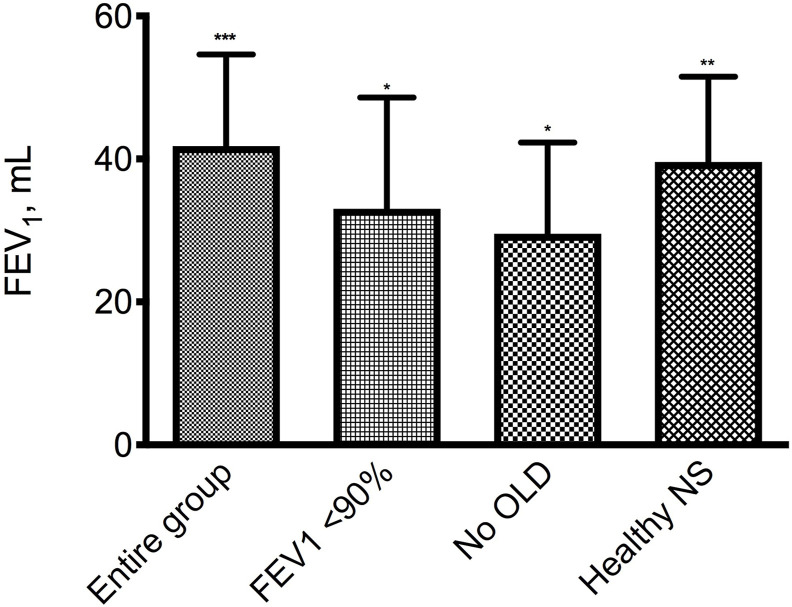
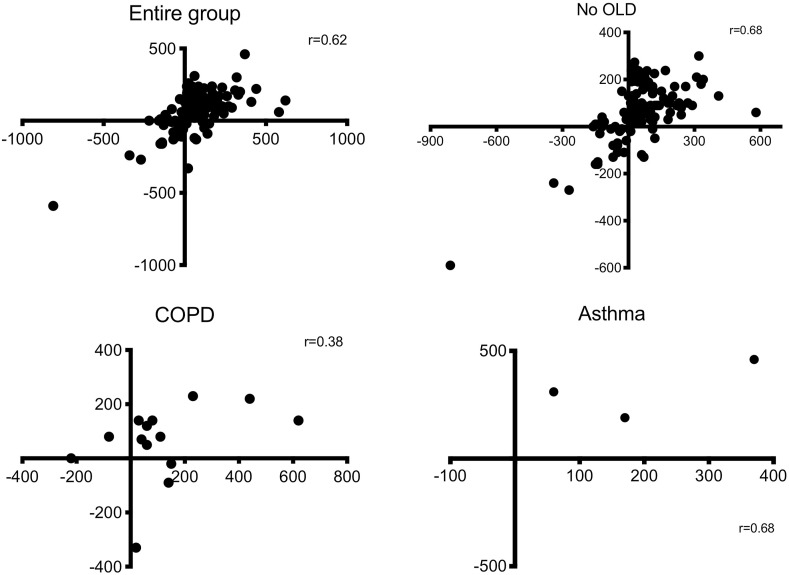
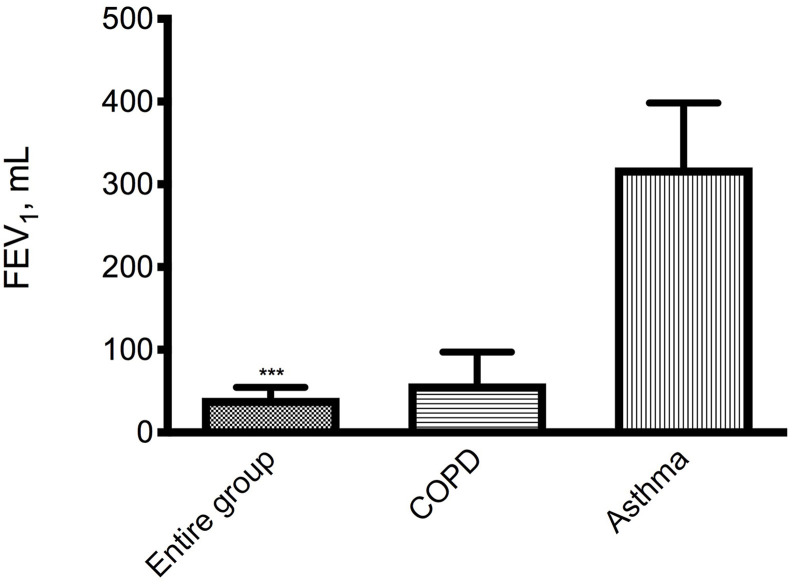
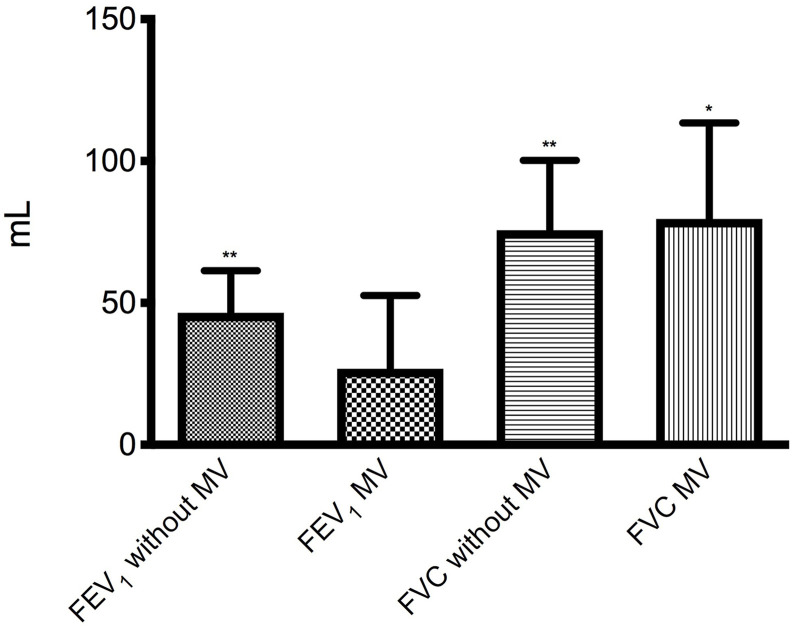
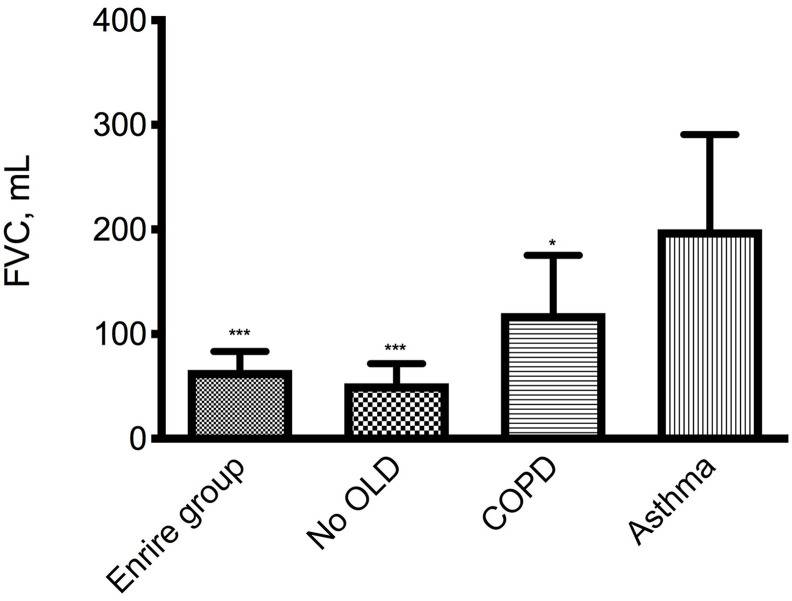
All patients had suffered from a moderate to severe COVID-19, classified 3 or 4 according to the WHO classification, Seventeen patients had concomitant obstructive lung disease (14 suffering from COPD and 3 from asthma). FEV after salbutamol improved on average by 41.7 mL in the entire examined sample, by 29.4 mL in subjects without concomitant obstructive lung diseases, by 59.3 mL in COPD patients and by 320.0 mL in asthma patients. Mean FVC after salbutamol improved by 65.7 mL in the entire examined sample, by 52.5 mL in subjects without concomitant obstructive lung diseases, by 120.0 mL in COPD patients, and by 200.0 mL in asthma patients.
This study suggests that a treatment with bronchodilators must always be taken into consideration in post-COVID-19 patients because it can induce a functional improvement that, even if small, can facilitate the breathing of these patients.
支气管扩张剂在 2019 年冠状病毒病(COVID-19)幸存者中的作用仍不确定,特别是对于同时患有阻塞性肺部疾病的患者。我们旨在验证急性 COVID-19 肺炎后接受多学科肺康复的 COVID-19 患者的支气管扩张剂可逆性水平。
我们招募了 105 名连续患者,他们从 COVID-19 急性护理病房出院后并从急性 COVID-19 肺炎中康复后,前往意大利特莱塞泰尔梅的 Istituti Clinici Scientifici Maugeri Spa SB,IRCCS 的肺康复病房。所有患者在进入病房后 48 小时内吸入沙丁胺醇 400μg 前后进行肺活量测定,以确定支气管扩张反应。
所有患者均患有中度至重度 COVID-19,根据世界卫生组织分类为 3 或 4 类。17 名患者同时患有阻塞性肺部疾病(14 名患有 COPD,3 名患有哮喘)。沙丁胺醇后 FEV 在整个检查样本中平均改善了 41.7mL,在无伴发阻塞性肺部疾病的患者中改善了 29.4mL,在 COPD 患者中改善了 59.3mL,在哮喘患者中改善了 320.0mL。沙丁胺醇后 FVC 在整个检查样本中平均改善了 65.7mL,在无伴发阻塞性肺部疾病的患者中改善了 52.5mL,在 COPD 患者中改善了 120.0mL,在哮喘患者中改善了 200.0mL。
本研究表明,COVID-19 后患者必须始终考虑使用支气管扩张剂治疗,因为它可以诱导功能改善,即使很小,也可以使这些患者呼吸更轻松。