The Chiropractic Knowledge Hub, University of Southern Denmark, Campusvej 55, DK-5230, Odense M, Denmark.
Research Unit of General Practice, Department of Public Health, University of Southern Denmark, J.B. Winsløws vej 9A, DK-5000, Odense C, Denmark.
Chiropr Man Therap. 2021 Apr 19;29(1):15. doi: 10.1186/s12998-021-00371-8.
Chiropractic care is commonly used to treat infantile colic. However large trials with parental blinding are missing. Therefore, the purpose of this study is to evaluate the effect of chiropractic care on infantile colic.
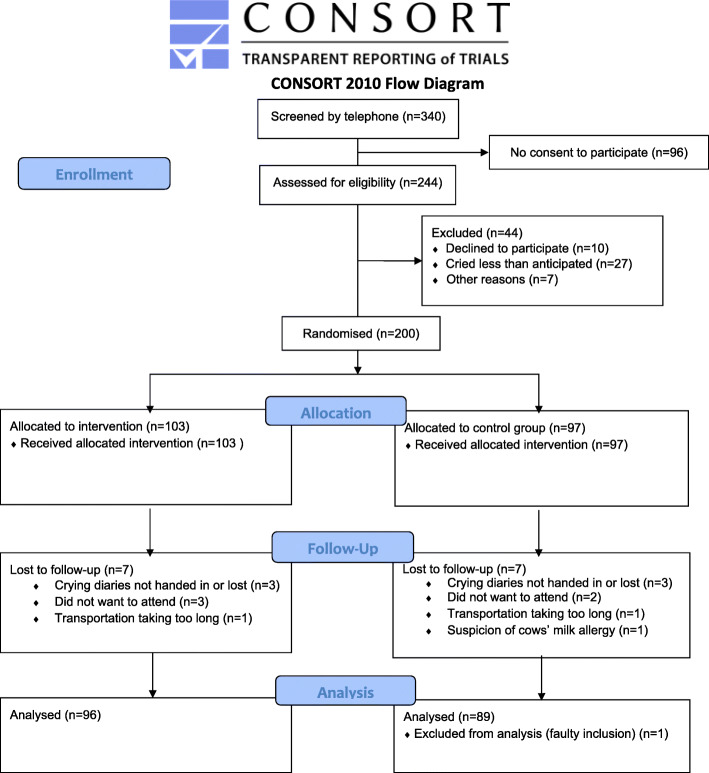
This is a multicenter, single-blind randomized controlled trial conducted in four Danish chiropractic clinics, 2015-2019. Information was distributed in the maternity wards and by maternal and child health nurses. Children aged 2-14 weeks with unexplained excessive crying were recruited through home visits and randomized (1:1) to either chiropractic care or control group. Both groups attended the chiropractic clinic twice a week for 2 weeks. The intervention group received chiropractic care, while the control group was not treated. The parents were not present in the treatment room and unaware of their child's allocation. The primary outcome was change in daily hours of crying before and after treatment. Secondary outcomes were changes in hours of sleep, hours being awake and content, gastrointestinal symptoms, colic status and satisfaction. All outcomes were based on parental diaries and a final questionnaire.
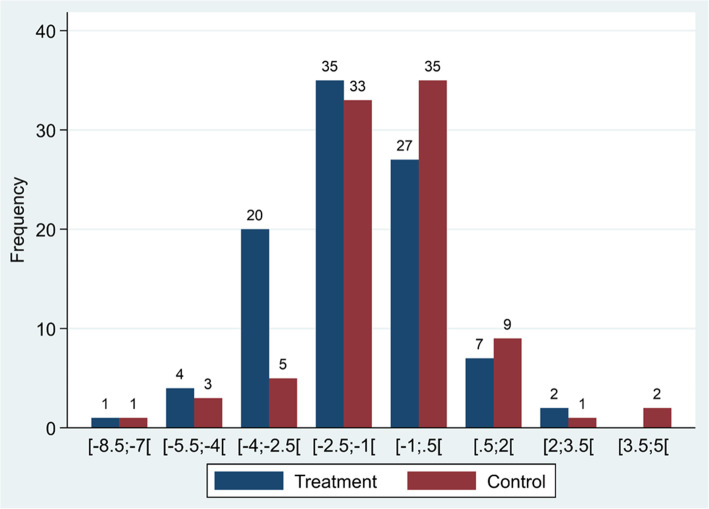
Of 200 recruited children, 185 completed the trial (treatment group n = 96; control group n = 89). Duration of crying in the treatment group was reduced by 1.5 h compared with 1 h in the control group (mean difference - 0.6, 95% CI - 1.1 to - 0.1; P = 0.026), but when adjusted for baseline hours of crying, age and chiropractic clinic, the difference was not significant (P = 0.066). The proportion obtaining a clinically important reduction of 1 h of crying was 63% in the treatment group and 47% in the control group (p = 0.037), and NNT was 6.5. We found no effect on any of the secondary outcomes.
Excessive crying was reduced by half an hour in favor of the group receiving chiropractic care compared with the control group, but not at a statistically significant level after adjustments. From a clinical perspective, the mean difference between the groups was small, but there were large individual differences, which emphasizes the need to investigate if subgroups of children, e.g. those with musculoskeletal problems, benefit more than others from chiropractic care.
Clinical Trials NCT02595515 , registered 2 November 2015.
整脊疗法常用于治疗婴儿绞痛。但缺乏有父母盲法的大型试验。因此,本研究旨在评估整脊治疗对婴儿绞痛的效果。
这是一项于 2015-2019 年在丹麦 4 家整脊诊所进行的多中心、单盲随机对照试验。信息通过产妇病房和母婴健康护士分发。通过家访招募 2-14 周龄、原因不明的过度哭闹的儿童,并进行随机(1:1)分组至整脊治疗组或对照组。两组均在 2 周内每周去 2 次整脊诊所。干预组接受整脊治疗,对照组则不进行治疗。父母不在治疗室,也不知道孩子的分组情况。主要结局为治疗前后每日哭泣时间的变化。次要结局为睡眠时间、清醒时间和清醒时状态、胃肠道症状、绞痛状态和满意度的变化。所有结局均基于父母的日记和最终问卷。
200 名招募的儿童中,185 名完成了试验(治疗组 n=96;对照组 n=89)。与对照组相比,治疗组的哭泣时间减少了 1.5 小时(平均差值-0.6,95%CI-1.1 至-0.1;P=0.026),但在校正基线哭泣时间、年龄和整脊诊所后,差异无统计学意义(P=0.066)。治疗组中哭泣时间减少 1 小时的比例为 63%,对照组为 47%(p=0.037),NNT 为 6.5。我们未发现对任何次要结局有影响。
与对照组相比,接受整脊治疗的组哭泣时间减少了半小时,但在调整后未达到统计学显著水平。从临床角度来看,两组之间的平均差异较小,但个体差异较大,这强调了需要调查是否有特定亚组的儿童(例如有肌肉骨骼问题的儿童)从整脊治疗中获益更多。
临床试验 NCT02595515,于 2015 年 11 月 2 日注册。