Xu Pengcheng, Jia Wei, Qian Hua, Xiao Shenglan, Miao Te, Yen Hui-Ling, Tan Hongwei, Kang Min, Cowling Benjamin J, Li Yuguo
Institute of Applied Mathematics, Academy of Mathematics and Systems Sciences, Chinese Academy of Sciences, Beijing, China.
Department of Mechanical Engineering, The University of Hong Kong, Hong Kong, China.
Build Environ. 2021 Jul;198:107839. doi: 10.1016/j.buildenv.2021.107839. Epub 2021 Apr 15.
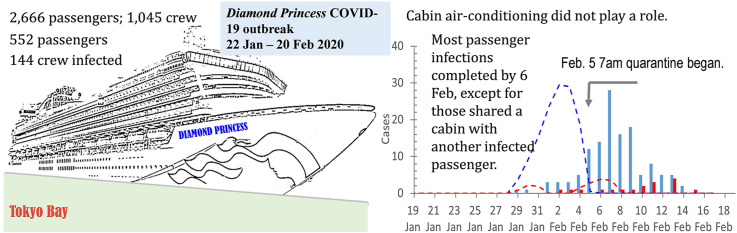
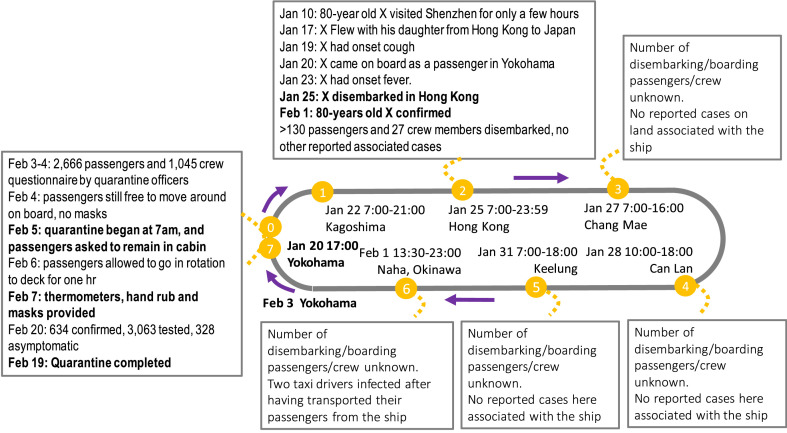
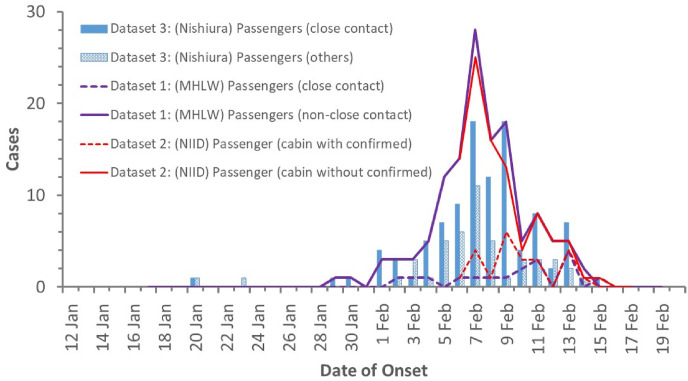
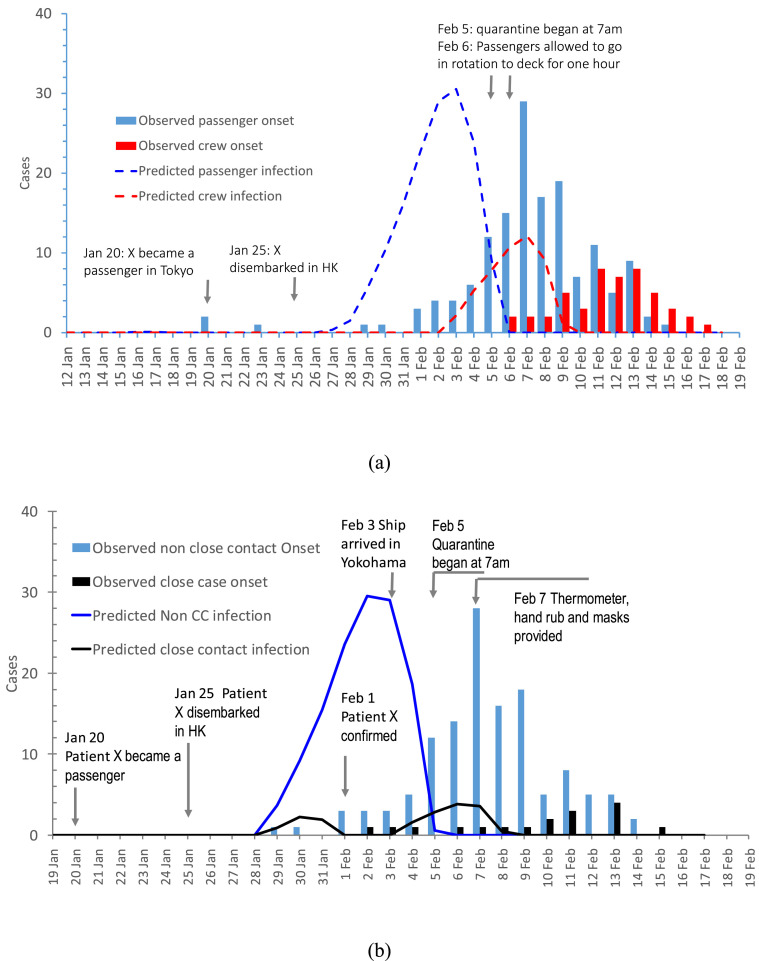
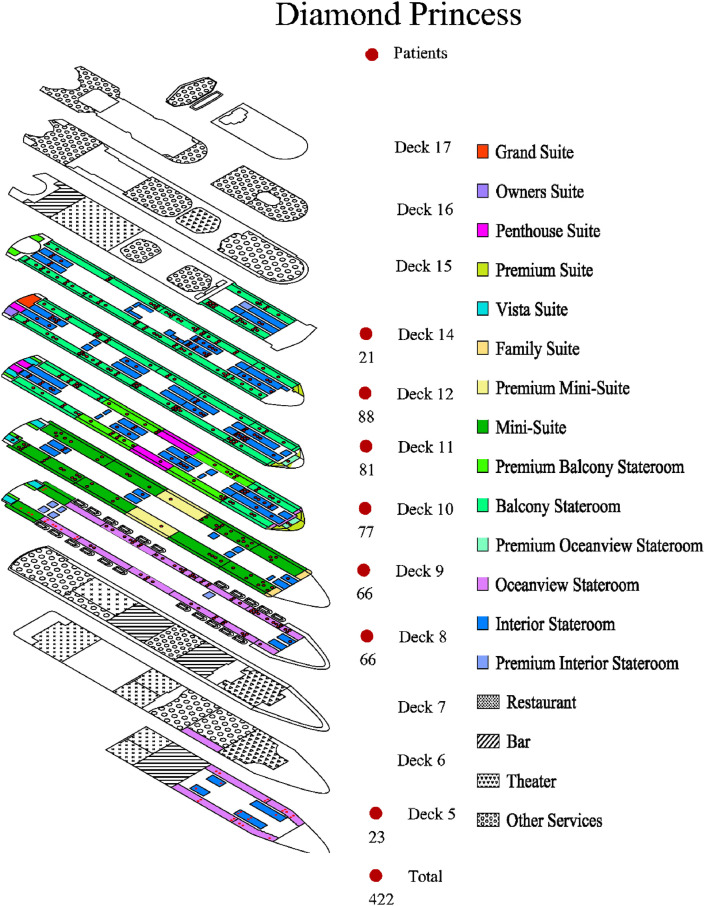
An outbreak of COVID-19 occurred on the cruise ship in January and February 2020 in Japan. We analysed information on the cases of infection to infer whether airborne transmission of SARS-CoV-2, the causative agent of COVID-19, had occurred between cabins. We infer from our analysis that most infections in passengers started on 28 January and were completed by 6 February, except in those who shared a cabin with another infected passenger. The distribution of the infected cabins was random, and no spatial cluster of the infected can be identified. We infer that the ship's central air-conditioning system for passenger's cabins did not play a role in SARS-CoV-2 transmission, i.e. airborne transmission did not occur between cabins during the outbreak, suggesting that the sufficient ventilation was provided. We also infer that the ship's cabin drainage system did not play a role. Most transmission appears to have occurred in the public areas of the cruise ship, likely due to crowding and insufficient ventilation in some of these areas.
2020年1月和2月,一艘游轮上发生了新冠疫情。我们分析了感染病例信息,以推断新冠病毒(COVID-19的病原体)是否在客舱之间通过空气传播。我们从分析中推断,除了与另一名感染乘客共用一个客舱的乘客外,大多数乘客的感染始于1月28日,并在2月6日前完成。受感染客舱的分布是随机的,无法识别出受感染人群的空间聚集情况。我们推断,游轮客舱的中央空调系统在新冠病毒传播中未起作用,即在疫情爆发期间客舱之间未发生空气传播,这表明通风良好。我们还推断,游轮客舱排水系统也未起作用。大多数传播似乎发生在游轮的公共区域,可能是由于这些区域中的一些地方拥挤且通风不足。