Manitoba Centre for Health Policy, Department of Community Health Sciences, Rady Faculty of Health Sciences, University of Manitoba, 408-727 McDermot Ave, Winnipeg, Manitoba, R3E 3P5, Canada.
First Nations Health and Social Secretariat of Manitoba, Winnipeg, Canada.
BMC Pregnancy Childbirth. 2021 Apr 20;21(1):312. doi: 10.1186/s12884-021-03782-w.
In Manitoba, Canada, low-income pregnant women are eligible for the Healthy Baby Prenatal Benefit, an unconditional income supplement of up to CAD $81/month, during their latter two trimesters. Our objective was to determine the impact of the Healthy Baby Prenatal Benefit on birth and early childhood outcomes among Manitoba First Nations women and their children.
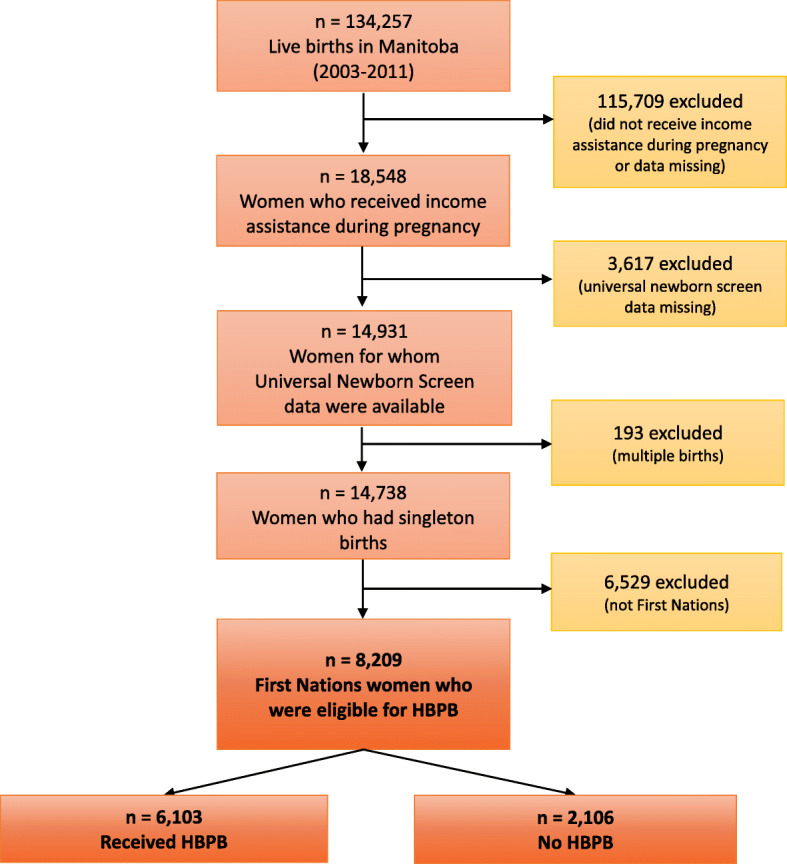
We used administrative data to identify low-income First Nations women who gave birth 2003-2011 (n = 8209), adjusting for differences between women who received (n = 6103) and did not receive the Healthy Baby Prenatal Benefit (n = 2106) with using propensity score weighting. Using multi-variable regressions, we compared rates of low birth weight, preterm, and small- and large-for-gestational-age births, 5-min Apgar scores, breastfeeding initiation, birth hospitalization length of stay, hospital readmissions, complete vaccination at age one and two, and developmental vulnerability in Kindergarten.
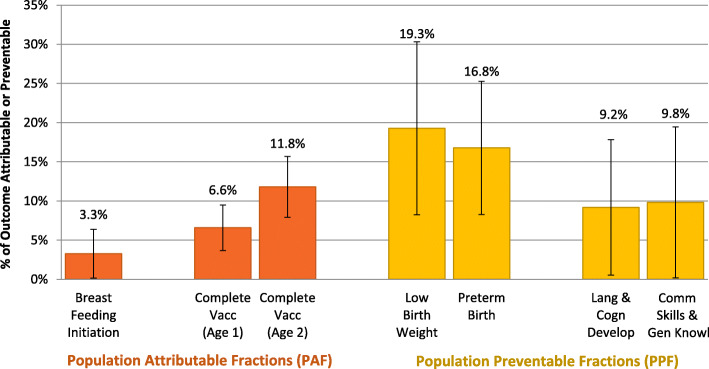
Women who received the benefit had lower risk of low birth weight (adjusted relative risk [aRR] 0.74; 95% CI 0.62-0.88) and preterm (aRR 0.77; 0.68-0.88) births, and were more likely to initiate breastfeeding (aRR 1.05; 1.01-1.09). Receipt of the Healthy Baby Prenatal Benefit was also associated with higher rates of child vaccination at age one (aRR 1.10; 1.06-1.14) and two (aRR 1.19; 1.13-1.25), and a lower risk that children would be vulnerable in the developmental domains of language and cognitive development (aRR 0.88; 0.79-0.98) and general knowledge/communication skills (aRR 0.87; 0.77-0.98) in Kindergarten.
A modest unconditional income supplement of CAD $81/month during pregnancy was associated with improved birth outcomes, increased vaccination rates, and better developmental health outcomes for First Nations children from low-income families.
在加拿大马尼托巴省,低收入孕妇有资格获得健康婴儿产前福利,这是一种无条件的每月最高 81 加元的收入补贴,适用于妊娠后期的最后两个三个月。我们的目的是确定健康婴儿产前福利对马尼托巴省第一民族妇女及其子女的出生和幼儿期结局的影响。
我们使用行政数据来识别 2003-2011 年期间分娩的低收入第一民族妇女(n=8209),通过倾向评分加权调整接受(n=6103)和未接受健康婴儿产前福利(n=2106)的妇女之间的差异。使用多变量回归,我们比较了低出生体重、早产和小胎龄儿及大胎龄儿的出生比例、5 分钟 Apgar 评分、母乳喂养开始率、分娩住院时间、医院再入院率、一岁和两岁时完全接种疫苗率以及幼儿园发展脆弱性。
接受该福利的妇女低出生体重的风险较低(调整后的相对风险 [aRR] 0.74;95%CI 0.62-0.88)和早产(aRR 0.77;0.68-0.88)的风险较低,并且更有可能开始母乳喂养(aRR 1.05;1.01-1.09)。接受健康婴儿产前福利还与一岁(aRR 1.10;1.06-1.14)和两岁(aRR 1.19;1.13-1.25)时儿童疫苗接种率较高相关,以及儿童在语言和认知发展(aRR 0.88;0.79-0.98)和一般知识/沟通技能(aRR 0.87;0.77-0.98)领域发展脆弱性的风险较低。
妊娠期间每月 81 加元的适度无条件收入补贴与改善出生结局、提高疫苗接种率以及改善低收入家庭的第一民族儿童的发育健康结果相关。