Department of Physics, Brown University, Providence, United States.
Department of Medicine, Albert Einstein College of Medicine, Bronx, United States.
Elife. 2021 Apr 22;10:e64176. doi: 10.7554/eLife.64176.
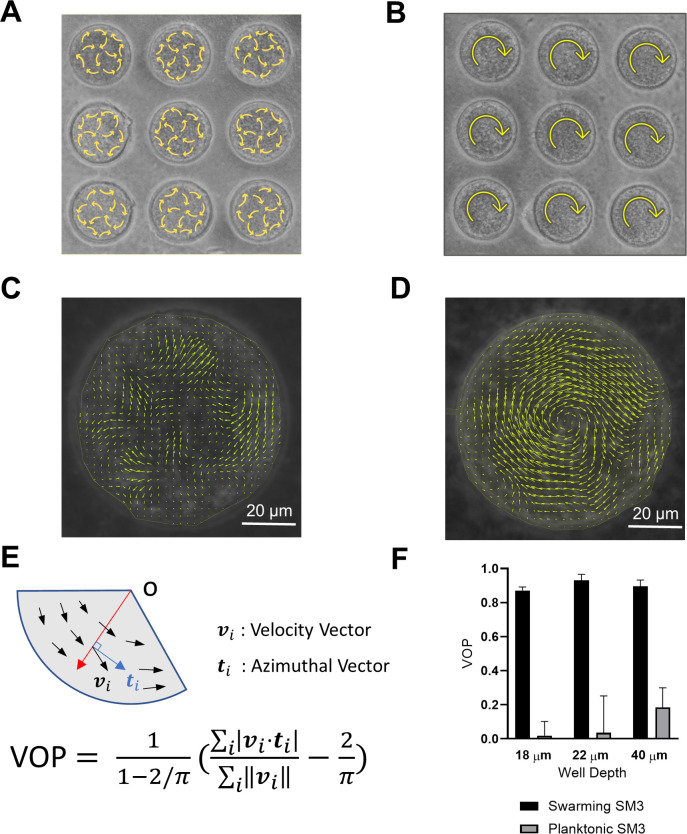
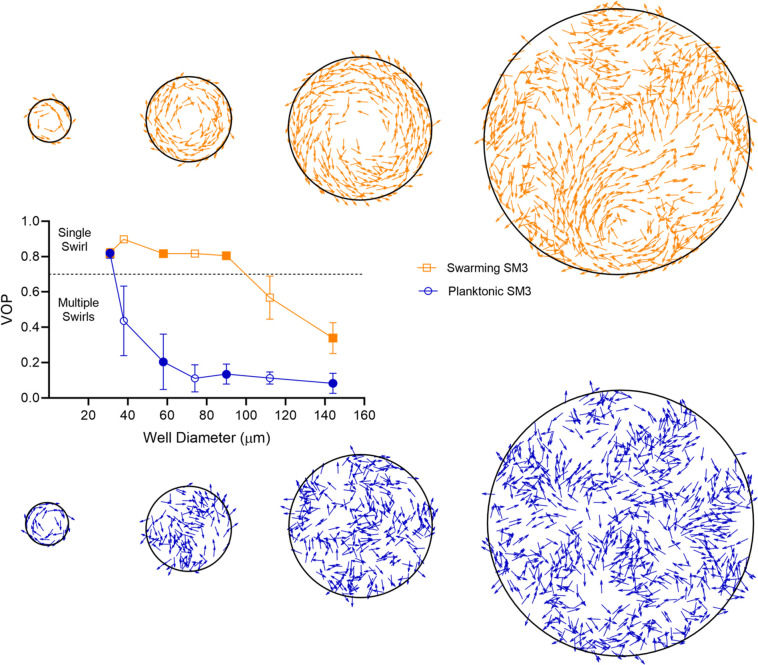
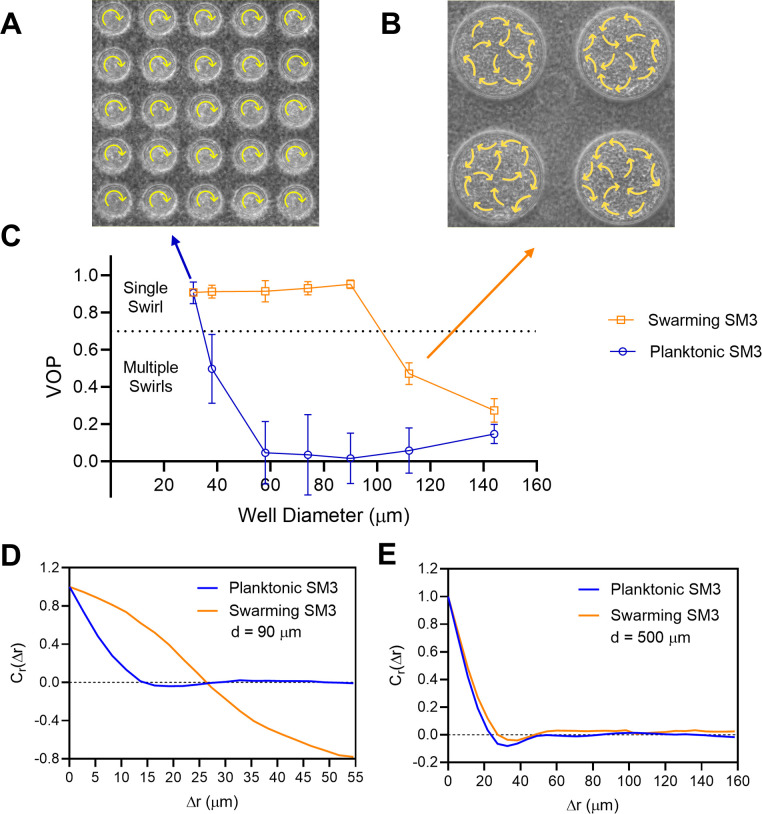
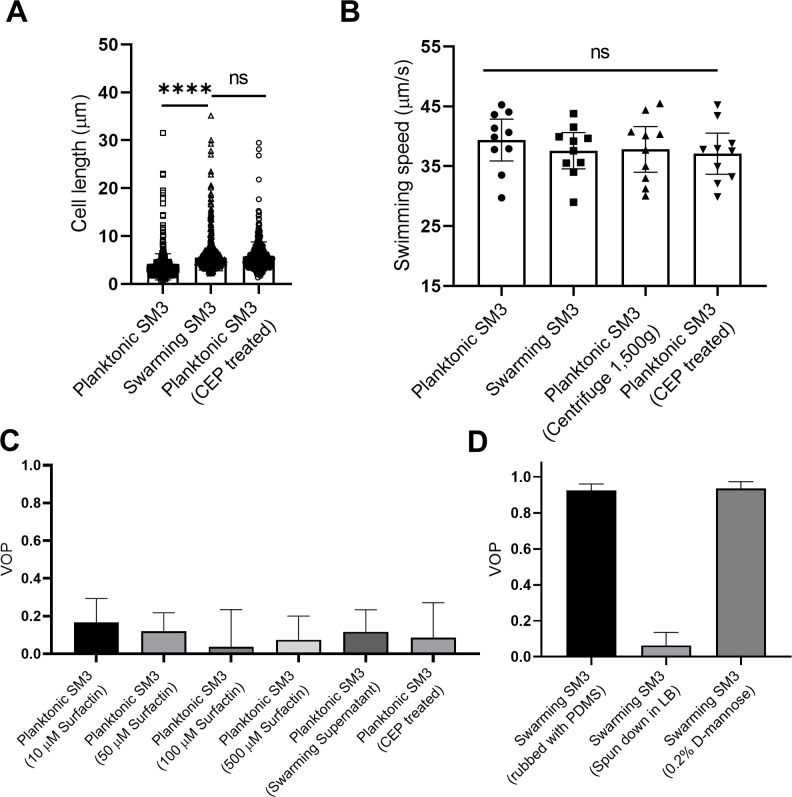
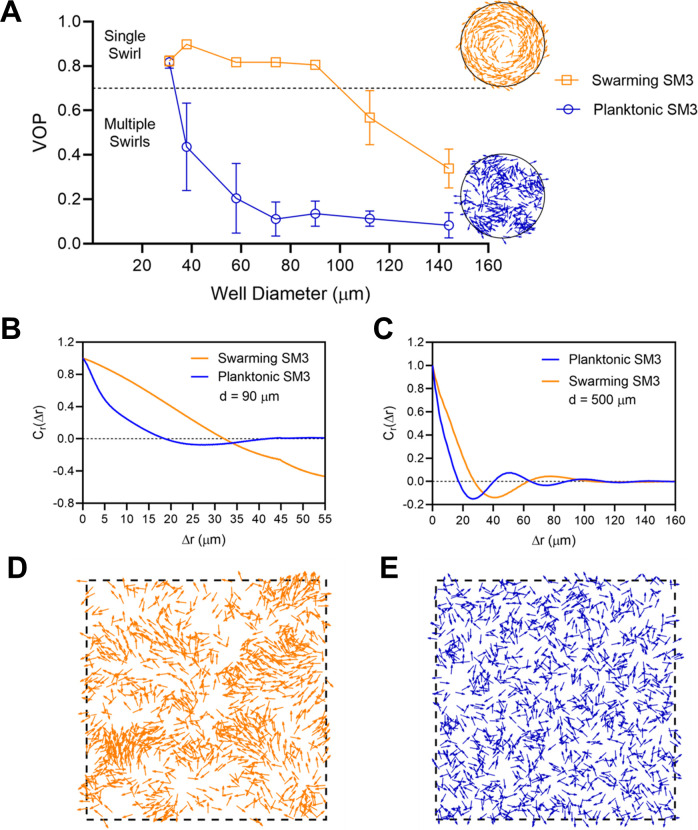
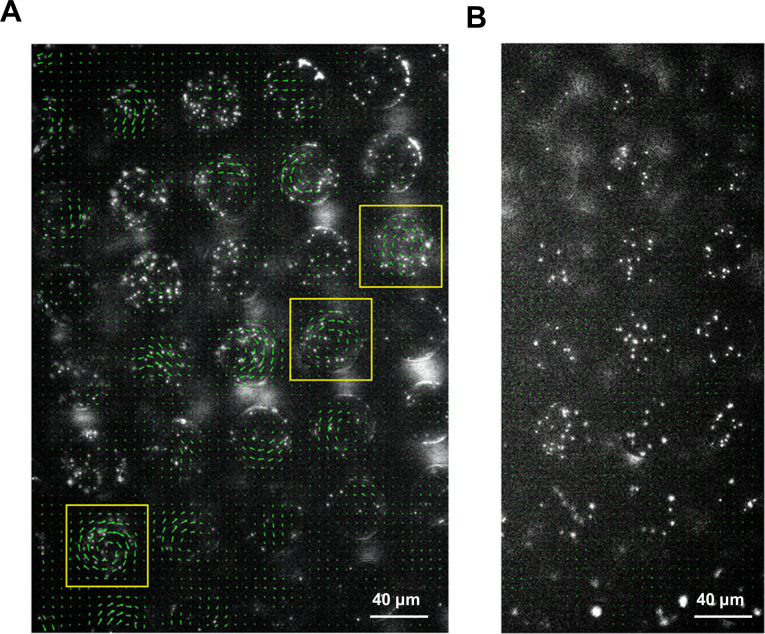
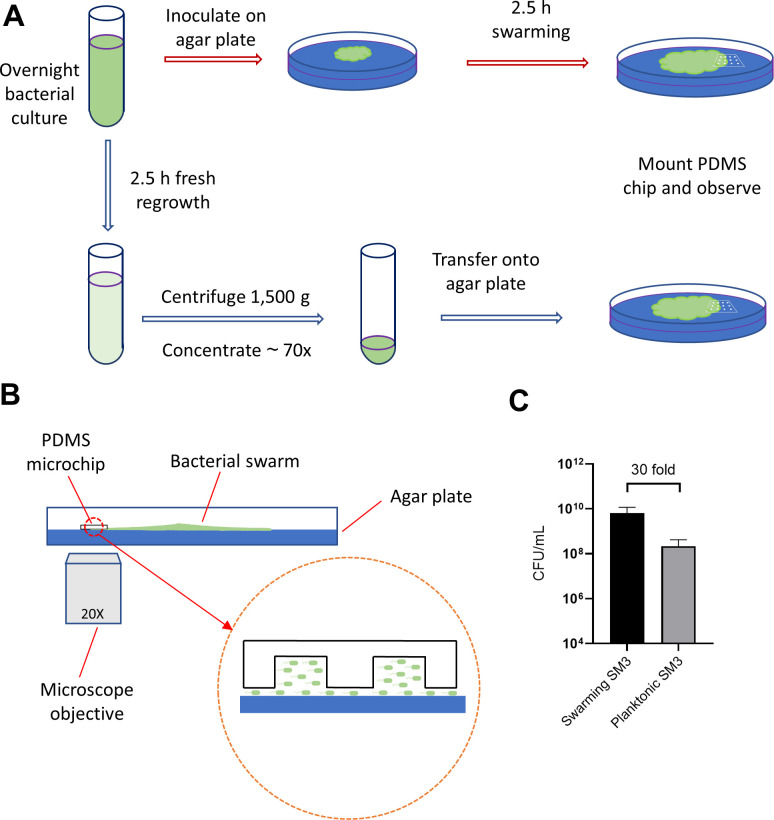
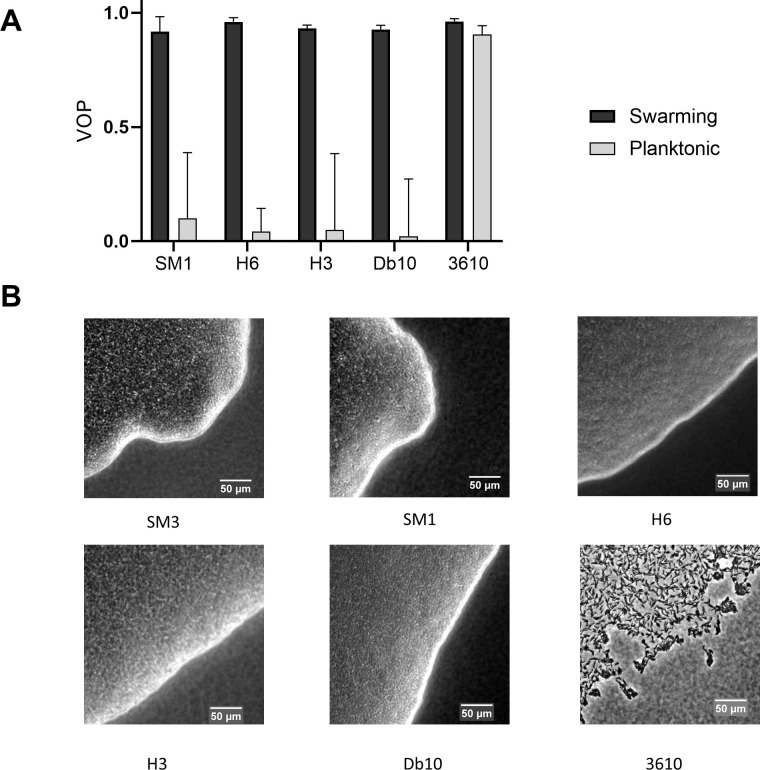
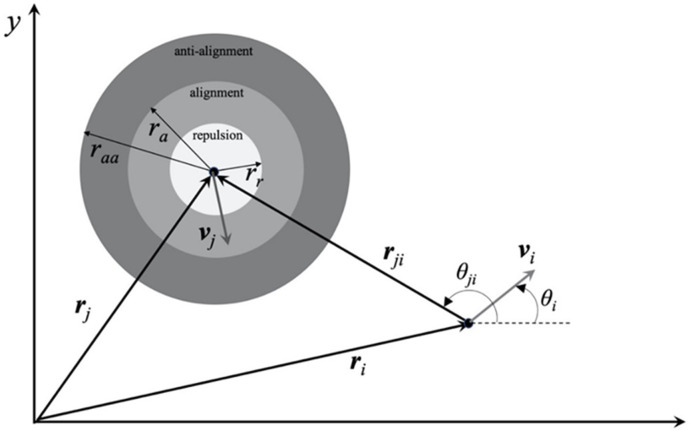
Powered by flagella, many bacterial species exhibit collective motion on a solid surface commonly known as swarming. As a natural example of active matter, swarming is also an essential biological phenotype associated with virulence, chemotaxis, and host pathogenesis. Physical changes like cell elongation and hyper-flagellation have been shown to accompany the swarming phenotype. Less studied, however, are the contrasts of collective motion between the swarming cells and their counterpart planktonic cells of comparable cell density. Here, we show that confining bacterial movement in circular microwells allows distinguishing bacterial swarming from collective swimming. On a soft agar plate, a novel bacterial strain sp. SM3 in swarming and planktonic states exhibited different motion patterns when confined to circular microwells of a specific range of sizes. When the confinement diameter was between 40 μm and 90 μm, swarming SM3 formed a single-swirl motion pattern in the microwells whereas planktonic SM3 formed multiple swirls. Similar differential behavior is observed across several other species of gram-negative bacteria. We also observed 'rafting behavior' of swarming bacteria upon dilution. We hypothesize that the rafting behavior might account for the motion pattern difference. We were able to predict these experimental features via numerical simulations where swarming cells are modeled with stronger cell-cell alignment interaction. Our experimental design using PDMS microchip disk arrays enabled us to observe bacterial swarming on murine intestinal surface, suggesting a new method for characterizing bacterial swarming under complex environments, such as in polymicrobial niches, and for in vivo swarming exploration.
在鞭毛的驱动下,许多细菌物种在固体表面上表现出集体运动,通常称为群集运动。作为主动物质的自然范例,群集运动也是与毒力、趋化性和宿主发病机制相关的重要生物学表型。已经表明,细胞伸长和过度鞭毛化等物理变化伴随着群集表型。然而,研究较少的是具有可比细胞密度的群集细胞与浮游细胞之间的集体运动对比。在这里,我们表明在圆形微井中限制细菌运动可以将细菌的群集运动与集体游动区分开来。在软琼脂平板上,在群集和浮游状态下的新型细菌菌株 sp。SM3 在被限制在特定尺寸范围内的圆形微井中时表现出不同的运动模式。当限制直径在 40 µm 和 90 µm 之间时,群集 SM3 在微井中形成单一漩涡运动模式,而浮游 SM3 形成多个漩涡。在其他几种革兰氏阴性菌中也观察到类似的差异行为。我们还观察到群集细菌在稀释时的“浮筏行为”。我们假设浮筏行为可能解释了运动模式的差异。我们通过数值模拟预测了这些实验特征,其中群集细胞的模型具有更强的细胞间对齐相互作用。我们使用 PDMS 微芯片盘阵列的实验设计使我们能够观察到细菌在鼠肠表面的群集运动,这表明了一种在复杂环境下(如多微生物生境中)对细菌群集进行特征描述的新方法,以及对体内群集运动的探索。