Wang Xuewei, Liu Jun, Zhu Xiaoning
Shandong Provincial University Laboratory for Protected Horticulture, Blockchain Laboratory of Agricultural Vegetables, Weifang University of Science and Technology, Weifang, 262700, Shandong, China.
Elite Digital Intelligence Technology Co., LTD, Beijing, China.
Plant Methods. 2021 Apr 23;17(1):43. doi: 10.1186/s13007-021-00745-2.
Research on early object detection methods of crop diseases and pests in the natural environment has been an important research direction in the fields of computer vision, complex image processing and machine learning. Because of the complexity of the early images of tomato diseases and pests in the natural environment, the traditional methods can not achieve real-time and accurate detection.
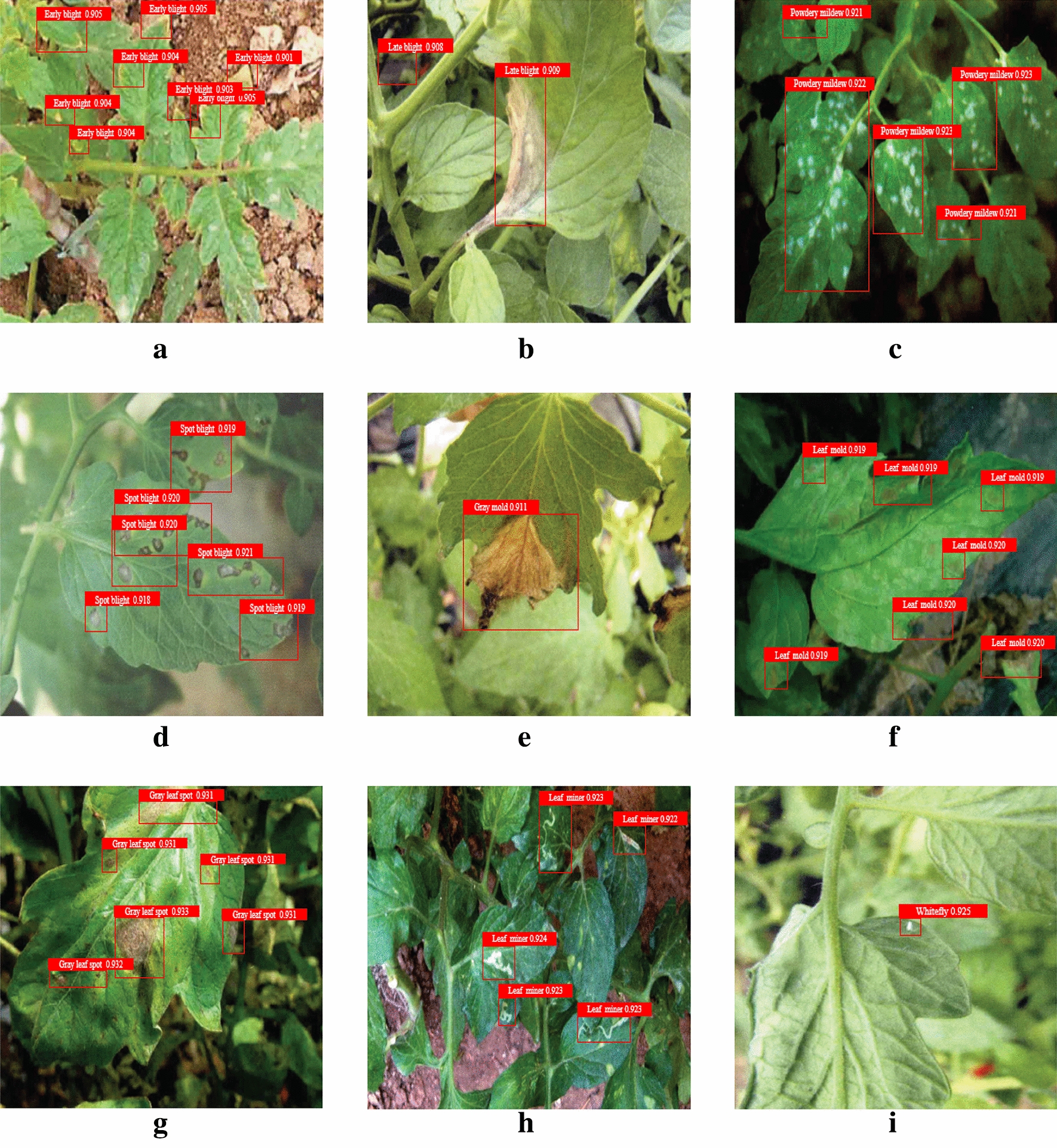
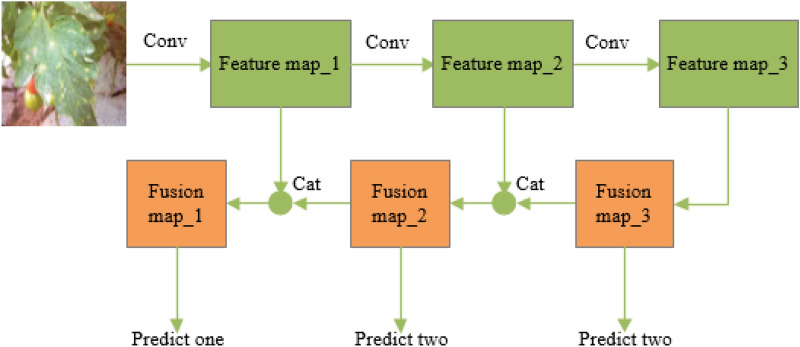
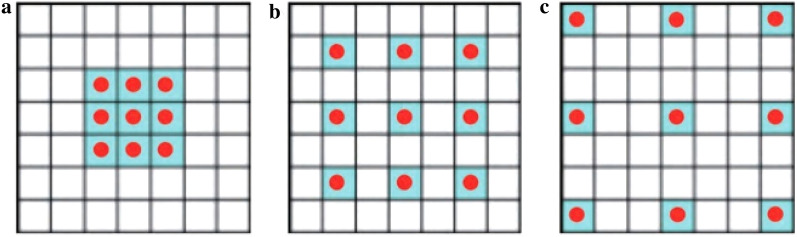
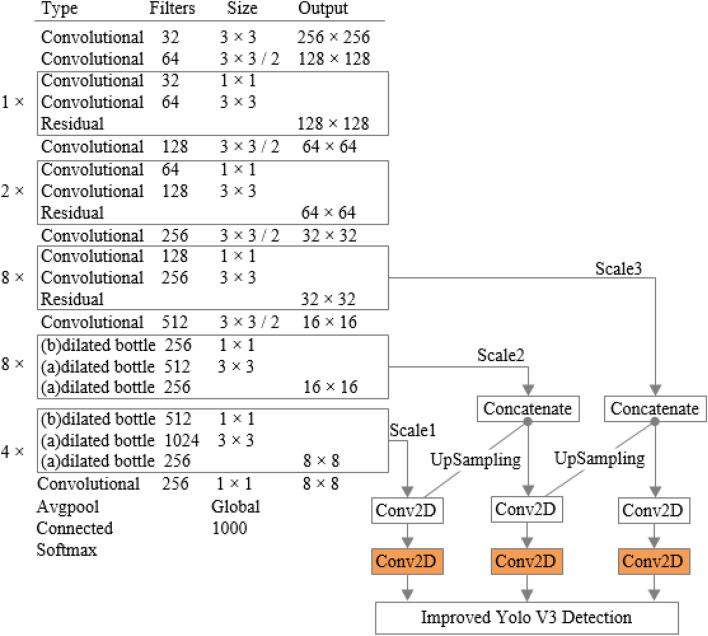
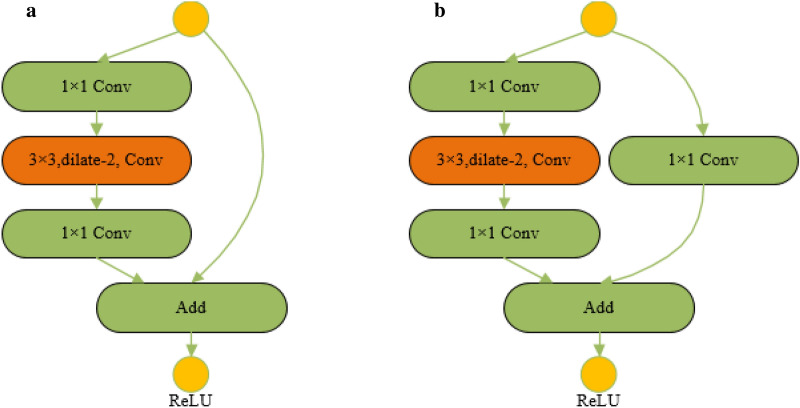
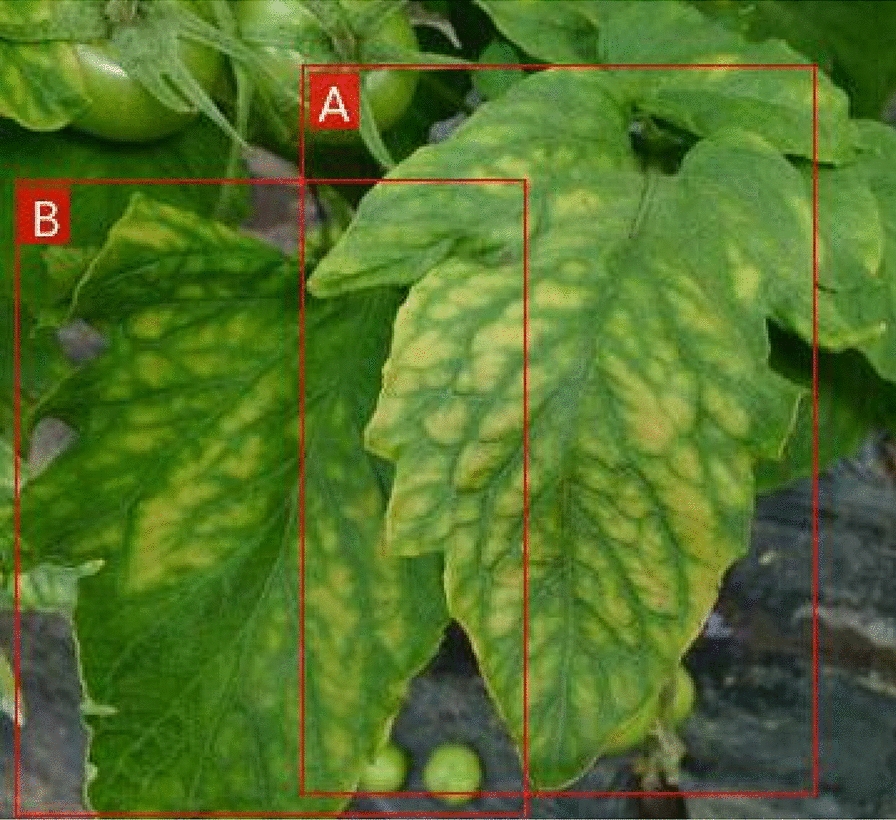
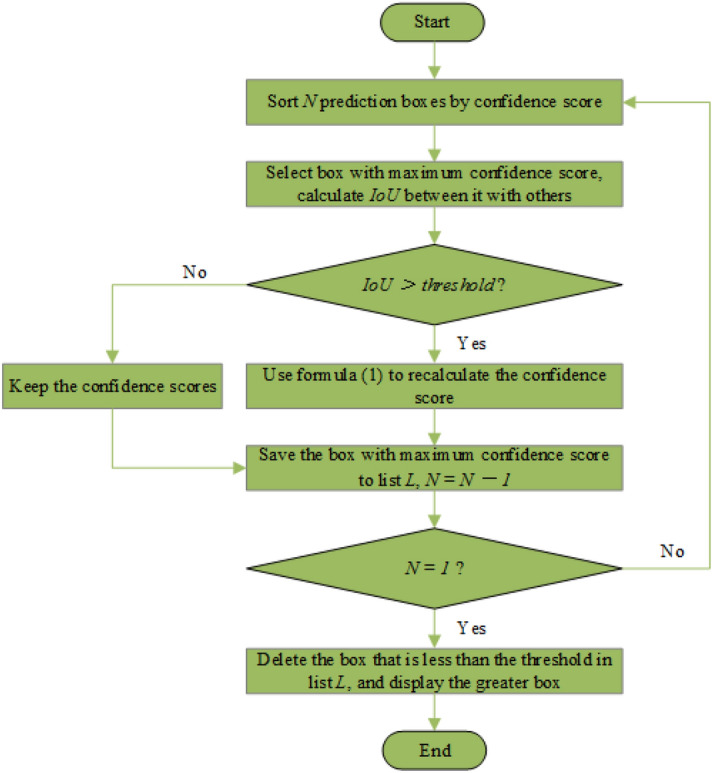
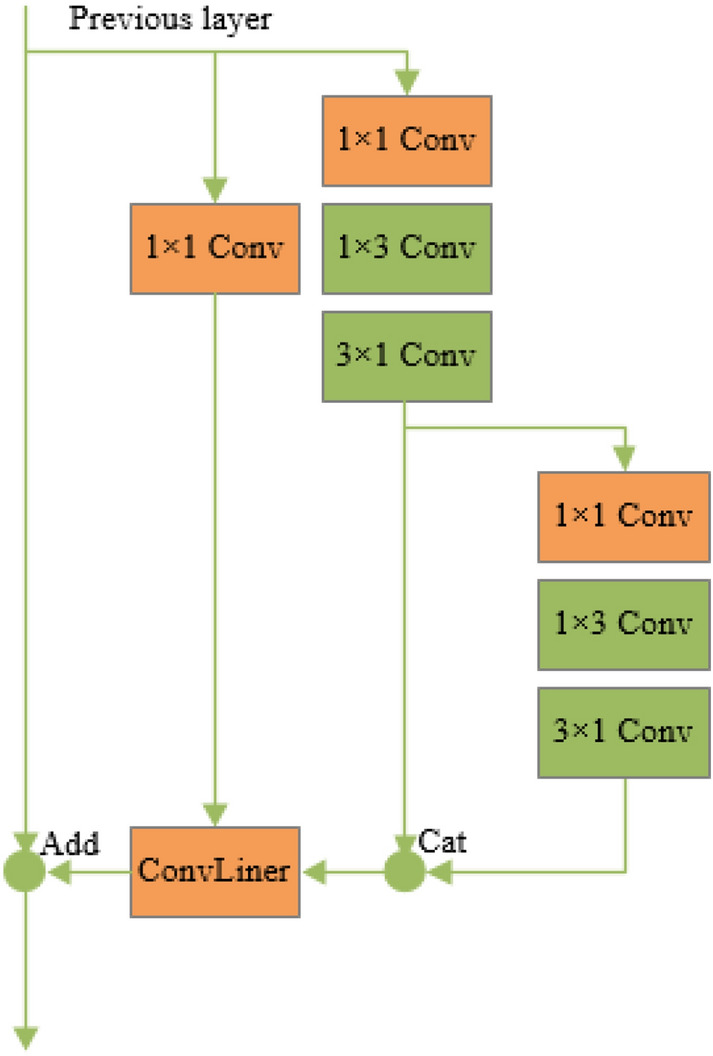
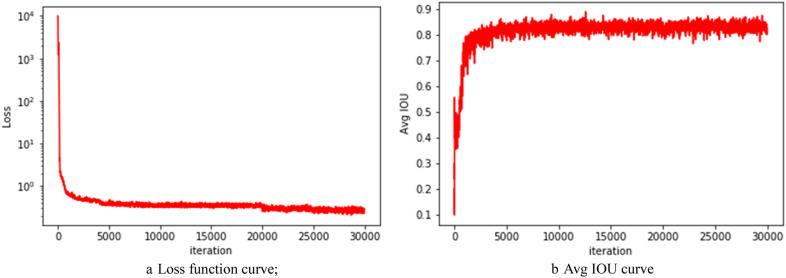
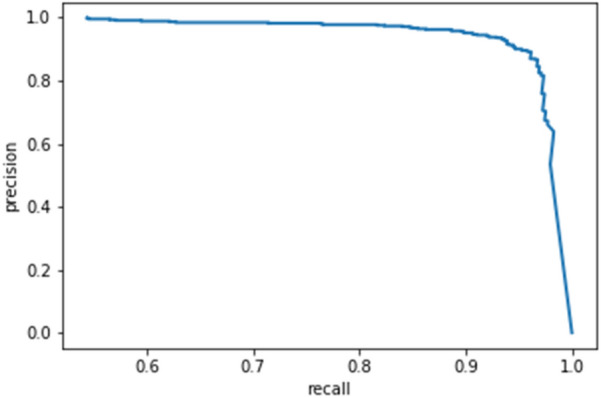
Aiming at the complex background of early period of tomato diseases and pests image objects in the natural environment, an improved object detection algorithm based on YOLOv3 for early real-time detection of tomato diseases and pests was proposed. Firstly, aiming at the complex background of tomato diseases and pests images under natural conditions, dilated convolution layer is used to replace convolution layer in backbone network to maintain high resolution and receptive field and improve the ability of small object detection. Secondly, in the detection network, according to the size of candidate box intersection ratio (IOU) and linear attenuation confidence score predicted by multiple grids, the obscured objects of tomato diseases and pests are retained, and the detection problem of mutual obscure objects of tomato diseases and pests is solved. Thirdly, to reduce the model volume and reduce the model parameters, the network is lightweight by using the idea of convolution factorization. Finally, by introducing a balance factor, the small object weight in the loss function is optimized. The test results of nine common tomato diseases and pests under six different background conditions are statistically analyzed. The proposed method has a F1 value of 94.77%, an AP value of 91.81%, a false detection rate of only 2.1%, and a detection time of only 55 Ms. The test results show that the method is suitable for early detection of tomato diseases and pests using large-scale video images collected by the agricultural Internet of Things.
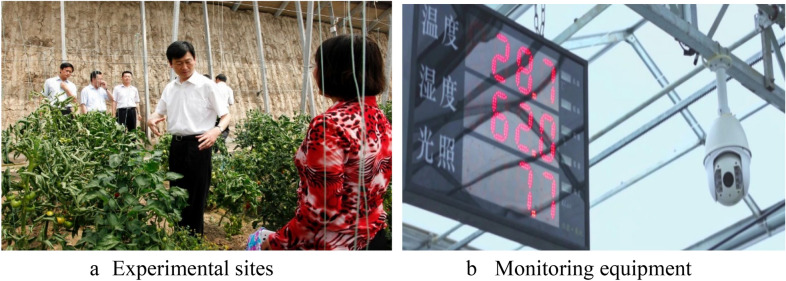
At present, most of the object detection of diseases and pests based on computer vision needs to be carried out in a specific environment (such as picking the leaves of diseases and pests and placing them in the environment with light supplement equipment, so as to achieve the best environment). For the images taken by the Internet of things monitoring camera in the field, due to various factors such as light intensity, weather change, etc., the images are very different, the existing methods cannot work reliably. The proposed method has been applied to the actual tomato production scenarios, showing good detection performance. The experimental results show that the method in this study improves the detection effect of small objects and leaves occlusion, and the recognition effect under different background conditions is better than the existing object detection algorithms. The results show that the method is feasible to detect tomato diseases and pests in the natural environment.
自然环境下农作物病虫害早期目标检测方法的研究一直是计算机视觉、复杂图像处理和机器学习领域的重要研究方向。由于自然环境中番茄病虫害早期图像的复杂性,传统方法无法实现实时、准确的检测。
针对自然环境下番茄病虫害图像目标早期背景复杂的问题,提出了一种基于YOLOv3的改进目标检测算法,用于番茄病虫害的早期实时检测。首先,针对自然条件下番茄病虫害图像背景复杂的问题,在主干网络中使用空洞卷积层替换卷积层,以保持高分辨率和感受野,提高小目标检测能力。其次,在检测网络中,根据候选框交并比(IOU)大小和多个网格预测的线性衰减置信度得分,保留番茄病虫害的遮挡目标,解决了番茄病虫害相互遮挡目标的检测问题。第三,为了减小模型体积、减少模型参数,利用卷积分解的思想对网络进行轻量化。最后,通过引入平衡因子,优化损失函数中小目标的权重。对六种不同背景条件下的九种常见番茄病虫害的测试结果进行了统计分析。所提方法的F1值为94.77%,AP值为91.81%,误检率仅为2.1%,检测时间仅为55毫秒。测试结果表明,该方法适用于利用农业物联网采集的大规模视频图像对番茄病虫害进行早期检测。
目前,大多数基于计算机视觉的病虫害目标检测需要在特定环境下进行(如采摘病虫害叶片并放置在有补光设备的环境中,以达到最佳环境)。对于田间物联网监控摄像头拍摄的图像,由于光照强度、天气变化等多种因素,图像差异很大,现有方法无法可靠工作。所提方法已应用于实际番茄生产场景,表现出良好的检测性能。实验结果表明,本研究方法提高了小目标和叶片遮挡的检测效果,不同背景条件下的识别效果优于现有目标检测算法。结果表明,该方法用于自然环境下番茄病虫害检测是可行的。