School of Computer and Information Engineering, Beijing Technology and Business University, Beijing 100048, China.
Beijing Key Laboratory of Big Data Technology for Food Safety, Beijing Technology and Business University, Beijing 100048, China.
Sensors (Basel). 2019 Mar 1;19(5):1058. doi: 10.3390/s19051058.
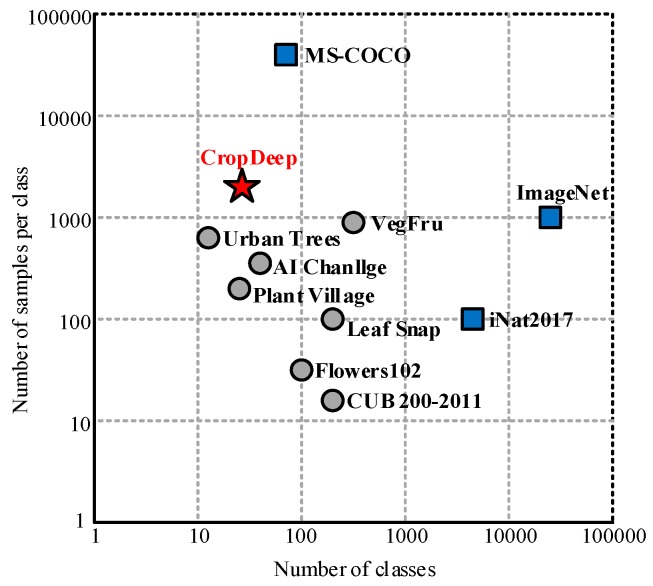
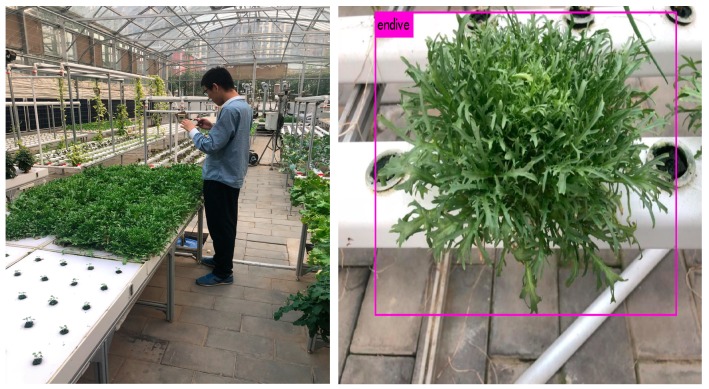
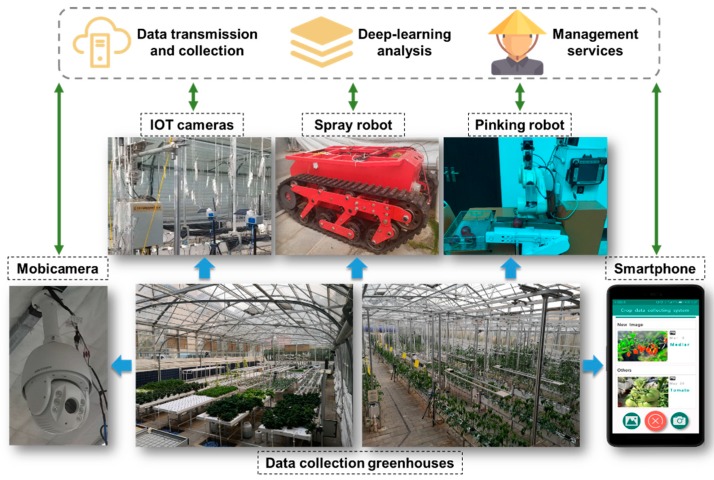
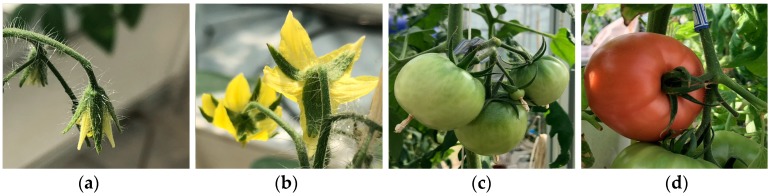
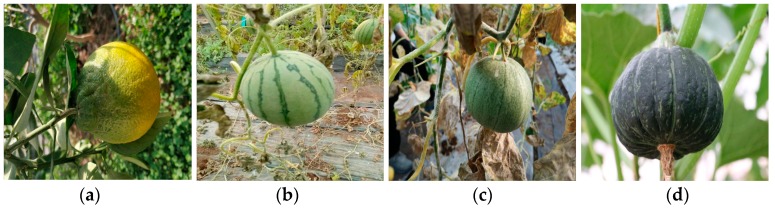
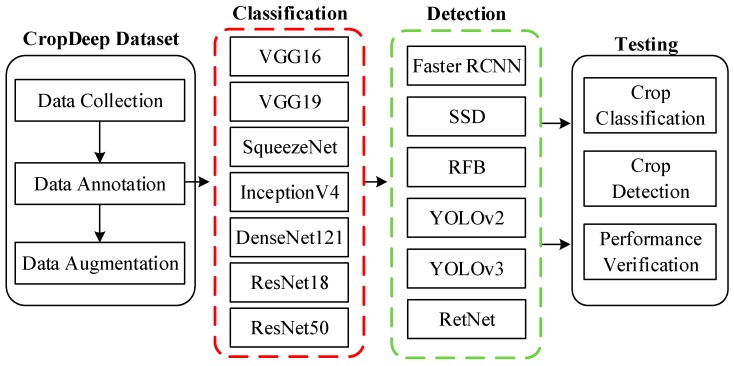
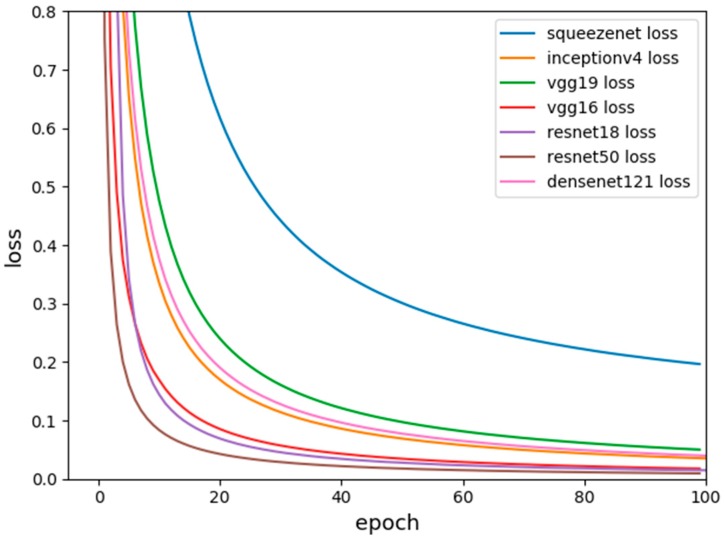
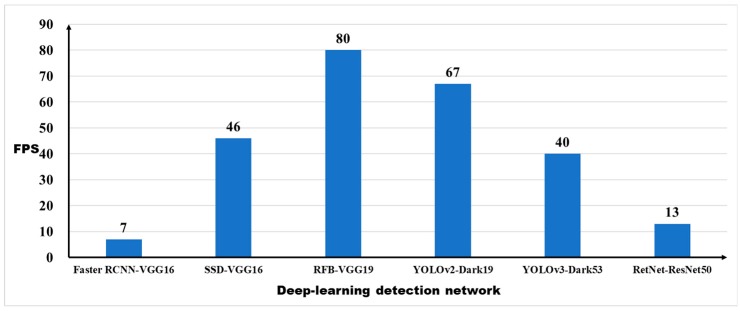
Intelligence has been considered as the major challenge in promoting economic potential and production efficiency of precision agriculture. In order to apply advanced deep-learning technology to complete various agricultural tasks in online and offline ways, a large number of crop vision datasets with domain-specific annotation are urgently needed. To encourage further progress in challenging realistic agricultural conditions, we present the CropDeep species classification and detection dataset, consisting of 31,147 images with over 49,000 annotated instances from 31 different classes. In contrast to existing vision datasets, images were collected with different cameras and equipment in greenhouses, captured in a wide variety of situations. It features visually similar species and periodic changes with more representative annotations, which have supported a stronger benchmark for deep-learning-based classification and detection. To further verify the application prospect, we provide extensive baseline experiments using state-of-the-art deep-learning classification and detection models. Results show that current deep-learning-based methods achieve well performance in classification accuracy over 99%. While current deep-learning methods achieve only 92% detection accuracy, illustrating the difficulty of the dataset and improvement room of state-of-the-art deep-learning models when applied to crops production and management. Specifically, we suggest that the YOLOv3 network has good potential application in agricultural detection tasks.
智能被认为是促进精准农业经济潜力和生产效率的主要挑战。为了在线和离线方式应用先进的深度学习技术来完成各种农业任务,我们急需大量具有特定领域标注的作物视觉数据集。为了鼓励在具有挑战性的实际农业条件下取得进一步进展,我们提出了 CropDeep 物种分类和检测数据集,该数据集由 31,147 张图像组成,包含 31 个不同类别的超过 49,000 个标注实例。与现有的视觉数据集相比,这些图像是使用不同的相机和设备在温室中采集的,在各种情况下拍摄。它具有视觉上相似的物种和周期性变化,具有更具代表性的标注,为基于深度学习的分类和检测提供了更强的基准。为了进一步验证应用前景,我们使用最先进的深度学习分类和检测模型提供了广泛的基准实验。结果表明,当前基于深度学习的方法在分类准确率方面超过 99%。虽然当前的深度学习方法的检测准确率仅为 92%,这表明该数据集具有一定的难度,并且现有的深度学习模型在应用于作物生产和管理时还有改进的空间。具体来说,我们建议 YOLOv3 网络在农业检测任务中有很好的潜在应用。