Department of Neurology, Marshall University School of Medicine, Huntington, WV, USA.
Department of Neurology and Neural and Behavioral Sciences, Penn State University College of Medicine, Hershey, PA, USA.
Parkinsonism Relat Disord. 2021 May;86:97-100. doi: 10.1016/j.parkreldis.2021.03.032. Epub 2021 Apr 11.
Traditionally, medical care and research in Parkinson's disease (PD) have been conducted with in-person encounters. The recent COVID-19 pandemic has profoundly impacted the delivery of in-person clinical care and clinical research. We conducted an online survey of active clinician members of the Parkinson Study Group (PSG) to evaluate the adoption of various non-face-to-face methods in clinical practice and research in PD during the COVID-19 pandemic.
We conducted a survey using the open-access online SurveyMonkey tool (http://www.surveymonkey.com). The survey had 27 items and was designed to elucidate clinical/research care before and during the COVID-19 pandemic. The survey was sent to 414 active PSG members with weekly reminders and it remained accessible for 30 days from May 2020.
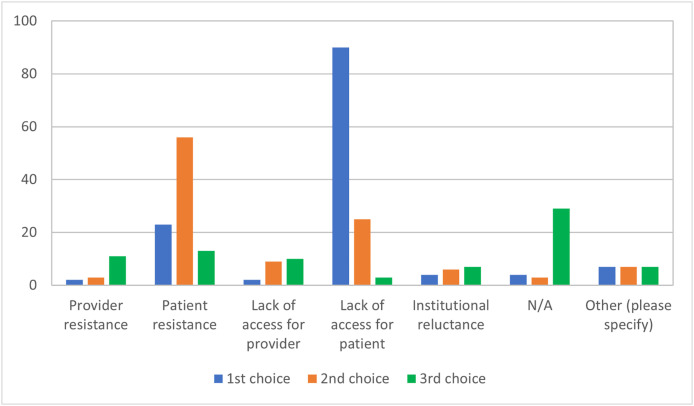
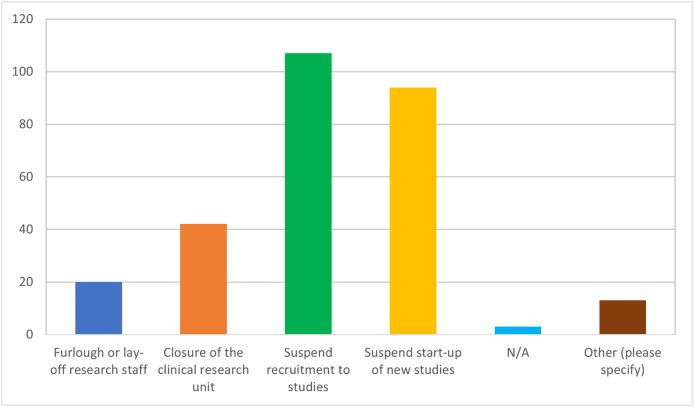
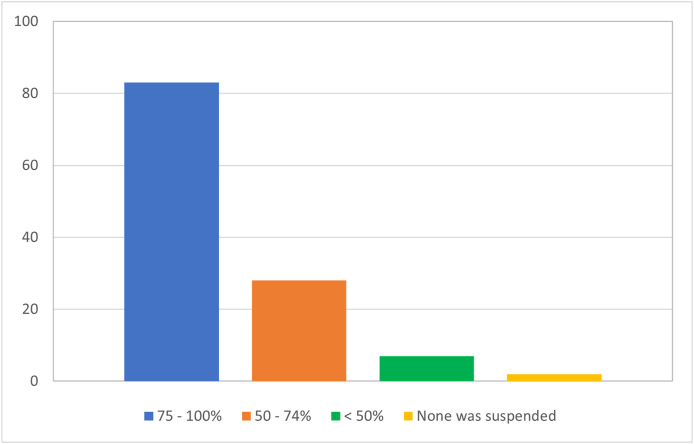
We received 142 responses, of which 133 (93.7%) provided demographic data. The clinical use of virtual visits via synchronous video conferencing increased from 39.5% pre-COVID-19 to 94.6% during the COVID-19 pandemic. Lack of access for patients (68.2%) and patient resistance (51.4%) were the top barriers for its use. Approximately 70% respondents stated that 75-100% of their research activities were suspended during the COVID-19 pandemic. Many sites had to fill out protocol deviations (38.2%), protocol exceptions (25.5%) or change their research profile due to layoffs (16.8%). The overall use of video conferencing increased from 30.3% to 64.1%.
The current results suggest a need for flexibility in conducting office visits and clinical trials in PD patients. Technology has the potential to enhance patient care and convenience, when in-person visits can be challenging.
传统上,帕金森病(PD)的医疗护理和研究都是通过面对面的方式进行的。最近的 COVID-19 大流行深刻地影响了面对面的临床护理和临床研究的开展。我们对活跃的帕金森病研究小组(PSG)临床医生成员进行了在线调查,以评估在 COVID-19 大流行期间在 PD 临床实践和研究中采用各种非面对面方法的情况。
我们使用开放获取的在线 SurveyMonkey 工具(http://www.surveymonkey.com)进行了一项调查。该调查共有 27 个项目,旨在阐明 COVID-19 大流行之前和期间的临床/研究护理情况。该调查于 2020 年 5 月发送给 414 名活跃的 PSG 成员,并每周提醒一次,可在 30 天内访问。
我们收到了 142 份回复,其中 133 份(93.7%)提供了人口统计学数据。通过同步视频会议进行虚拟就诊的临床使用率从 COVID-19 大流行前的 39.5%增加到 COVID-19 大流行期间的 94.6%。使用率不高的原因是患者无法获得(68.2%)和患者抵制(51.4%)。大约 70%的受访者表示,他们的研究活动在 COVID-19 大流行期间有 75-100%暂停。由于裁员,许多站点不得不填写方案偏差(38.2%)、方案例外(25.5%)或更改其研究方案(16.8%)。视频会议的总体使用率从 30.3%增加到 64.1%。
目前的结果表明,在 PD 患者中进行门诊就诊和临床试验时需要灵活性。当面对面访问具有挑战性时,技术有可能增强患者护理和便利性。