School of Nursing, Loma Linda University, Loma Linda, CA, USA.
JBI Evid Synth. 2021 Oct;19(10):2659-2694. doi: 10.11124/JBIES-20-00329.
This review examined the effectiveness of telemonitoring versus usual care on self-care behaviors among community-dwelling adults with heart failure.
Heart failure is a global health crisis. There is a body of high-level evidence demonstrating that telemonitoring is an appropriate and effective therapy for many chronic conditions, including heart failure. The focus has been on traditional measures such as rehospitalizations, length of stay, cost analyses, patient satisfaction, quality of life, and death rates. What has not been systematically evaluated is the effectiveness of telemonitoring on self-care behaviors. Involving patients in self-care is an important heart failure management strategy.
This review included studies on adult participants (18 years and older), diagnosed with heart failure (New York Heart Association Class I - IV), who used telemonitoring in the ambulatory setting. Studies among pediatric patients with heart failure, adult patients with heart failure in acute care settings, or those residing in a care facility were excluded.
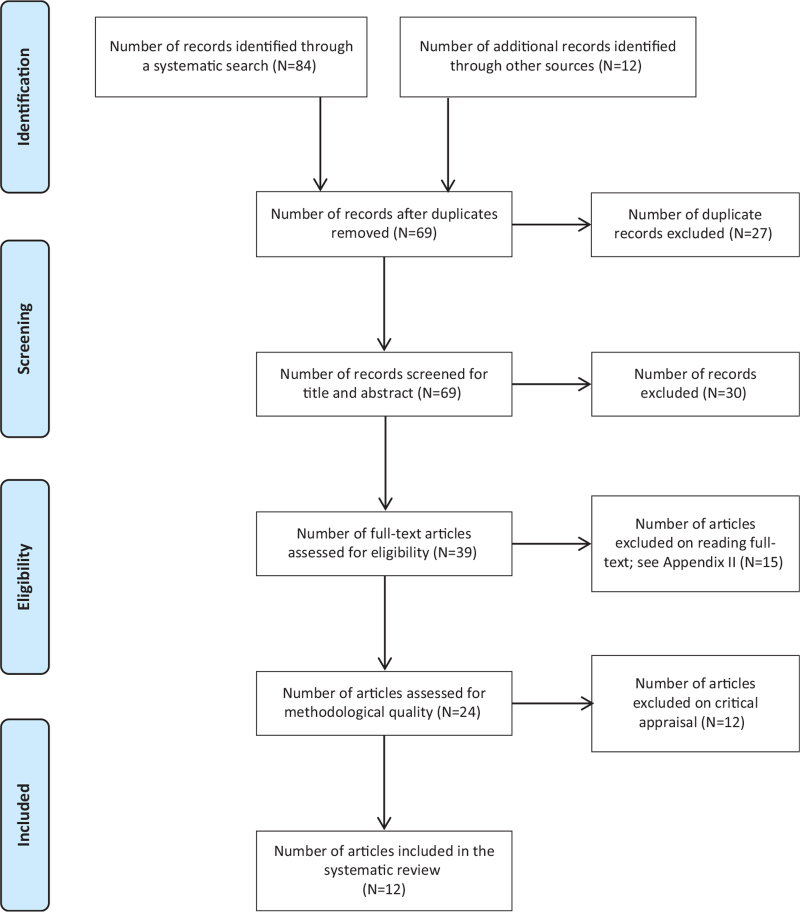
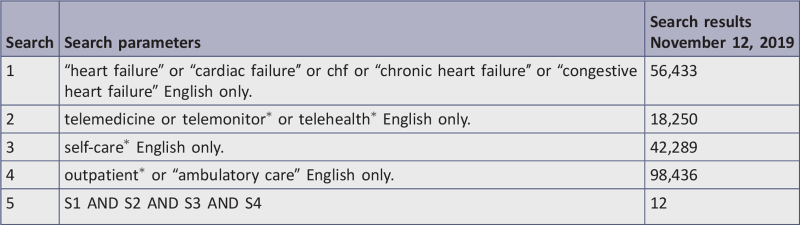
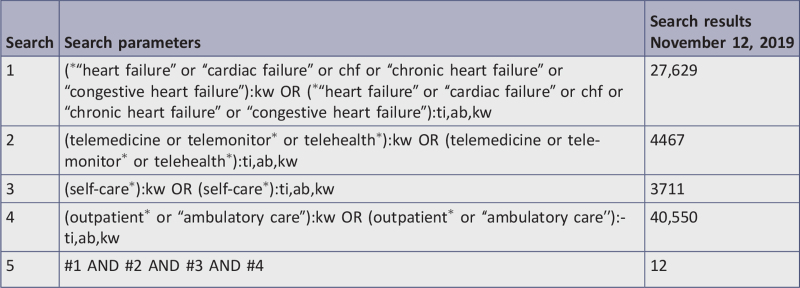
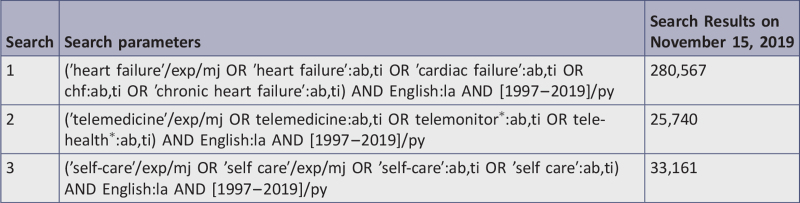
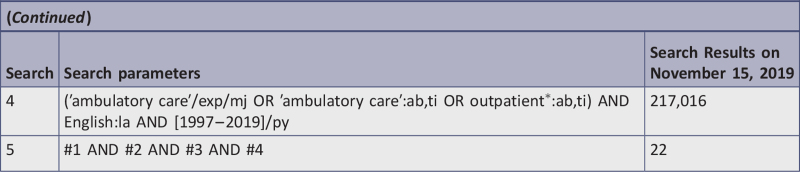
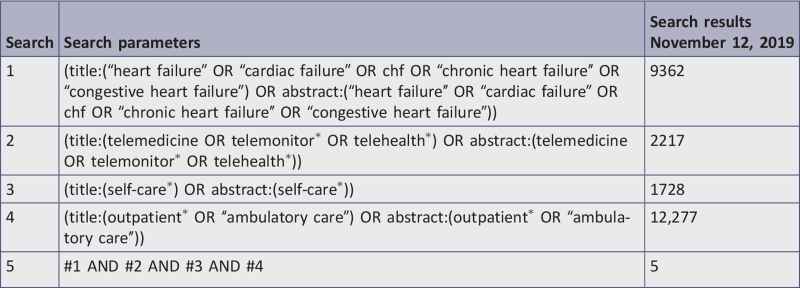
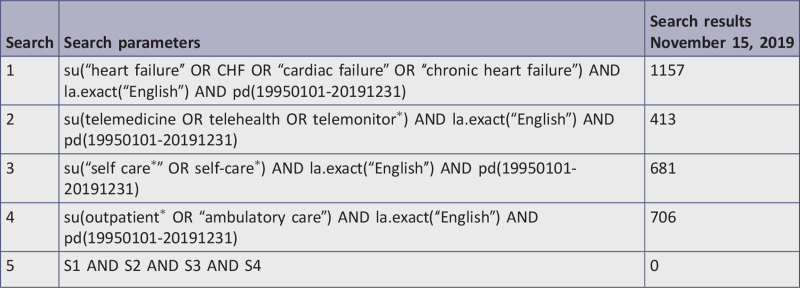
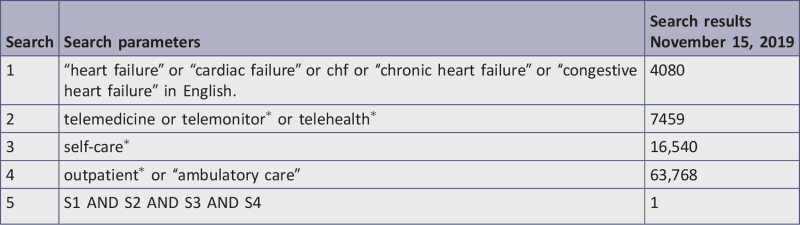
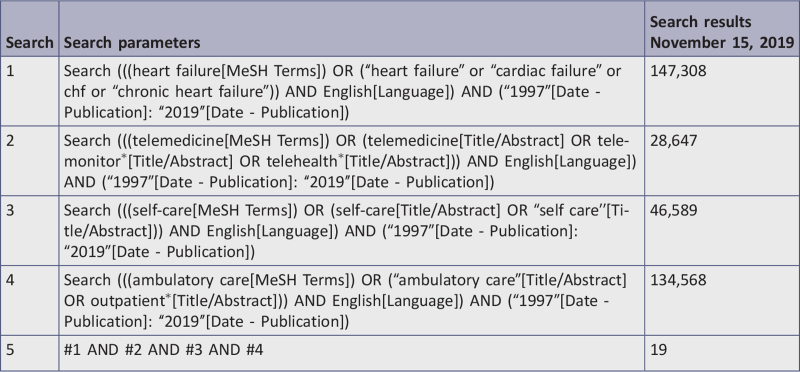
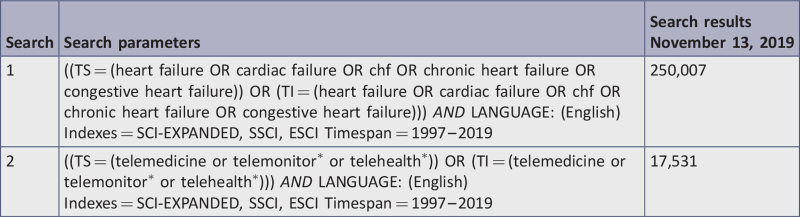
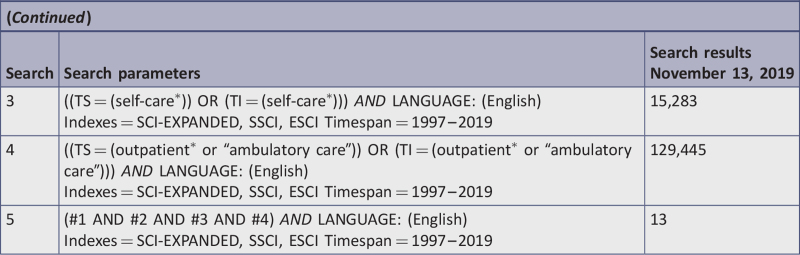
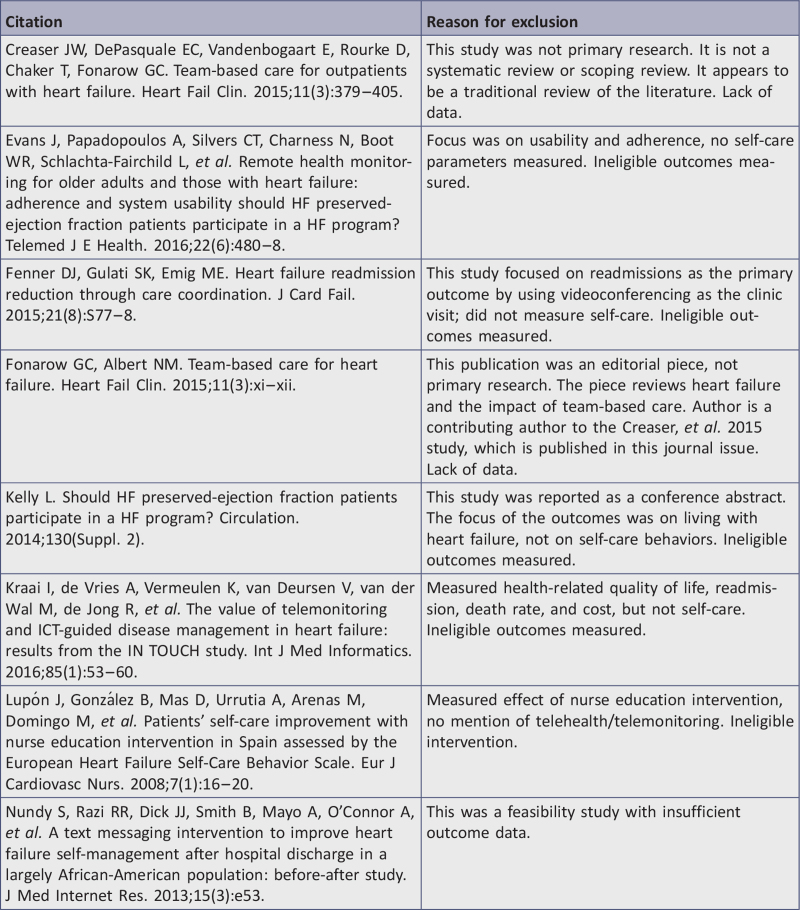
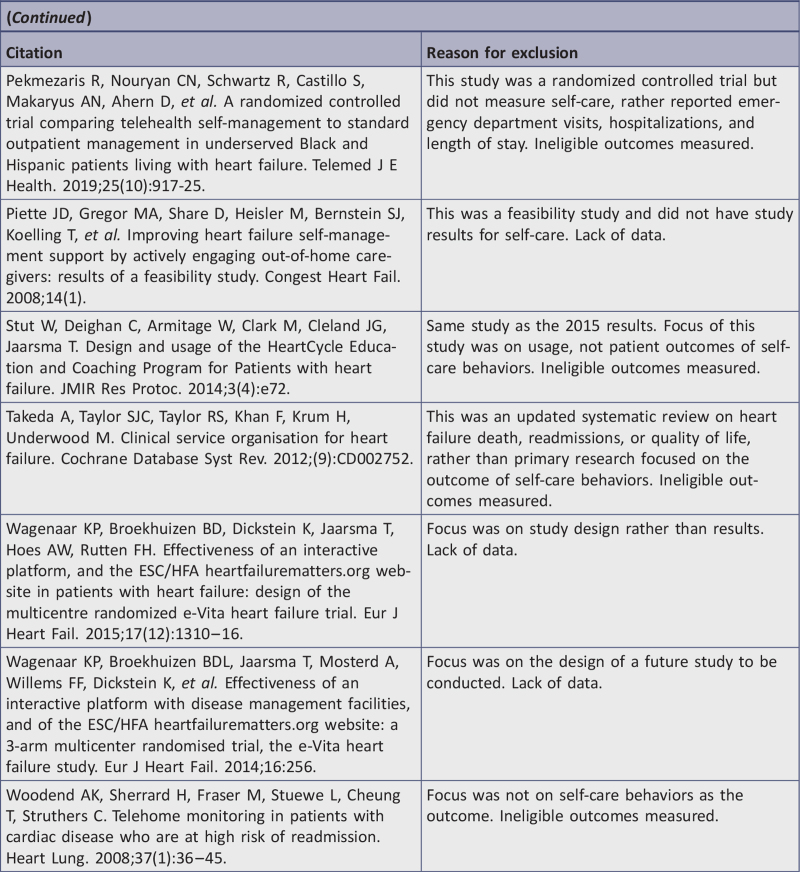
Eight databases, including CINAHL, Cochrane Central Register of Controlled Trials, Embase, MEDLINE, Epistemonikos, ProQuest Dissertations and Theses, PsycINFO, and Web of Science were systematically searched for English-language studies between 1997 and 2019. Studies selected for retrieval were assessed by two independent reviewers for methodological quality using critical appraisal checklists appropriate to the study design. Those meeting a priori quality standards of medium or high quality were included in the review.
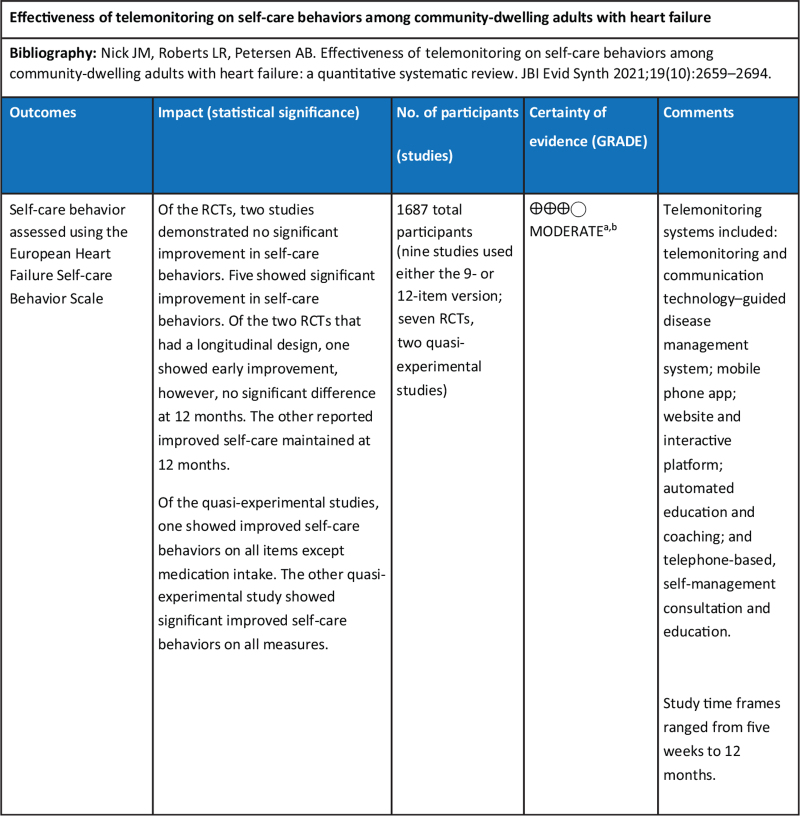
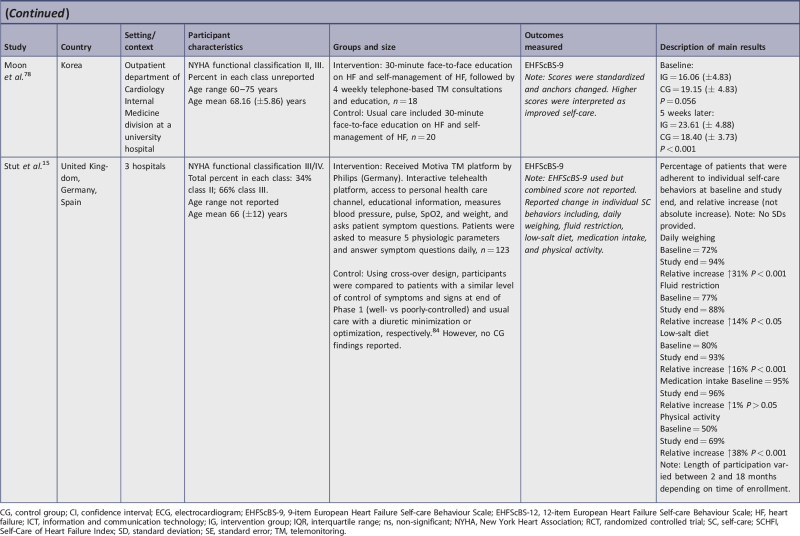
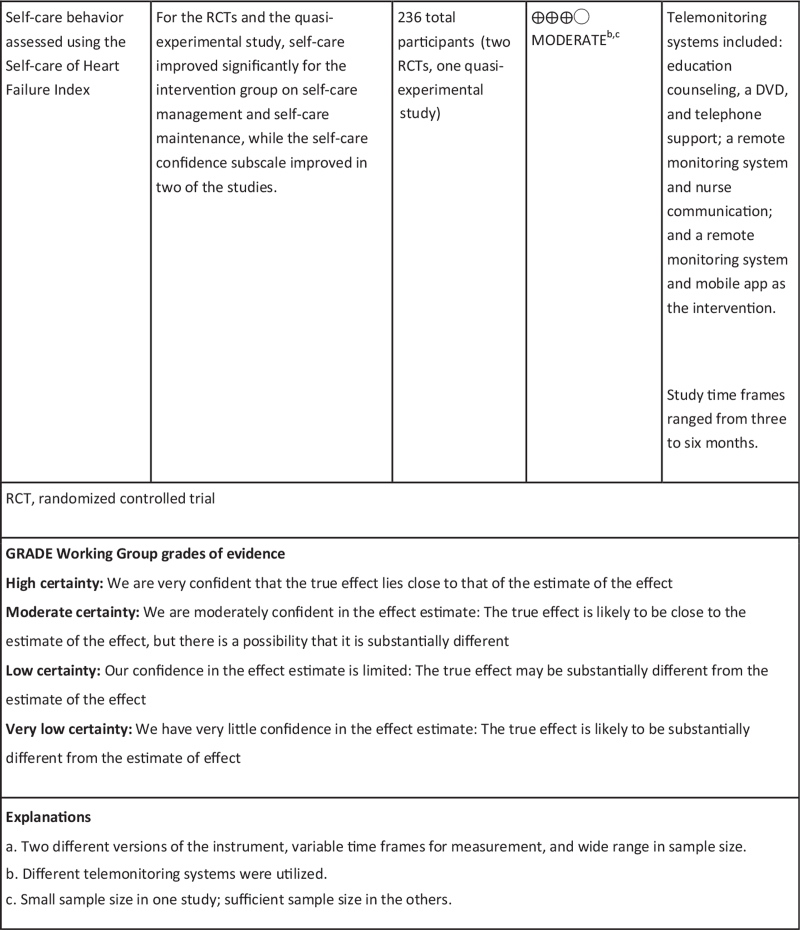
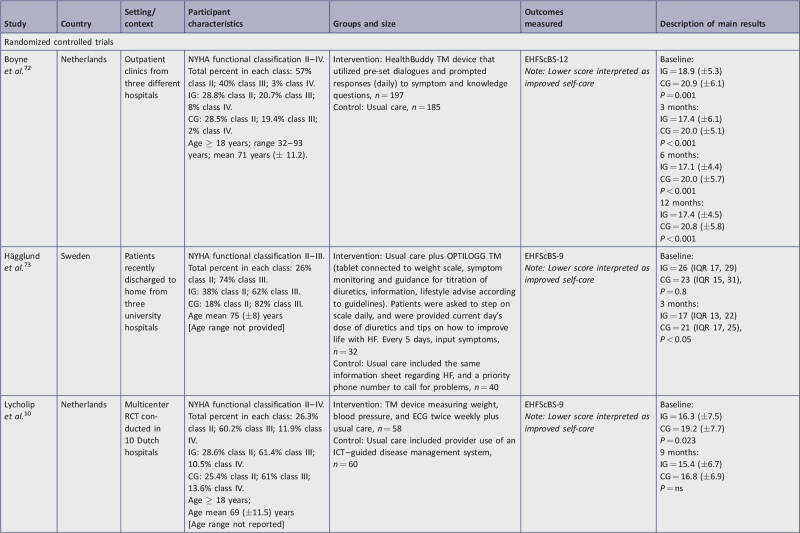
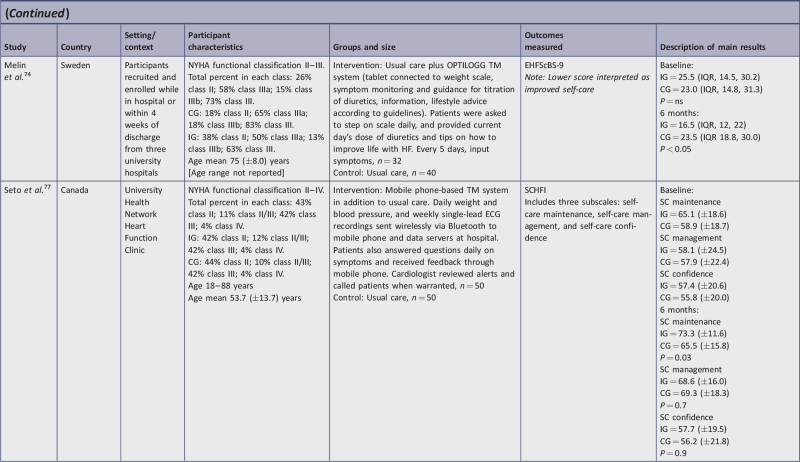
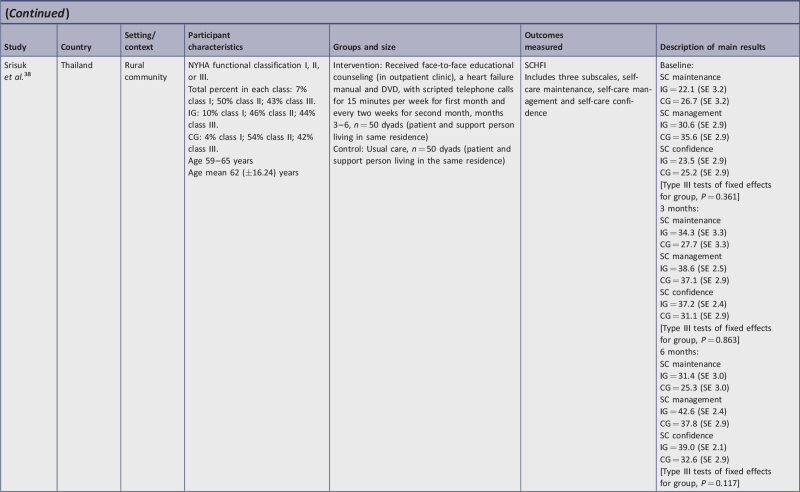
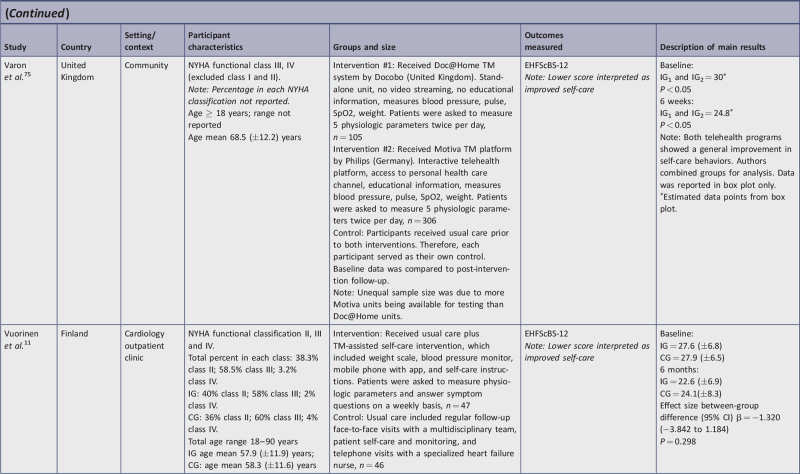
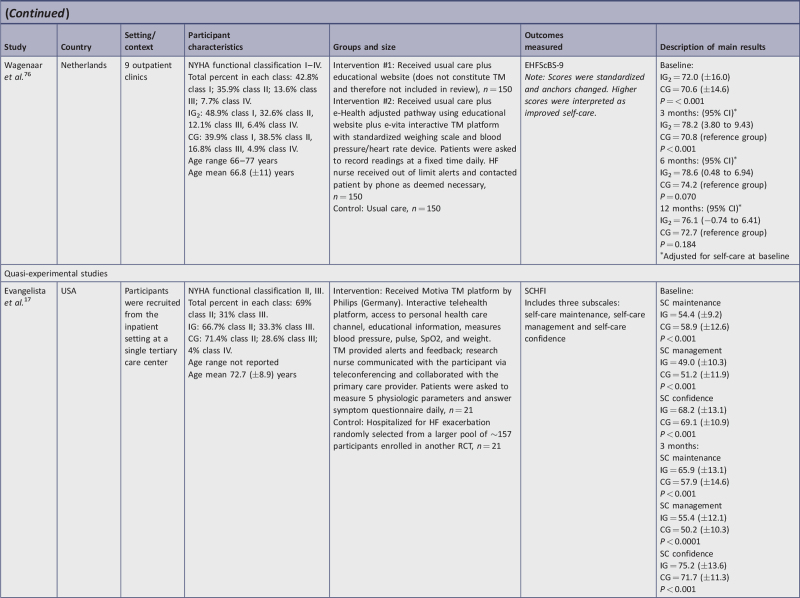
Twelve publications were included in this review (N = 1923). Nine of the 12 studies were randomized controlled trials and three were quasi-experimental studies. Based on appropriate JBI critical appraisal tools, the quality of included studies was deemed moderate to high. In a majority of the studies, a potential source of bias was related to lack of blinding of treatment assignment. Telemonitoring programs ranged from telephone-based support, interactive websites, and mobile apps to remote monitoring systems and devices. Self-care outcomes were measured with the European Heart Failure Self-care Behaviour Scale in nine studies and with the Self-care of Heart Failure Index in three studies. Telemonitoring improved self-care behaviors across 10 of these studies, achieving statistical significance. Clinical significance was also observed in nine of the 12 studies. All studies utilized one of two validated instruments that specifically measure self-care behaviors among patients with heart failure. However, in some studies, variation in interpretation and reporting was observed in the use of one instrument.
Overall, telemonitoring had a positive effect on self-care behavior among adult, community-dwelling patients with heart failure; however, there is insufficient and conflicting evidence to determine how long the effectiveness lasts. Longitudinal studies are needed to determine the sustained effect of telemonitoring on self-care behaviors. In addition, the limitations of the current studies (eg, inadequate sample size, study design, incomplete statistical reporting, self-report bias) should be taken into account when designing future studies. This review provides evidence for the use of telemonitoring, which is poised for dramatic expansion given the current clinical environment encouraging reduced face-to-face visits.
PROSPERO CRD42019131852.
本综述考察了远程监测与常规护理相比,对心力衰竭的社区居住成年人自我护理行为的有效性。
心力衰竭是一个全球性的健康危机。有大量高水平的证据表明,远程监测是许多慢性疾病(包括心力衰竭)的一种合适和有效的治疗方法。重点一直放在传统的措施上,如再住院率、住院时间、成本分析、患者满意度、生活质量和死亡率。然而,尚未系统评估远程监测对自我护理行为的有效性。让患者参与自我护理是心力衰竭管理策略的一个重要组成部分。
本综述纳入了 18 岁及以上、被诊断为心力衰竭(纽约心脏协会 I-IV 级)、在门诊使用远程监测的成年参与者的研究。排除了儿科心力衰竭患者、急性护理环境中的成年心力衰竭患者或居住在护理机构的患者的研究。
8 个数据库(包括 CINAHL、Cochrane 对照试验中心注册库、Embase、MEDLINE、Epistemonikos、ProQuest 论文和学位数据库、PsycINFO 和 Web of Science)系统地检索了 1997 年至 2019 年期间发表的英文研究。由两名独立的评审员使用适合研究设计的批判性评价检查表对检索到的研究进行方法学质量评估。符合预先确定的中等到高质量标准的研究被纳入综述。
本综述共纳入 12 篇文献(N=1923)。12 项研究中的 9 项为随机对照试验,3 项为准实验研究。根据适当的 JBI 批判性评价工具,纳入研究的质量被认为是中等至高度。在大多数研究中,与治疗分配缺乏盲法有关的潜在偏倚来源。远程监测方案范围从基于电话的支持、互动网站和移动应用程序到远程监测系统和设备。9 项研究使用欧洲心力衰竭自我护理行为量表测量自我护理结果,3 项研究使用心力衰竭自我护理指数测量自我护理结果。在这些研究中的 10 项研究中,远程监测改善了自我护理行为,并达到了统计学意义。12 项研究中的 9 项也观察到了临床意义。所有研究都使用了两种专门测量心力衰竭患者自我护理行为的经过验证的工具之一。然而,在一些研究中,在使用一种工具时,观察到解释和报告的差异。
总体而言,远程监测对社区居住的成年心力衰竭患者的自我护理行为有积极影响;然而,目前的证据还不够充分且存在冲突,无法确定其效果持续的时间。需要进行纵向研究,以确定远程监测对自我护理行为的持续效果。此外,在设计未来的研究时,应考虑当前研究的局限性(例如,样本量不足、研究设计、不完整的统计报告、自我报告偏倚)。本综述提供了使用远程监测的证据,考虑到目前鼓励减少面对面就诊的临床环境,远程监测有望得到显著扩展。
PROSPERO CRD42019131852。