El Rhalete Abdelilah, Rhazi Inas, Bensaid Amine, Zaid Ikram, Bkiyer Houssam, Ismaili Nabila, Elouafi Nouha, Housni Brahim
Department of Intensive Care Unit, Mohammed VI University Hospital, Oujda, Morocco.
Faculty of Medicine and Pharmacy, Mohammed 1st University, Oujda, Morocco.
Ann Med Surg (Lond). 2021 May;65:102309. doi: 10.1016/j.amsu.2021.102309. Epub 2021 Apr 18.
To date, more than 105,805,951 cases of COVID-19 have been diagnosed including 2,312,278 deaths. Many patients have cardiovascular risk-factors and/or co-morbidities and a lot of them developed heart conditions during the active or the post-infectious phase of the infection. A number of studies tried to demonstrate an association between poor prognostic outcomes and cardiovascular comorbidities and related damages, but the quality of current evidence is still weak.
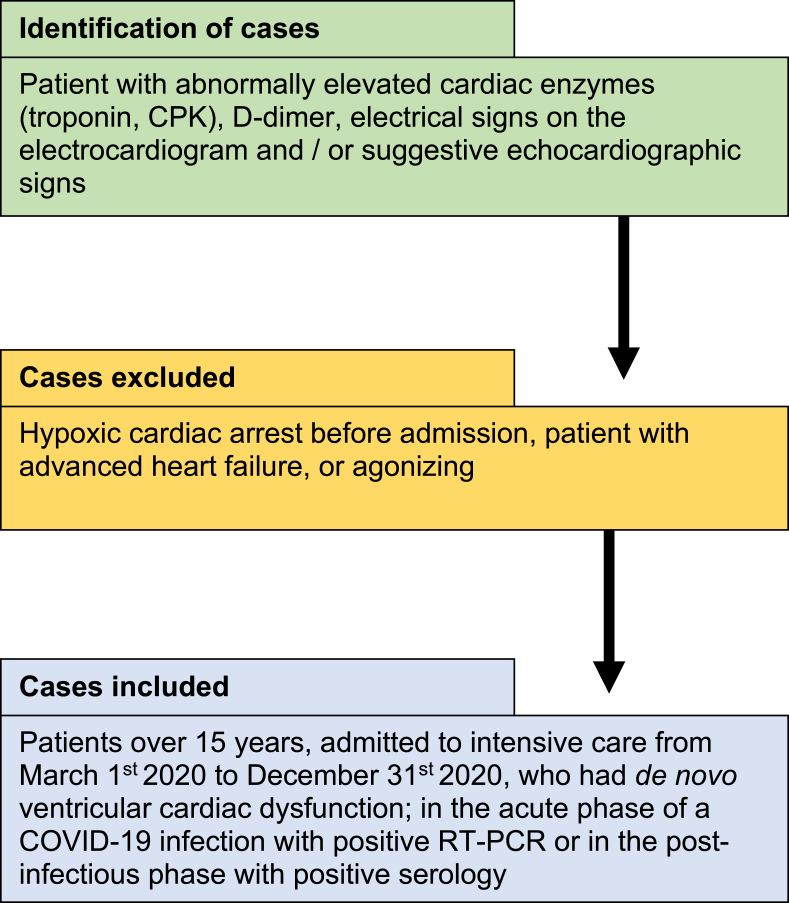
The aim of this single-center report is to describe the prevalence of cardiac injuries among our COVID-19 patients, to explore their association with survival outcomes and to demonstrate the medical care provided in our real-world setting. Our study included 610 COVID-19 patients admitted to the intensive care unit of our university hospital of whom13.77% (n = 84) presented cardiovascular injuries and which we included in this case series.
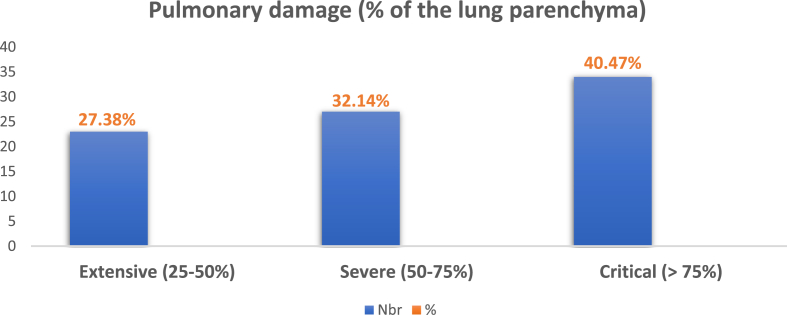
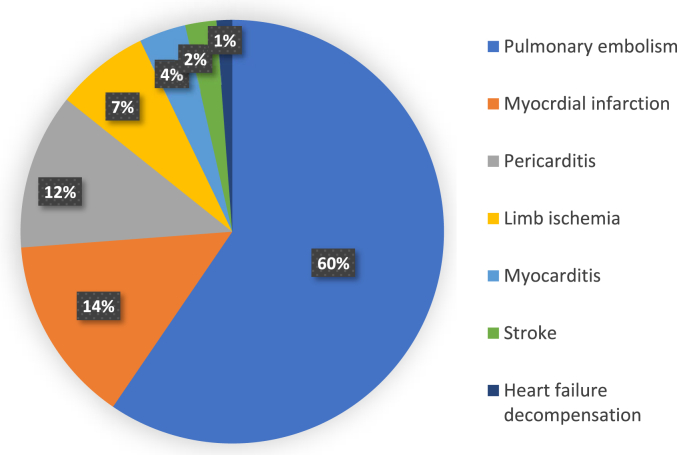
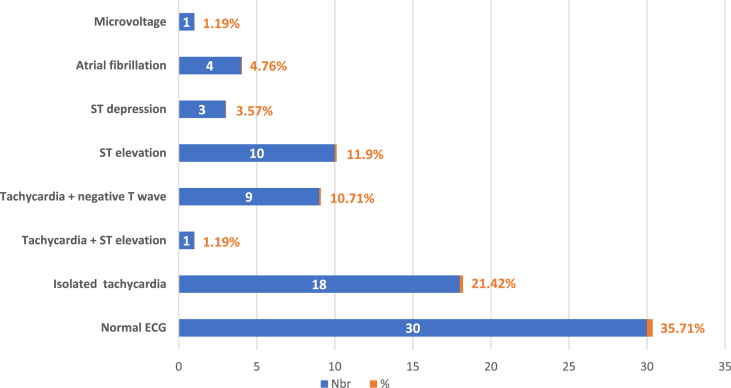
The average age of our patients was 65 years (27-90). 60 were men (71.42%) while 24 were women (28.55%). Their average BMI was 29.7 kg/m. Among them, 50 had a pulmonary embolism (59.52%), 12 patients had a myocardial infarction (14.28%), 10 presented pericarditis (11.9%) and 3 developed myocarditis (3.57%). There were 6 cases of ischemia (7.14%), 2 cases of stroke (2.38%), and 1 case of decompensated heart failure (1.19%). Among our patients, 46.42% had diabetes, 32.14% had a high blood pressure, 13.09% had a chronic renal failure and 14.28% had a history of ischemic heart disease. 14 patients (16.66%) had an elevated troponin with higher levels than 1000 ng/mL. The D-dimer value was high in almost all patients (80.95%). Lung damage from COVID-19 was extensive in 27.38%, severe in 32.14%, and critical in 40.47% of enrolled cases. CT chest angiography, ECG, and cardiac ultrasound were performed to the paraclinical confirmatory exploration of cardiac damages of these patients. Medical care was based on isolation, azithromycin, vitamin C, zinc, vitamin D, salicylic acid, dexamethasone followed with methylprednisolone, and anticoagulation for all hospitalized patients. Tocilizumab was indicated for 17 patients with hyperferritinemia (20.23% of patients). The initial respiratory care of our patients required oxygen therapy using nasal cannula (7.14%) high concentration masks (33.33%), high flow nasal cannula treatment (11.9%), non-invasive ventilation (NIV) (5.95%), and mechanical ventilation (41.66%). Thrombolysis was performed in three subjects with myocardial infarction and 2 underwent angioplasty with placement of an active stent at the proximal interventricular anterior artery, which all were successful. Three massive pulmonary embolisms died despite adequate treatment. Colchicine and salicylic acid were administered for pericarditis cases. Thromboprophylaxis was indicated for all patients and was reinforced if a venous thrombotic episode was confirmed. Patients with limb ischemia underwent surgical treatment. Among the 84 patients included in our cohort, 34 (40.47%) died in intensive care unit and 50 (59.52%) had a favorable evolution.
Cardiovascular involvement during COVID-19 should not be neglected and are associated with severe outcomes.
截至目前,已确诊超过105,805,951例新冠肺炎病例,其中包括2,312,278例死亡病例。许多患者存在心血管危险因素和/或合并症,其中许多人在感染的活动期或感染后阶段出现了心脏疾病。多项研究试图证明不良预后与心血管合并症及相关损害之间的关联,但目前证据的质量仍然薄弱。
本单中心报告的目的是描述我们新冠肺炎患者中心脏损伤的患病率,探讨其与生存结果的关联,并展示我们在实际临床环境中提供的医疗护理。我们的研究纳入了610例入住我校大学医院重症监护病房的新冠肺炎患者,其中13.77%(n = 84)出现心血管损伤,我们将这些患者纳入了本病例系列。
我们患者的平均年龄为65岁(27 - 90岁)。男性60例(71.42%),女性24例(28.55%)。他们的平均体重指数为29.7kg/m²。其中,50例发生肺栓塞(59.52%),12例发生心肌梗死(14.28%),10例出现心包炎(-11.9%),3例发生心肌炎(3.57%)。有6例缺血(7.14%),2例中风(2.38%),1例失代偿性心力衰竭(1.19%)。在我们的患者中,46.42%患有糖尿病,32.14%患有高血压,13.09%患有慢性肾衰竭,14.28%有缺血性心脏病史。14例患者(16.66%)肌钙蛋白升高,水平高于1000ng/mL。几乎所有患者的D - 二聚体值都很高(80.95%)。在纳入病例中,27.38%的患者新冠肺炎导致的肺部损伤广泛,32.14%严重,40.47%危急。对这些患者进行了胸部CT血管造影、心电图和心脏超声检查,以进行心脏损伤的临床辅助确诊。医疗护理基于隔离、阿奇霉素、维生素C、锌、维生素D、水杨酸、地塞米松,随后使用甲泼尼龙,对所有住院患者进行抗凝治疗。对于17例高铁蛋白血症患者(占患者的20.23%)使用了托珠单抗。我们患者的初始呼吸护理需要使用鼻导管吸氧(7.14%)、高浓度面罩吸氧(33.33%)、高流量鼻导管治疗(11.9%)、无创通气(NIV)(5.95%)和机械通气(41.66%)。对3例心肌梗死患者进行了溶栓治疗,2例在左前降支近端进行了血管成形术并置入了活性支架,所有手术均成功。尽管进行了充分治疗,仍有3例大面积肺栓塞患者死亡。对心包炎病例给予秋水仙碱和水杨酸治疗。对所有患者进行血栓预防,如果确诊静脉血栓事件则加强预防。肢体缺血患者接受了手术治疗。在我们队列中的84例患者中,34例(40.47%)在重症监护病房死亡,5例(59.52%)病情好转。
新冠肺炎期间的心血管受累不应被忽视,且与严重后果相关。