Gorkun Anastasiya A, Revokatova Daria P, Zurina Irina M, Nikishin Denis A, Bikmulina Polina Y, Timashev Peter S, Shpichka Anastasiya I, Kosheleva Nastasia V, Kolokoltsova Tamara D, Saburina Irina N
FSBSI Institute of General Pathology and Pathophysiology, Moscow, Russia.
Institute for Regenerative Medicine, Sechenov University, Moscow, Russia.
Front Cell Dev Biol. 2021 Apr 9;9:572727. doi: 10.3389/fcell.2021.572727. eCollection 2021.
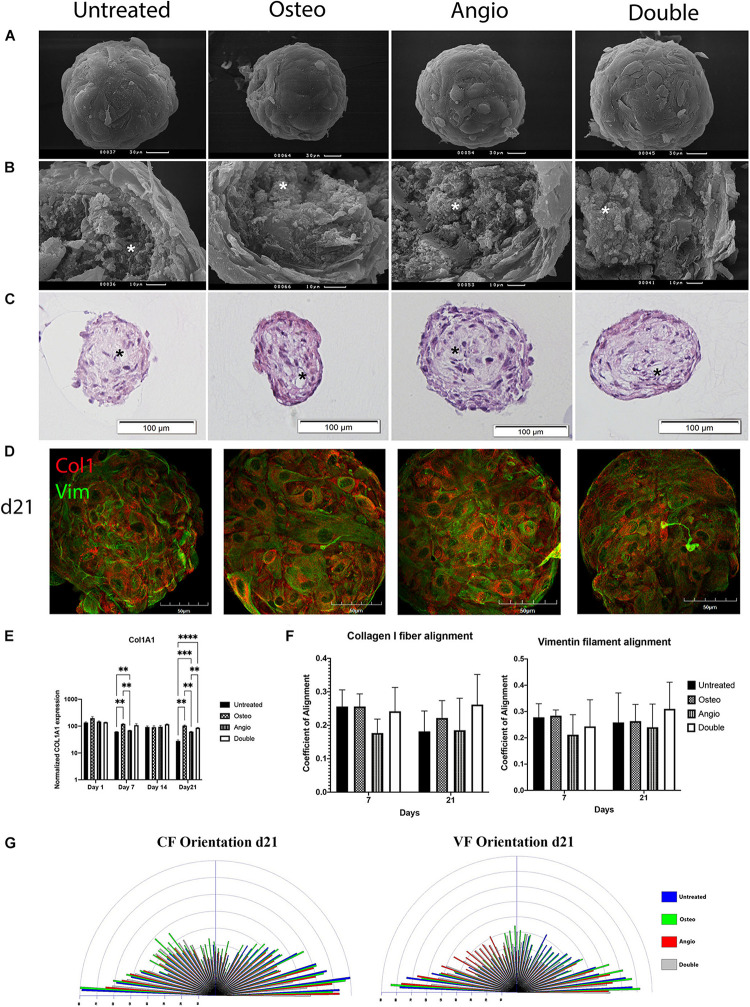
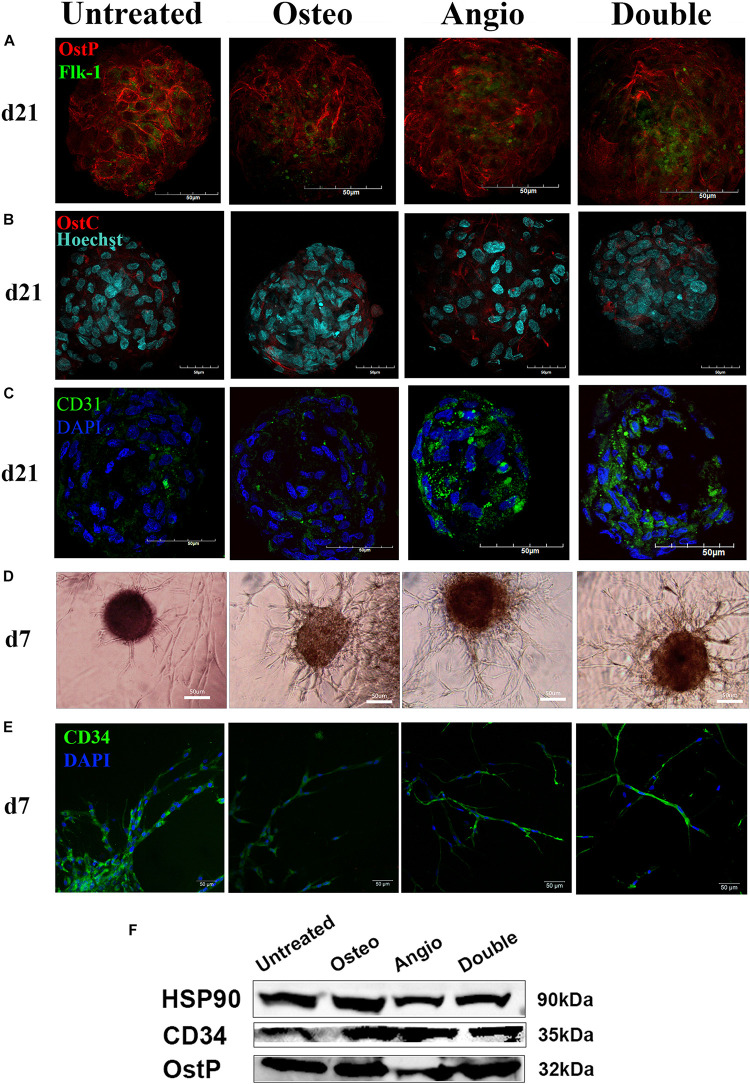
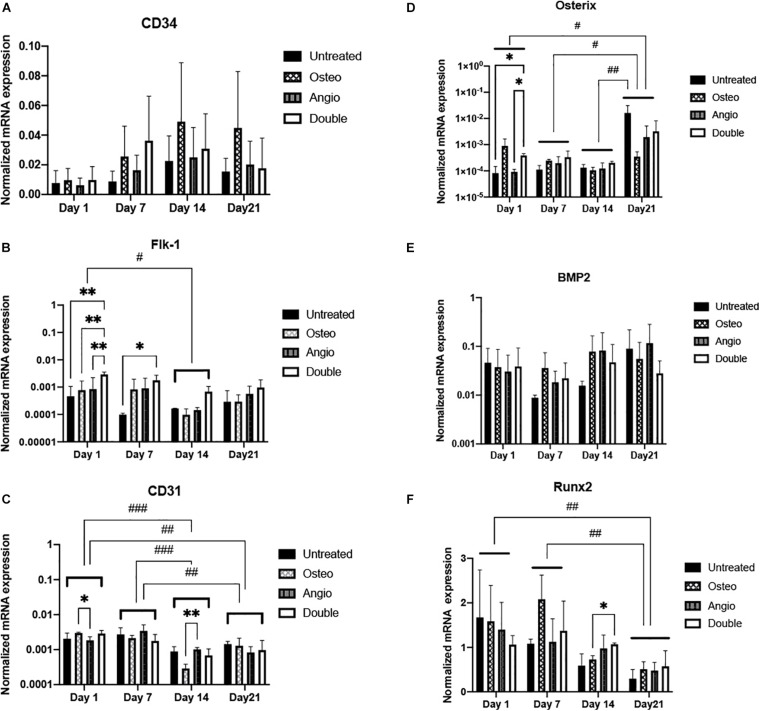
Bone formation during embryogenesis is driven by interacting osteogenesis and angiogenesis with parallel endothelial differentiation. Thence, all bioengineering techniques are aimed at pre-vascularization of osteogenic bioequivalents to provide better regeneration outcomes upon transplantation. Due to appearance of cell-cell and cell-matrix interactions, 3D cultures of adipose-derived stromal cells (ADSCs) provide a favorable spatial context for the induction of different morphogenesis processes, including vasculo-, angio-, and osteogenesis and, therefore, allow modeling their communication . However, simultaneous induction of multidirectional cell differentiation in spheroids from multipotent mesenchymal stromal cells (MMSCs) was not considered earlier. Here we show that arranging ADSCs into spheroids allows rapid and spontaneous acquiring of markers of both osteo- and angiogenesis compared with 2D culture. We further showed that this multidirectional differentiation persists in time, but is not influenced by classical protocols for osteo- or angio-differentiation. At the same time, ADSC-spheroids retain similar morphology and microarchitecture in different culture conditions. These findings can contribute to a better understanding of the fundamental aspects of autonomous regulation of differentiation processes and their cross-talks in artificially created self-organizing multicellular structures. This, in turn, can find a wide range of applications in the field of tissue engineering and regeneration.
胚胎发育过程中的骨形成是由相互作用的成骨作用和血管生成以及平行的内皮分化驱动的。因此,所有生物工程技术都旨在对成骨生物等效物进行预血管化,以便在移植后提供更好的再生效果。由于细胞间和细胞与基质相互作用的出现,脂肪来源的基质细胞(ADSCs)的三维培养为诱导不同的形态发生过程提供了有利的空间环境,包括血管生成、血管发生和成骨作用,因此能够模拟它们之间的相互作用。然而,此前并未考虑过在多能间充质基质细胞(MMSCs)的球体中同时诱导多向细胞分化。在这里,我们表明,与二维培养相比,将ADSCs排列成球体能够快速自发地获得成骨和血管生成的标志物。我们进一步表明,这种多向分化会持续存在,但不受成骨或血管生成经典方案的影响。同时,ADSC球体在不同的培养条件下保持相似的形态和微观结构。这些发现有助于更好地理解分化过程自主调节的基本方面及其在人工创建的自组织多细胞结构中的相互作用。反过来,这在组织工程和再生领域可以有广泛的应用。