Ekakitie Lisa Ilobekemen, Oyinloye Babatunji Emmanuel, Ajiboye Basiru Olaitan
Phytomedicine, Biochemical Toxicology and Biotechnology Research Laboratories, Department of Biochemistry, Afe Babalola University, Ado-Ekiti, Ekiti State, Nigeria.
Biotechnology and Structural Biology (BSB) Group, Department of Biochemistry and Microbiology, University of Zululand, Kwa Dlangezwa 3886, South Africa.
Heliyon. 2021 Apr 7;7(4):e06596. doi: 10.1016/j.heliyon.2021.e06596. eCollection 2021 Apr.
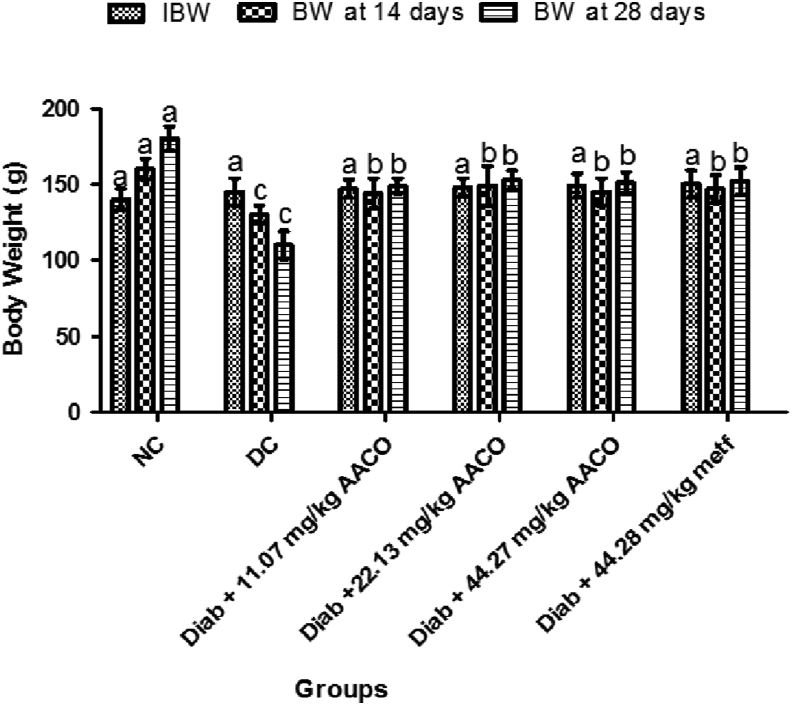
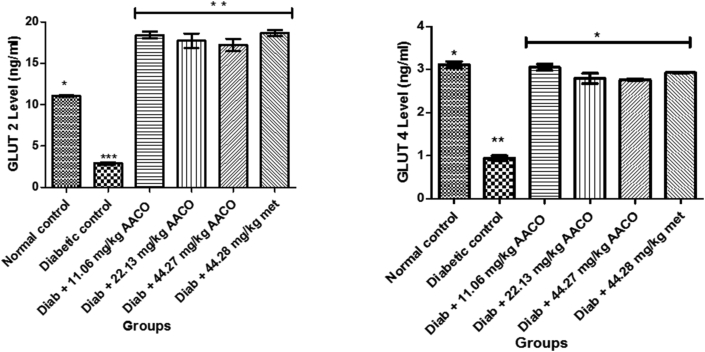
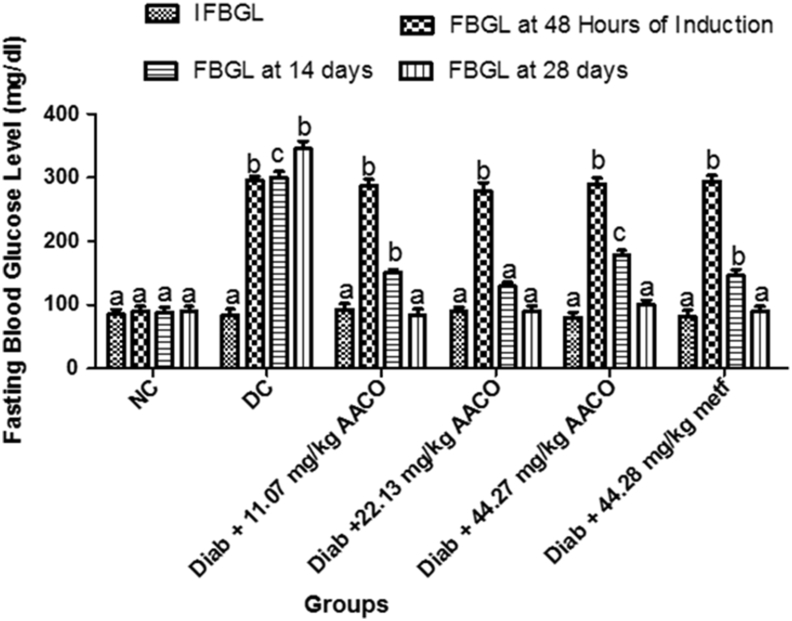
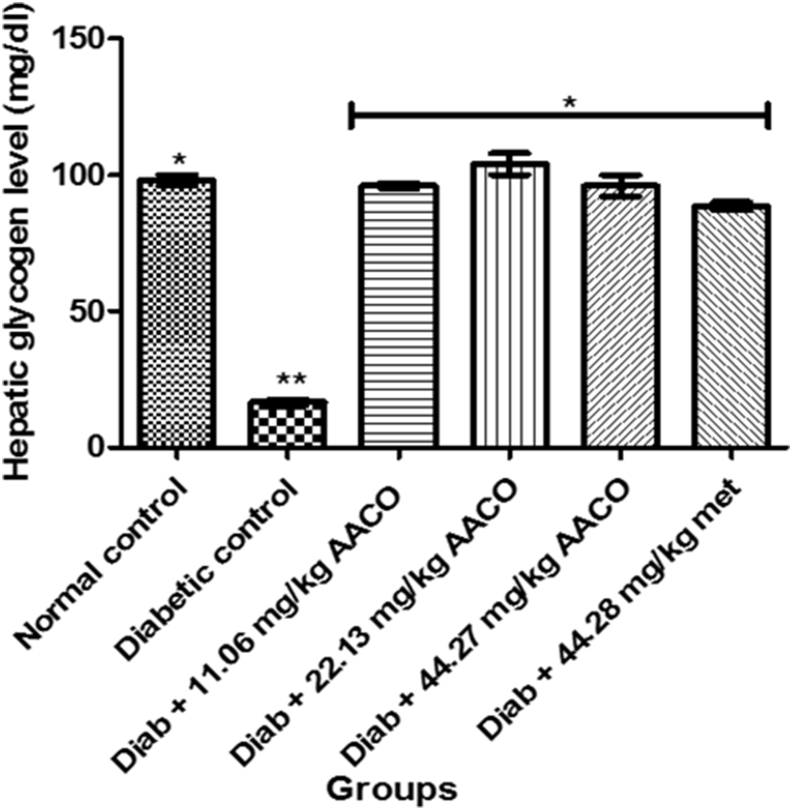
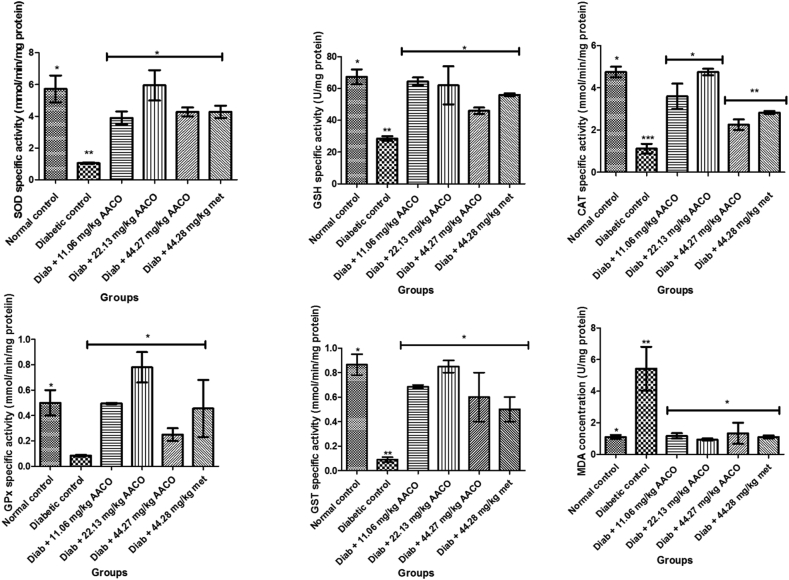
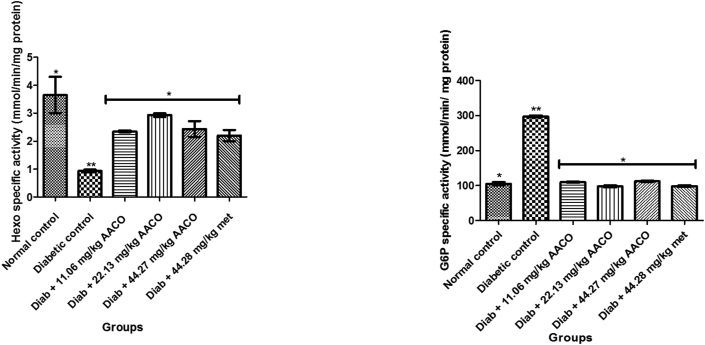
is a medicinal plant present in West Africa in the Itsekiri speaking part of Nigeria. It is used conventionally in diabetes mellitus management. This research investigates the ameliorative activity of the aqueous leaf extract of in a streptozotocin-induced diabetic rat model. Freshly prepared streptozotocin (40 mg/kg body weight [BW]) was administered intraperitoneally to induce diabetes. Three diabetic groups were placed on aqueous leaf extract of at 11.076, 22.134, and 44.268 mg/kg BW respectively; a group was placed on metformin (44.28 mg/kg BW), and the other two groups were the diabetic control and normal control. The experiment lasted for 28 days, thereafter, fasting blood glucose levels and body weight variations were recorded. Also, glycogen level, antioxidant enzyme, hexokinase and glucose-6-phosphatase activities, malonaldehyde (MDA) as well as glucose transporters 2 and 4 levels were analyzed using standard procedures. Diabetic rats administered aqueous extract of leaf significantly (p < 0.05) decreased the fasting blood glucose and MDA levels, and glucose-6-phosphatase activity. In addition, administration of aqueous extract of leaf to diabetic rats demonstrated a momentous increase in liver glycogen level, superoxide dismutase, catalase, glutathione peroxidase, reduced glutathione, glutathione transferase, and hexokinase activities as well as GLUT-2 and GLUT-4 levels. The data from this study suggest that the aqueous extract of leaf may be beneficial in the management of diabetic mellitus and its secondary effects.
是一种生长在尼日利亚伊特塞克里语区西非地区的药用植物。它传统上用于糖尿病管理。本研究在链脲佐菌素诱导的糖尿病大鼠模型中研究了其叶水提取物的改善活性。腹腔注射新鲜制备的链脲佐菌素(40毫克/千克体重[BW])以诱导糖尿病。三个糖尿病组分别给予叶水提取物,剂量为11.076、22.134和44.268毫克/千克体重;一组给予二甲双胍(44.28毫克/千克体重),另外两组分别为糖尿病对照组和正常对照组。实验持续28天,之后记录空腹血糖水平和体重变化。此外,使用标准程序分析糖原水平、抗氧化酶、己糖激酶和葡萄糖-6-磷酸酶活性、丙二醛(MDA)以及葡萄糖转运蛋白2和4水平。给予叶水提取物的糖尿病大鼠空腹血糖和MDA水平以及葡萄糖-6-磷酸酶活性显著降低(p<0.05)。此外,给糖尿病大鼠给予叶水提取物后,肝糖原水平、超氧化物歧化酶、过氧化氢酶、谷胱甘肽过氧化物酶、还原型谷胱甘肽、谷胱甘肽转移酶和己糖激酶活性以及GLUT-2和GLUT-4水平显著增加。本研究数据表明,叶水提取物可能对糖尿病及其继发效应的管理有益。