Zhang Teng, Wei Qingguang, Zhou Hua, Jing Zehao, Liu Xiaoguang, Zheng Yufeng, Cai Hong, Wei Feng, Jiang Liang, Yu Miao, Cheng Yan, Fan Daoyang, Zhou Wenhao, Lin Xinhong, Leng Huijie, Li Jian, Li Xinyu, Wang Caimei, Tian Yun, Liu Zhongjun
Department of Orthopedics, Peking University Third Hospital, Beijing, 100191, People's Republic of China.
Department of Materials Science and Engineering, College of Engineering, Peking University, Beijing, 100871, People's Republic of China.
Bioact Mater. 2021 Apr 6;6(11):3659-3670. doi: 10.1016/j.bioactmat.2021.03.030. eCollection 2021 Nov.
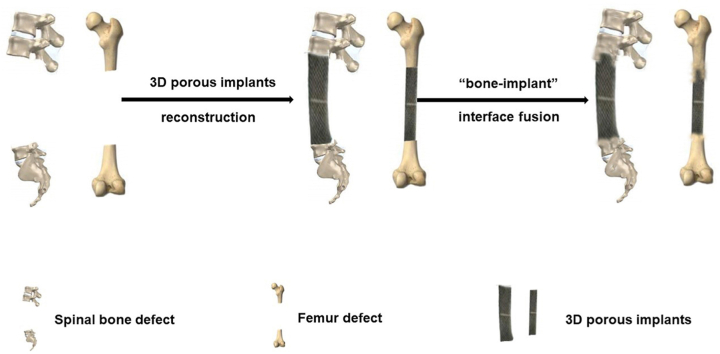
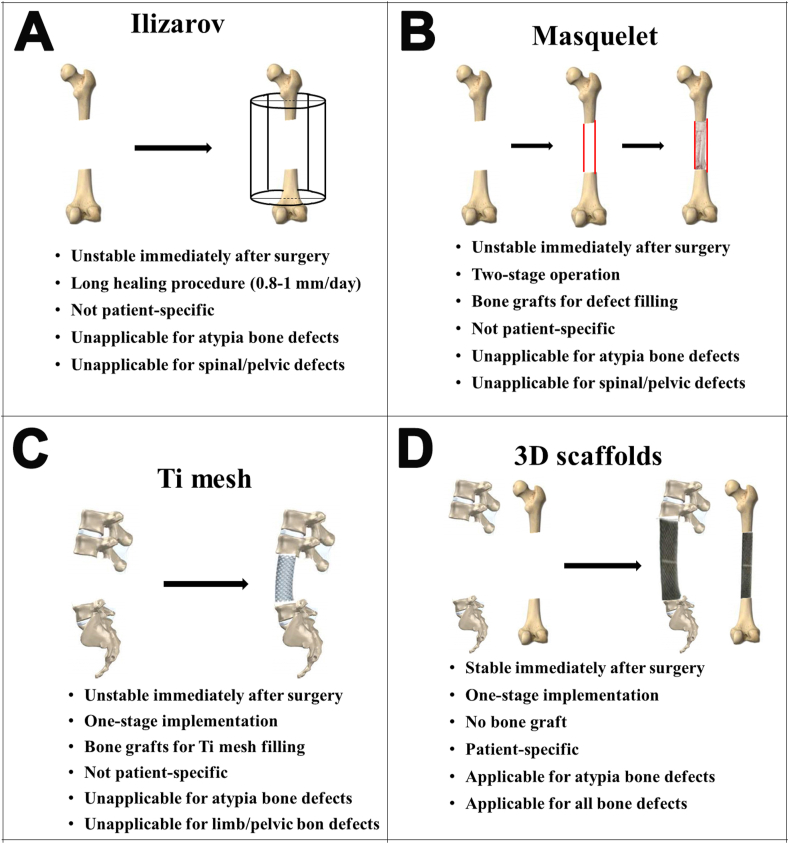
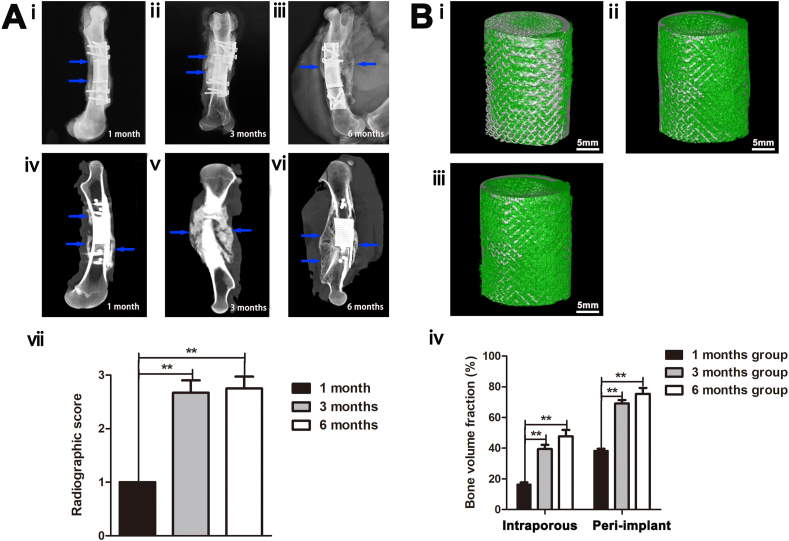
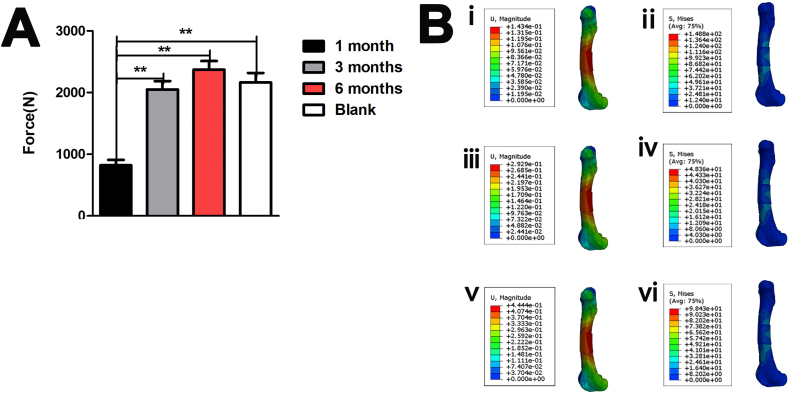
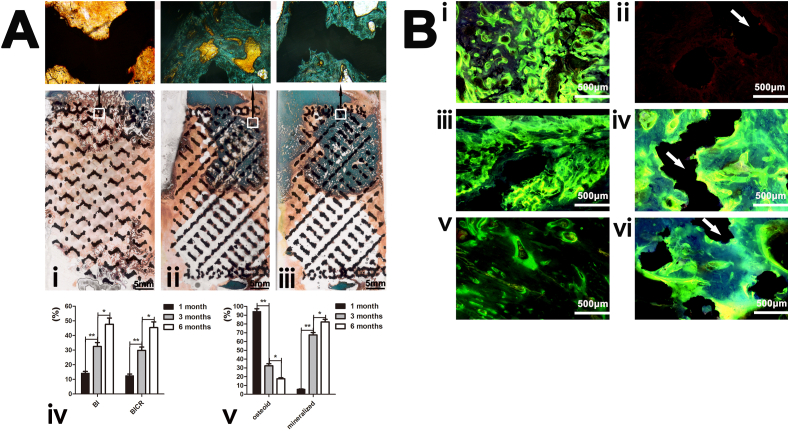
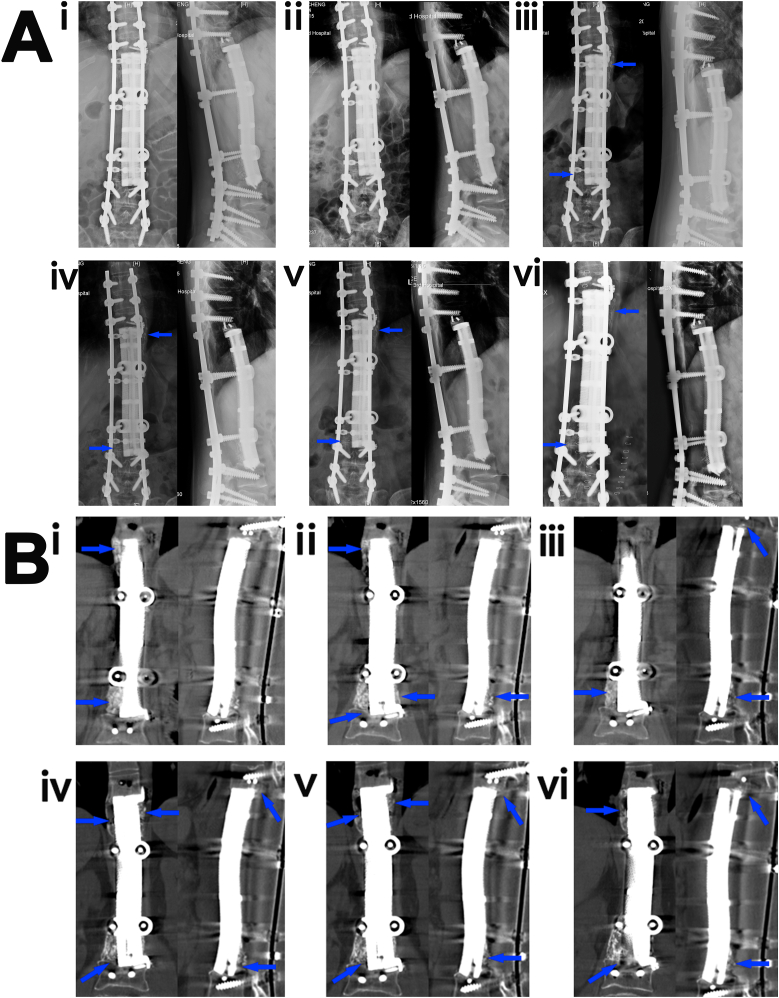
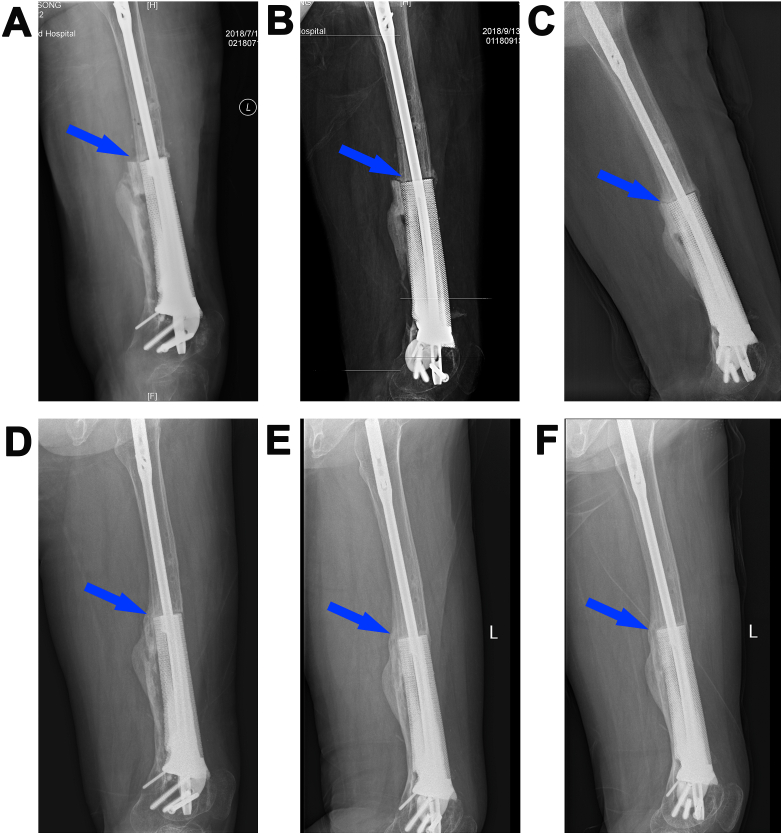
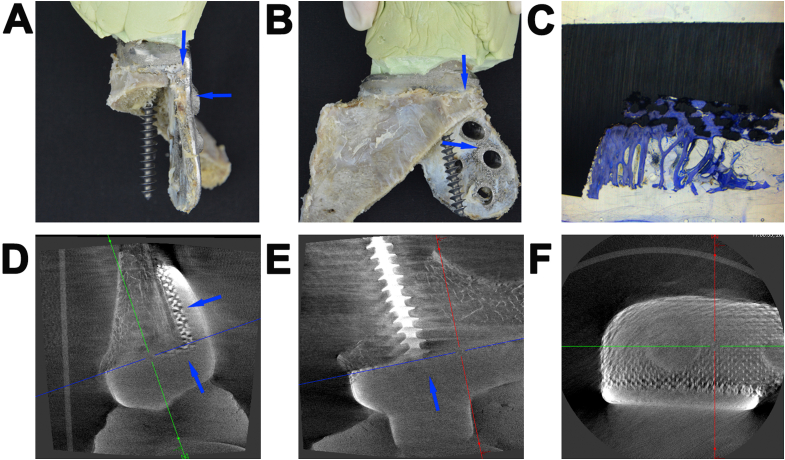
Bone defect repairs are based on bone graft fusion or replacement. Current large bone defect treatments are inadequate and lack of reliable technology. Therefore, we aimed to investigate a simple technique using three-dimensional (3D)-printed individualized porous implants without any bone grafts, osteoinductive agents, or surface biofunctionalization to treat large bone defects, and systematically study its long-term therapeutic effects and osseointegration characteristics. Twenty-six patients with large bone defects caused by tumor, infection, or trauma received treatment with individualized porous implants; among them, three typical cases underwent a detailed study. Additionally, a large segmental femur defect sheep model was used to study the osseointegration characteristics. Immediate and long-term biomechanical stability was achieved, and the animal study revealed that the bone grew into the pores with gradual remodeling, resulting in a long-term mechanically stable implant-bone complex. Advantages of 3D-printed microporous implants for the repair of bone defects included 1) that the stabilization devices were immediately designed and constructed to achieve early postoperative mobility, and 2) that osseointegration between the host bone and implants was achieved without bone grafting. Our osseointegration method, in which the "implant-bone" interface fusion concept was used instead of "bone-bone" fusion, subverts the traditional idea of osseointegration.
骨缺损修复基于骨移植融合或置换。目前对于大骨缺损的治疗并不充分,且缺乏可靠的技术。因此,我们旨在研究一种简单的技术,即使用三维(3D)打印的个体化多孔植入物,无需任何骨移植、骨诱导剂或表面生物功能化来治疗大骨缺损,并系统地研究其长期治疗效果和骨整合特性。26例由肿瘤、感染或创伤导致大骨缺损的患者接受了个体化多孔植入物治疗;其中,对3例典型病例进行了详细研究。此外,使用大段股骨缺损绵羊模型来研究骨整合特性。实现了即刻和长期的生物力学稳定性,动物研究表明,骨长入孔隙并逐渐重塑,形成长期机械稳定的植入物-骨复合体。3D打印微孔植入物修复骨缺损的优点包括:1)稳定装置可即刻设计和构建以实现术后早期活动;2)无需骨移植即可实现宿主骨与植入物之间的骨整合。我们的骨整合方法使用“植入物-骨”界面融合概念而非“骨-骨”融合,颠覆了传统的骨整合理念。