Emerg Infect Dis. 2021 May;27(5):1371-1379. doi: 10.3201/eid2705.204490.
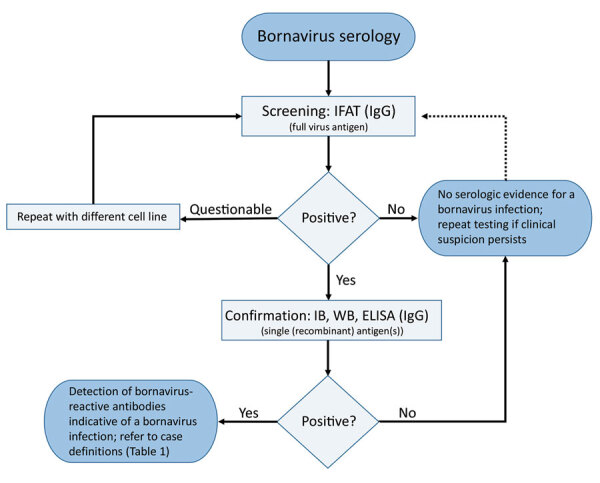
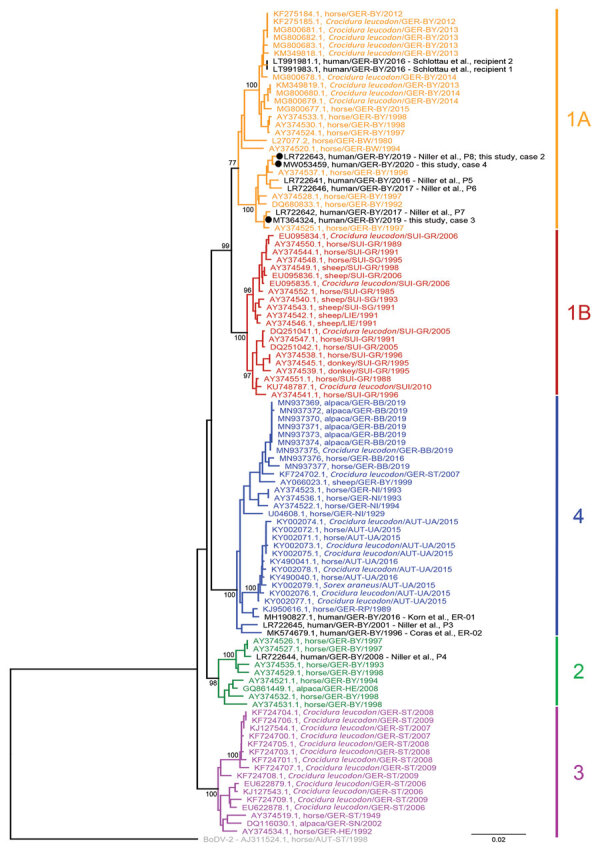
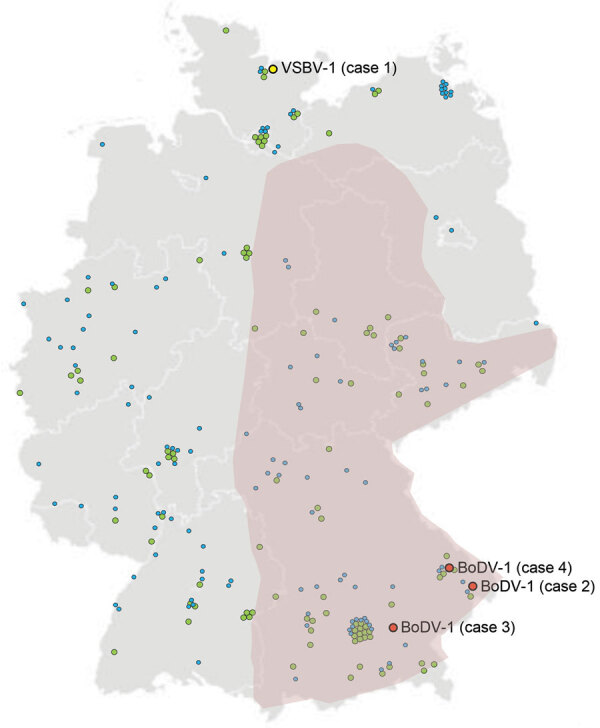
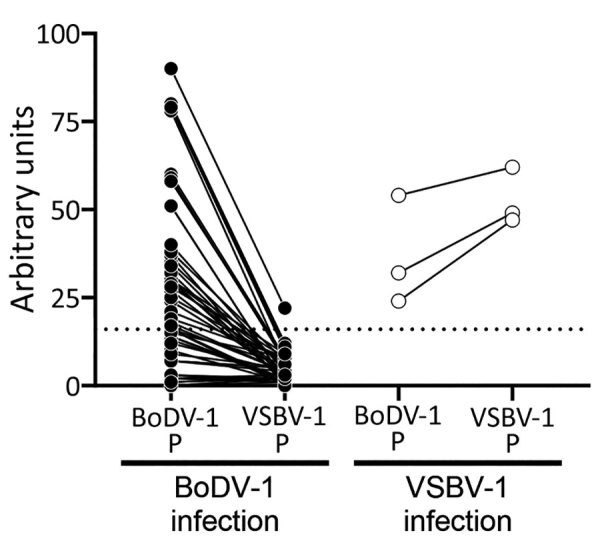
Human bornavirus encephalitis is a severe and often fatal infection caused by variegated squirrel bornavirus 1 (VSBV-1) and Borna disease virus 1 (BoDV-1). We conducted a prospective study of bornavirus etiology of encephalitis cases in Germany during 2018-2020 by using a serologic testing scheme applied along proposed graded case definitions for VSBV-1, BoDV-1, and unspecified bornavirus encephalitis. Of 103 encephalitis cases of unknown etiology, 4 bornavirus infections were detected serologically. One chronic case was caused by VSBV-1 after occupational-related contact of a person with exotic squirrels, and 3 acute cases were caused by BoDV-1 in virus-endemic areas. All 4 case-patients died. Bornavirus etiology could be confirmed by molecular methods. Serologic testing for these cases was virus specific, discriminatory, and a practical diagnostic option for living patients if no brain tissue samples are available. This testing should be guided by clinical and epidemiologic suspicions, such as residence in virus-endemic areas and animal exposure.
人类博尔纳病病毒脑炎是一种严重且常致命的感染,由多变松鼠博尔纳病病毒 1 型(VSBV-1)和博纳病病毒 1 型(BoDV-1)引起。我们通过应用针对 VSBV-1、BoDV-1 和未特指博尔纳病病毒脑炎的分级病例定义的血清学检测方案,对 2018-2020 年德国脑炎病例的博尔纳病病毒病因进行了前瞻性研究。在 103 例病因不明的脑炎病例中,通过血清学检测发现了 4 例博尔纳病病毒感染。1 例慢性病例是由于接触异国情调的松鼠而导致的职业接触引起的 VSBV-1 感染,3 例急性病例是在病毒流行地区由 BoDV-1 引起的。所有 4 例病例患者均死亡。通过分子方法可以确认博尔纳病病毒病因。如果没有脑组织样本,针对这些病例的血清学检测是具有特异性、可区分性的实用诊断选择,适用于存活患者。这种检测应根据临床和流行病学怀疑进行指导,例如居住在病毒流行地区和动物接触。