Institute for Diagnostic Virology, Friedrich-Loeffler-Institute, Südufer 10, 17493, Greifswald-Insel Riems, Germany.
Department of Birds and Rabbits Medicine, University of Sadat City, Monufia, Egypt.
Virol J. 2021 Apr 26;18(1):86. doi: 10.1186/s12985-021-01540-0.
Newcastle disease is a devastating disease in poultry caused by virulent Newcastle disease virus (NDV), a paramyxovirus endemic in many regions of the world despite intensive vaccination. Phylogenetic analyses reveal ongoing evolution of the predominant circulating genotype 2.VII, and the relevance of potential antigenic drift is under discussion. To investigate variation within neutralization-sensitive epitopes within the protein responsible for receptor binding, i.e. the Hemagglutinin-Neuraminidase (HN) spike protein, we were interested in establishing genotype-specific monoclonal antibodies (MAbs).
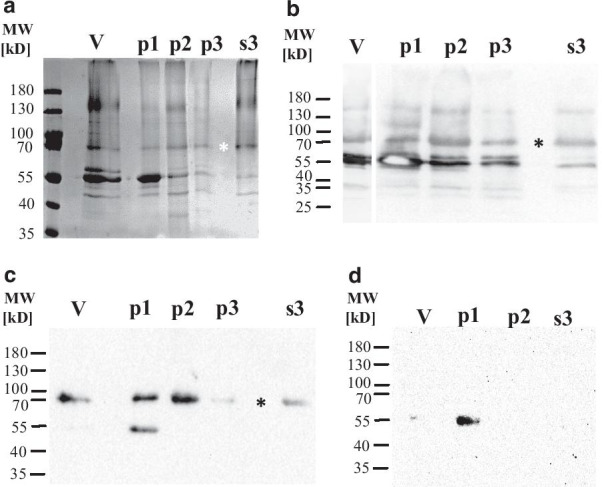
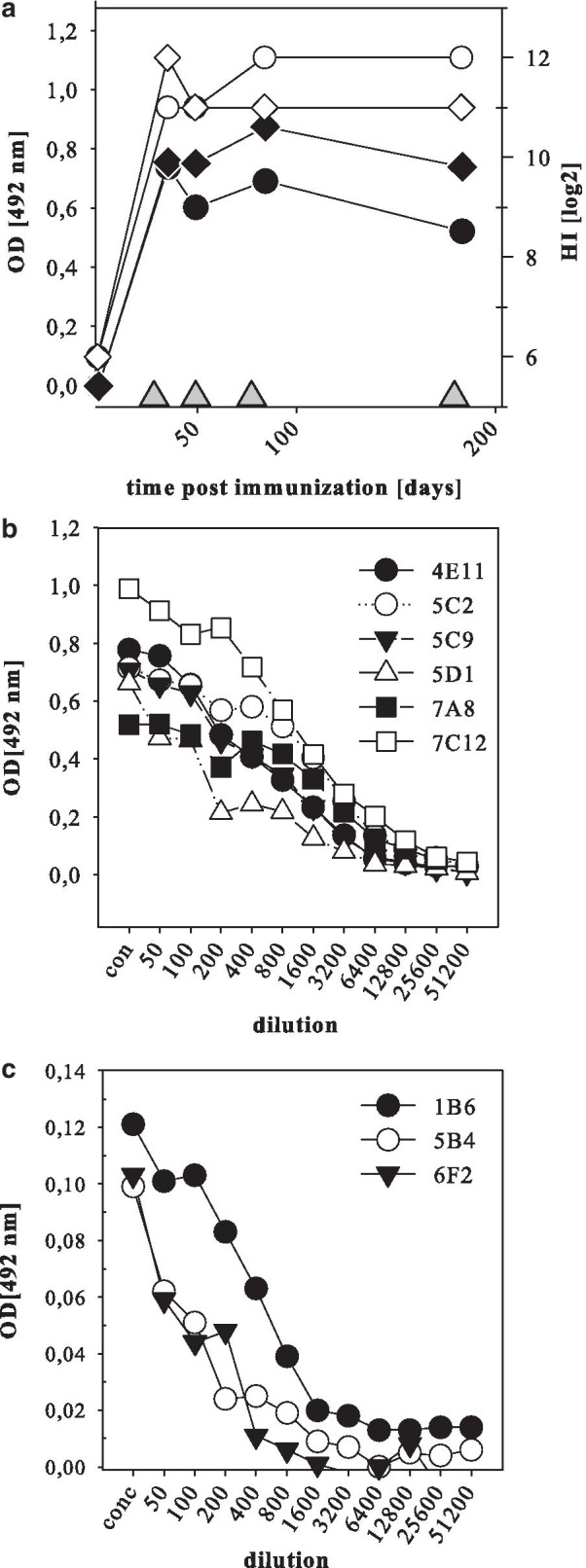
An HN-enriched fraction of a gradient-purified NDV genotype 2.VII was prepared and successfully employed to induce antibodies in BalbC mice that recognize conformationally intact sites reactive by haemagglutination inhibition (HI). For subsequent screening of mouse hybridoma cultures, an NDV-ELISA was established that utilizes Concanavalin A (ConA-ELISA) coupled glycoproteins proven to present conformation-dependent epitopes.
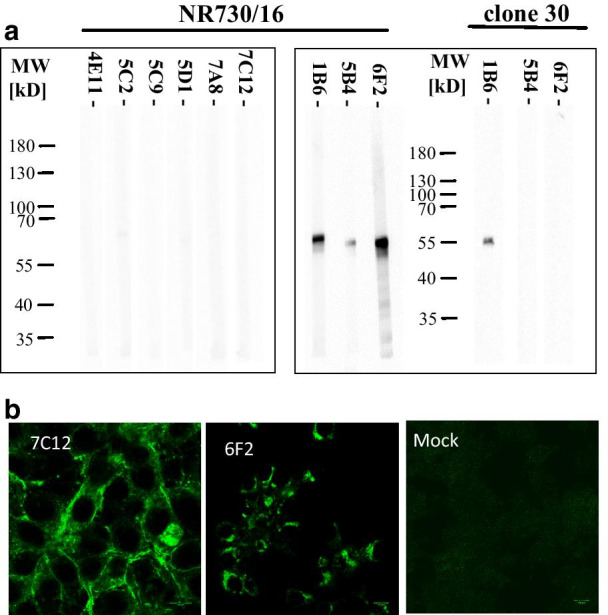
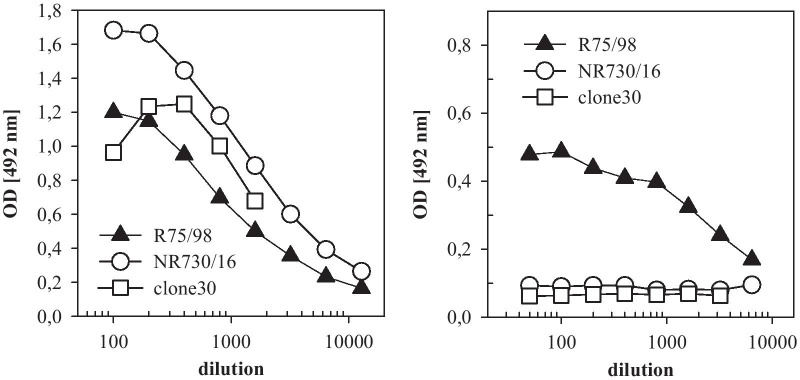
Six out of nine selected MAbs were able to block receptor binding as demonstrated by HI activity. One MAb recognized an epitope only present in the homologue virus, while four other MAbs showed weak reactivity to selected other genotypes. On the other hand, one broadly cross-reacting MAb reacted with all genotypes tested and resembled the reactivity profile of genotype-specific polyclonal antibody preparations that point to minor antigenic differences between tested NDV genotpyes.
These results point to the concurrent presence of variable and conserved epitopes within the HN molecule of NDV. The described protocol should help to generate MAbs against a variety of NDV strains and to enable in depth analysis of the antigenic profiles of different genotypes.
新城疫是一种毁灭性的禽类疾病,由毒力新城疫病毒(NDV)引起,尽管进行了密集的疫苗接种,但该病毒在世界许多地区流行。系统进化分析显示,主要流行的基因型 2.VII 仍在不断进化,潜在抗原漂移的相关性正在讨论中。为了研究负责受体结合的蛋白(即血凝素-神经氨酸酶(HN)刺突蛋白)中的中和敏感表位内的变异,我们有兴趣建立基因型特异性单克隆抗体(MAbs)。
梯度纯化的 NDV 基因型 2.VII 的 HN 富集部分被制备并成功用于诱导 BalbC 小鼠产生抗体,这些抗体可识别血凝抑制(HI)反应的构象完整位点。为了随后筛选小鼠杂交瘤培养物,建立了一种 NDV-ELISA,该 ELISA 利用已证明存在构象依赖性表位的 Concanavalin A(ConA-ELISA)偶联糖蛋白。
从 9 株中选择的 6 株 MAbs 能够阻断受体结合,如 HI 活性所证明的那样。一株 MAb 识别仅存在于同源病毒中的表位,而其他 4 株 MAbs 对选定的其他基因型表现出弱反应性。另一方面,一株广泛交叉反应的 MAb 与所有测试的基因型反应,与测试的 NDV 基因型之间存在微小抗原差异的基因型特异性多克隆抗体制剂的反应模式相似。
这些结果表明 NDV 的 HN 分子中存在可变和保守表位。所描述的方案应有助于针对多种 NDV 株产生 MAbs,并能够深入分析不同基因型的抗原谱。