Friedrich-Loeffler-Institut, Federal Research Institute for Animal Health, Institute of Novel and Emerging Infectious Diseases, Greifswald-Insel Riems, Germany.
Canadian Food Inspection Agency, National Centre for Foreign Animal Disease, Winnipeg, Canada.
PLoS One. 2018 Apr 30;13(4):e0194385. doi: 10.1371/journal.pone.0194385. eCollection 2018.
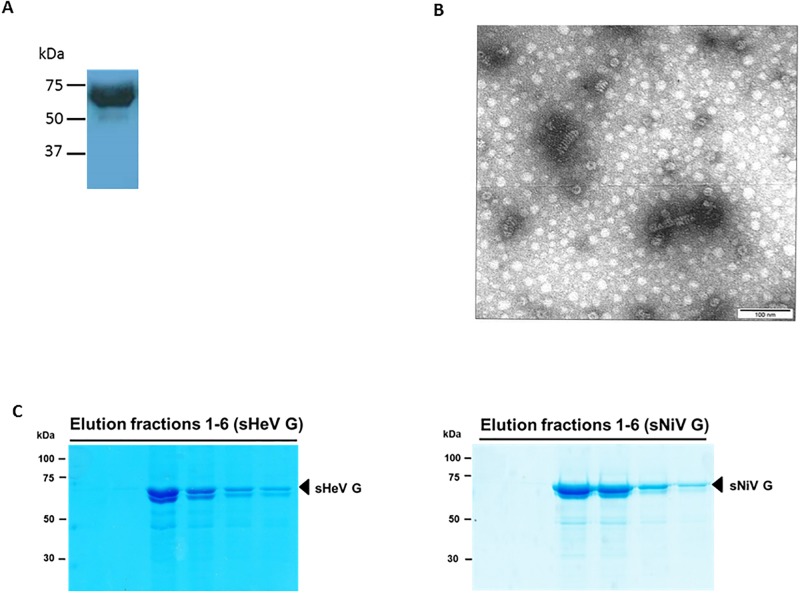
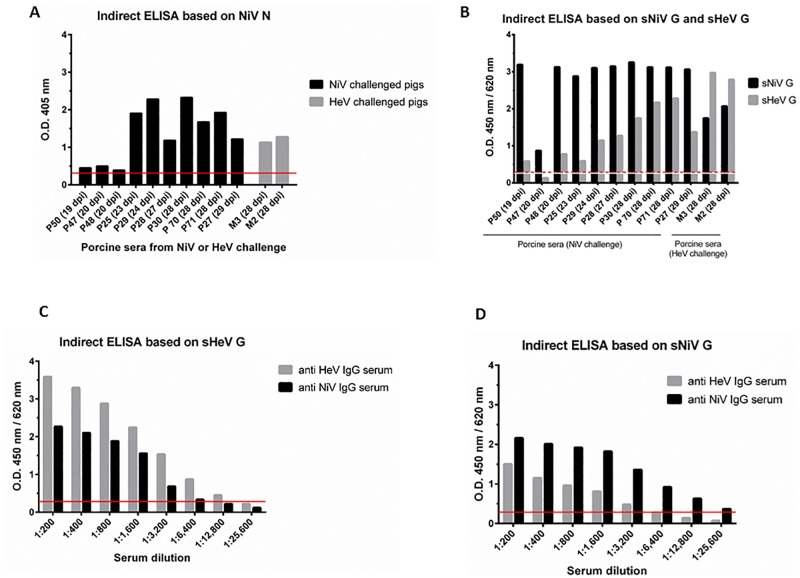
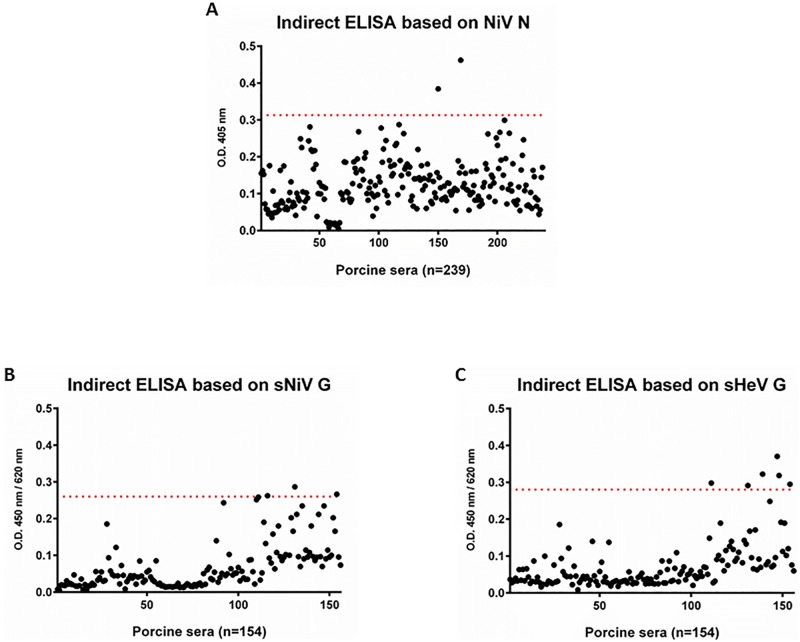
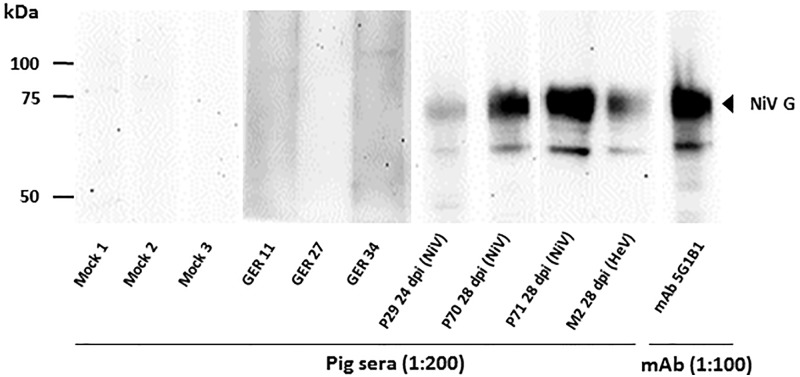
Hendra virus (HeV) and Nipah virus (NiV) belong to the genus Henipavirus in the family Paramyxoviridae. Henipavirus infections were first reported in the 1990's causing severe and often fatal outbreaks in domestic animals and humans in Southeast Asia and Australia. NiV infections were observed in humans in Bangladesh, India and in the first outbreak in Malaysia, where pigs were also infected. HeV infections occurred in horses in the North-Eastern regions of Australia, with singular transmission events to humans. Bats of the genus Pteropus have been identified as the reservoir hosts for henipaviruses. Molecular and serological indications for the presence of henipa-like viruses in African fruit bats, pigs and humans have been published recently. In our study, truncated forms of HeV and NiV attachment (G) proteins as well as the full-length NiV nucleocapsid (N) protein were expressed using different expression systems. Based on these recombinant proteins, Enzyme-linked Immunosorbent Assays (ELISA) were developed for the detection of HeV or NiV specific antibodies in porcine serum samples. We used the NiV N ELISA for initial serum screening considering the general reactivity against henipaviruses. The G protein based ELISAs enabled the differentiation between HeV and NiV infections, since as expected, the sera displayed higher reactivity with the respective homologous antigens. In the future, these assays will present valuable tools for serosurveillance of swine and possibly other livestock or wildlife species in affected areas. Such studies will help assessing the potential risk for human and animal health worldwide by elucidating the distribution of henipaviruses.
亨德拉病毒(HeV)和尼帕病毒(NiV)属于副黏病毒科亨尼帕病毒属。亨尼帕病毒感染于 20 世纪 90 年代首次报告,在东南亚和澳大利亚导致家畜和人类严重且常致命的暴发。在孟加拉国、印度和马来西亚的首次暴发中观察到人类感染尼帕病毒,猪也被感染。HeV 感染发生在澳大利亚东北部地区的马中,只有单一的人类传播事件。果蝠属的蝙蝠已被确定为亨尼帕病毒的天然宿主。最近已经发表了关于非洲果蝠、猪和人类中存在类似亨尼帕病毒的分子和血清学迹象。在我们的研究中,使用不同的表达系统表达了 HeV 和 NiV 附着(G)蛋白的截断形式以及全长 NiV 核衣壳(N)蛋白。基于这些重组蛋白,开发了用于检测猪血清样品中 HeV 或 NiV 特异性抗体的酶联免疫吸附测定(ELISA)。鉴于对亨尼帕病毒的普遍反应,我们使用 NiV N ELISA 进行初始血清筛选。基于 G 蛋白的 ELISA 能够区分 HeV 和 NiV 感染,因为正如预期的那样,血清与各自的同源抗原显示出更高的反应性。在未来,这些检测将为受影响地区的猪以及其他牲畜或野生动物物种的血清学监测提供有价值的工具。这些研究将有助于阐明亨尼帕病毒的分布,从而评估全球人类和动物健康的潜在风险。