Samhi Jordan, Allix Kevin, Bissyandé Tegawendé F, Klein Jacques
University of Luxembourg, SnT, 6 Rue Richard Coudenhove-Kalergi, 1359 Luxembourg, Luxembourg.
Empir Softw Eng. 2021;26(4):57. doi: 10.1007/s10664-021-09943-x. Epub 2021 Apr 21.
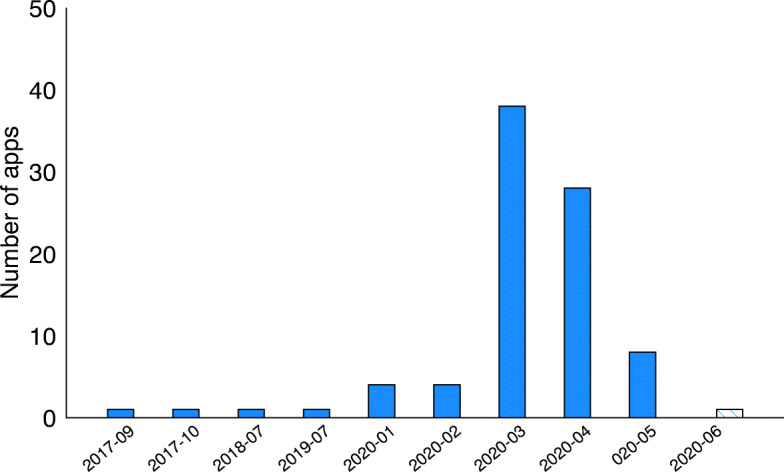
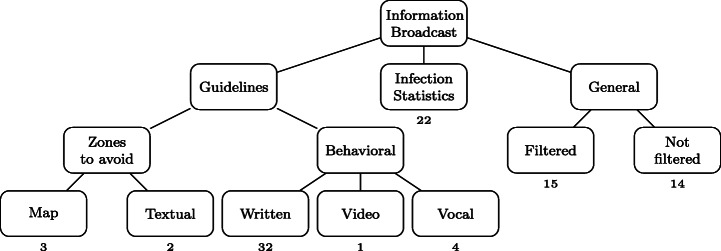
Due to the convenience of access-on-demand to information and business solutions, mobile apps have become an important asset in the digital world. In the context of the COVID-19 pandemic, app developers have joined the response effort in various ways by releasing apps that target different user bases (e.g., all citizens or journalists), offer different services (e.g., location tracking or diagnostic-aid), provide generic or specialized information, etc. While many apps have raised some concerns by spreading misinformation or even malware, the literature does not yet provide a clear landscape of the different apps that were developed. In this study, we focus on the Android ecosystem and investigate Covid-related Android apps. In a best-effort scenario, we attempt to systematically identify all relevant apps and study their characteristics with the objective to provide a first taxonomy of Covid-related apps, broadening the relevance beyond the implementation of contact tracing. Overall, our study yields a number of empirical insights that contribute to enlarge the knowledge on Covid-related apps: (1) Developer communities contributed rapidly to the COVID-19, with dedicated apps released as early as January 2020; (2) Covid-related apps deliver digital tools to users (e.g., health diaries), serve to broadcast information to users (e.g., spread statistics), and collect data from users (e.g., for tracing); (3) Covid-related apps are less complex than standard apps; (4) they generally do not seem to leak sensitive data; (5) in the majority of cases, Covid-related apps are released by entities with past experience on the market, mostly official government entities or public health organizations.
由于能够按需便捷访问信息和商业解决方案,移动应用程序已成为数字世界中的一项重要资产。在新冠疫情背景下,应用程序开发者通过发布针对不同用户群体(如全体公民或记者)、提供不同服务(如位置追踪或诊断辅助)、提供通用或专业信息等的应用程序,以各种方式参与到应对工作中。虽然许多应用程序因传播错误信息甚至恶意软件而引发了一些担忧,但文献尚未清晰呈现所开发的不同应用程序的全貌。在本研究中,我们聚焦于安卓生态系统并调查与新冠相关的安卓应用程序。在尽力而为的情况下,我们试图系统地识别所有相关应用程序并研究其特征,目的是提供首个与新冠相关应用程序的分类法,将相关性拓展到接触者追踪实施之外。总体而言,我们的研究得出了一些实证性见解,有助于扩充关于与新冠相关应用程序的知识:(1)开发者社区迅速为新冠疫情做出贡献,早在2020年1月就发布了专门的应用程序;(2)与新冠相关的应用程序为用户提供数字工具(如健康日记),向用户传播信息(如传播统计数据),并从用户那里收集数据(如用于追踪);(3)与新冠相关的应用程序比标准应用程序复杂度更低;(4)它们通常似乎不会泄露敏感数据;(5)在大多数情况下,与新冠相关的应用程序由在市场上有过往经验的实体发布,大多是官方政府实体或公共卫生组织。