From the Department of Psychiatry, Second Xiangya Hospital of Central South University, Changsha, Hunan, China (Pan); the Robarts Research Institute, University of Western Ontario, London, Ont., Canada (Pan, Khan, Palaniyappan); the Lawson Health Research Institute, London, Ont., Canada (Théberge, Palaniyappan); the Department of Medical Biophysics, University of Western Ontario, London, Ont., Canada (Jeon, Théberge, Khan, Palaniyappan); the Department of Psychiatry, University of Western Ontario, London, Ont., Canada (Palaniyappan, Théberge); the Department of Psychiatry, Dalhousie University, Halifax, NS, Canada (Dempster); the China National Clinical Research Center on Mental Disorders (Xiangya), Changsha, Hunan, China (Pan); the China National Technology Institute on Mental Disorders, Changsha, Hunan, China (Pan); the Hunan Key Laboratory of Psychiatry and Mental Health, Changsha, Hunan, China (Pan); and the Institute of Mental Health of Second Xiangya Hospital, Central South University, Changsha, Hunan, China (Pan).
J Psychiatry Neurosci. 2021 Apr 27;46(3):E337-E346. doi: 10.1503/jpn.200167.
Disorganized thinking is a core feature of acute psychotic episodes that is linked to social and vocational functioning. Several lines of evidence implicate disrupted cognitive control, excitatory overdrive and oxidative stress relating to the anterior cingulate cortex as mechanisms of conceptual disorganization (CD). We examined 3 candidate mechanistic markers related to CD in firstepisode psychosis: glutamate excess, cortical antioxidant (glutathione) status and the integrity of the cingulum bundle that connects regions implicated in cognitive control.
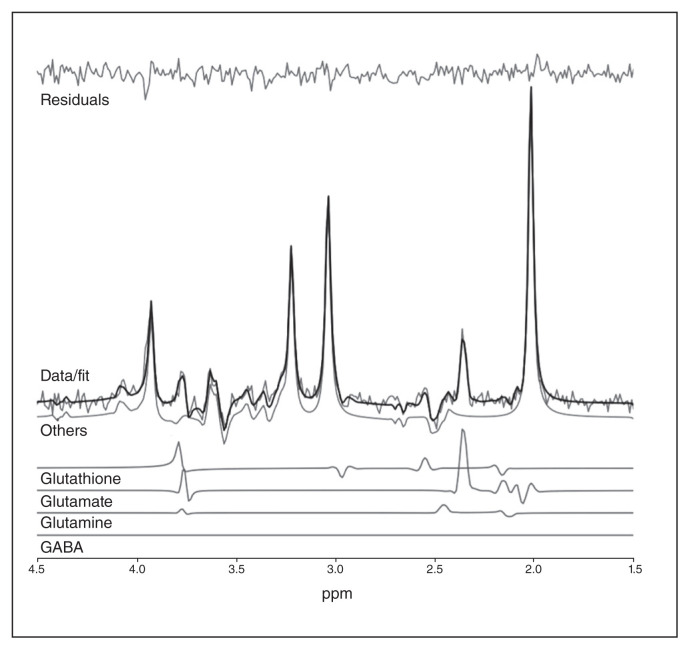
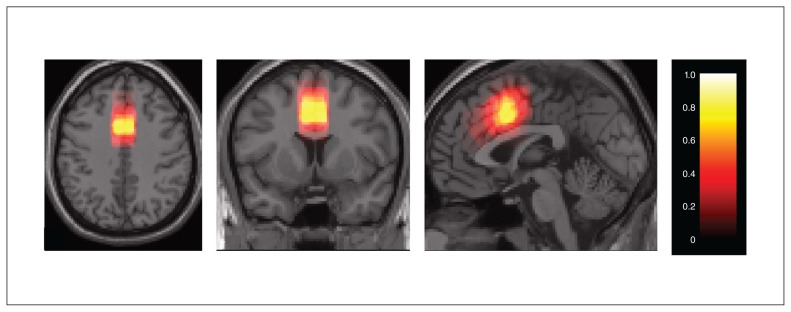
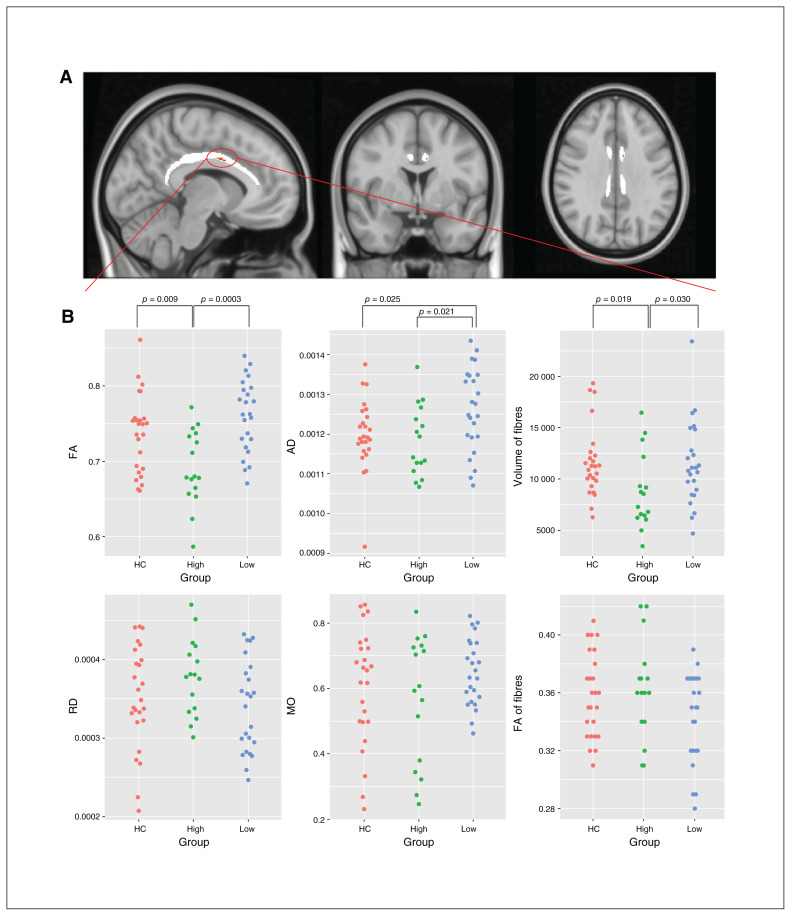
We used fractional anisotropy maps from 7 T diffusion-weighted imaging to investigate the bilateral cingulum based on a probabilistic white matter atlas. We compared high CD, low CD and healthy control groups and performed probabilistic fibre tracking from the identified clusters (regions of interest within the cingulum) to the rest of the brain. We quantified glutamate and glutathione using magnetic resonance spectroscopy (MRS) in the dorsal anterior cingulate cortex.
We found a significant fractional anisotropy reduction in a cluster in the left cingulum in the high CD group compared to the low CD group (Cohen's d = 1.39; p < 0.001) and controls (Cohen's d = 0.86; p = 0.009). Glutamate levels did not vary among groups, but glutathione levels were higher in the high CD group than in the low CD group. We also found higher glutathione related to lower fractional anisotropy in the cingulum cluster in the high CD group.
The MRS measures of glutamine were highly uncertain, and MRS was acquired from a single voxel only.
Acute CD relates to indicators of oxidative stress, as well as reduced white matter integrity of the cingulum, but not to MRI-based glutamatergic excess. We propose that both oxidative imbalance and structural dysconnectivity underlie acute disorganization.
思维紊乱是急性精神病发作的核心特征,与社会和职业功能有关。有几条证据表明,认知控制中断、兴奋性过度和与前扣带皮层有关的氧化应激是概念紊乱(CD)的机制。我们研究了首发精神病中与 CD 相关的 3 种候选机制标志物:谷氨酸过多、皮质抗氧化剂(谷胱甘肽)状态和连接认知控制相关区域的扣带束的完整性。
我们使用 7T 弥散加权成像的分数各向异性图,根据概率白质图谱研究双侧扣带束。我们比较了高 CD、低 CD 和健康对照组,并对识别出的簇(扣带束内的感兴趣区)到大脑其余部分进行概率纤维追踪。我们使用磁共振波谱(MRS)在背侧前扣带皮层定量谷氨酸和谷胱甘肽。
我们发现高 CD 组与低 CD 组(Cohen's d = 1.39;p < 0.001)和对照组(Cohen's d = 0.86;p = 0.009)相比,左扣带束簇的分数各向异性显著降低。各组之间谷氨酸水平没有差异,但高 CD 组的谷胱甘肽水平高于低 CD 组。我们还发现,高 CD 组扣带束簇的谷胱甘肽水平与分数各向异性降低相关。
MRS 对谷氨酰胺的测量高度不确定,且 MRS 仅从单个体素采集。
急性 CD 与氧化应激的指标以及扣带束白质完整性降低有关,而与基于 MRI 的谷氨酸过多无关。我们提出,急性紊乱的基础是氧化失衡和结构连接不良。