Department of Biology, School of Arts and Sciences, University of Pennsylvania, Philadelphia, PA.
Wadsworth Center, New York State Department of Health, Albany, NY.
J Cell Biol. 2021 Jun 7;220(6). doi: 10.1083/jcb.202007030.
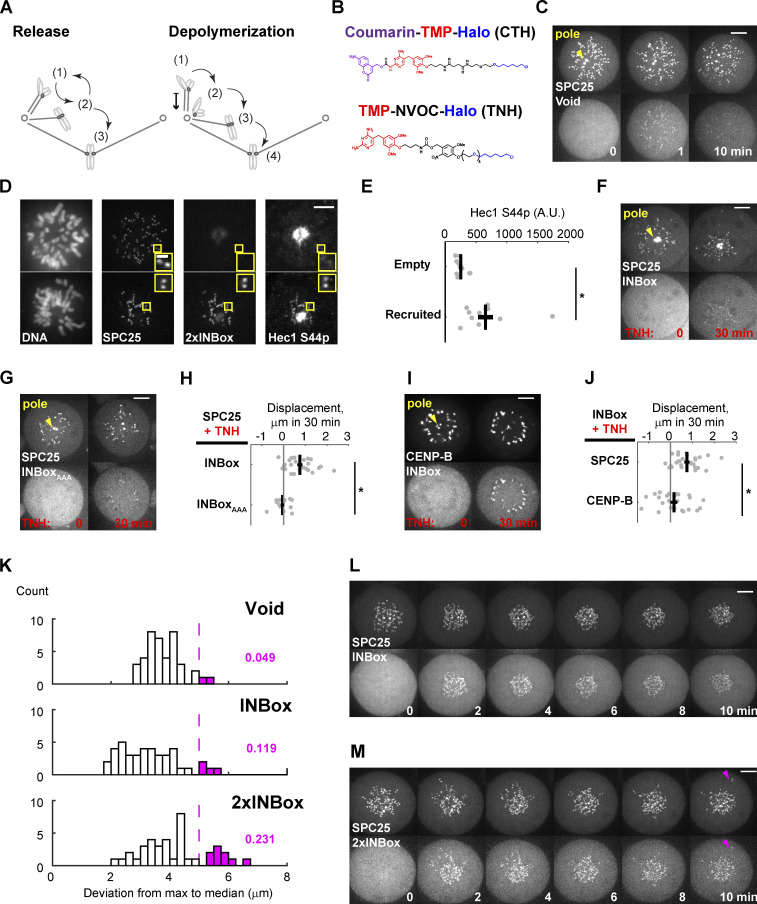
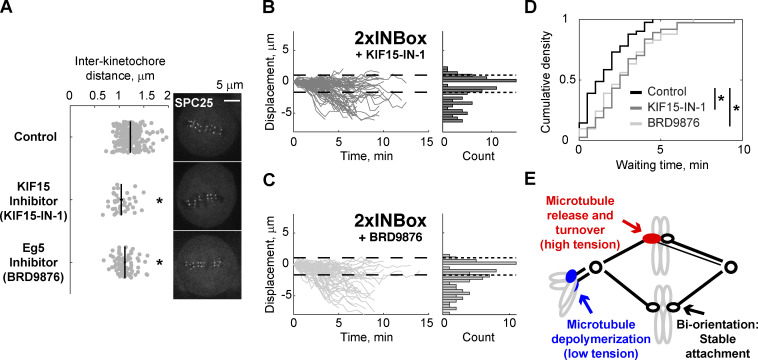
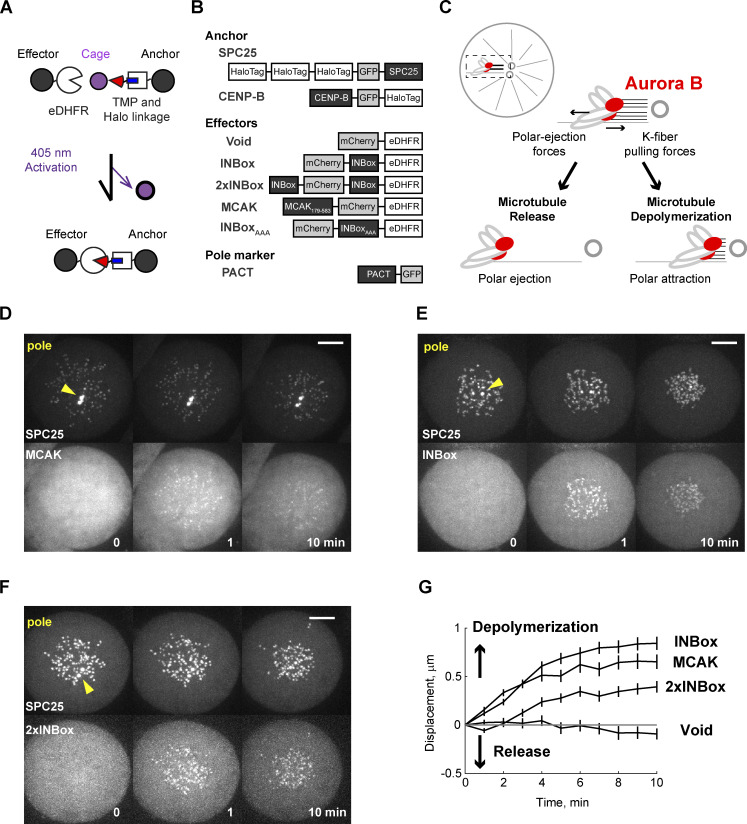
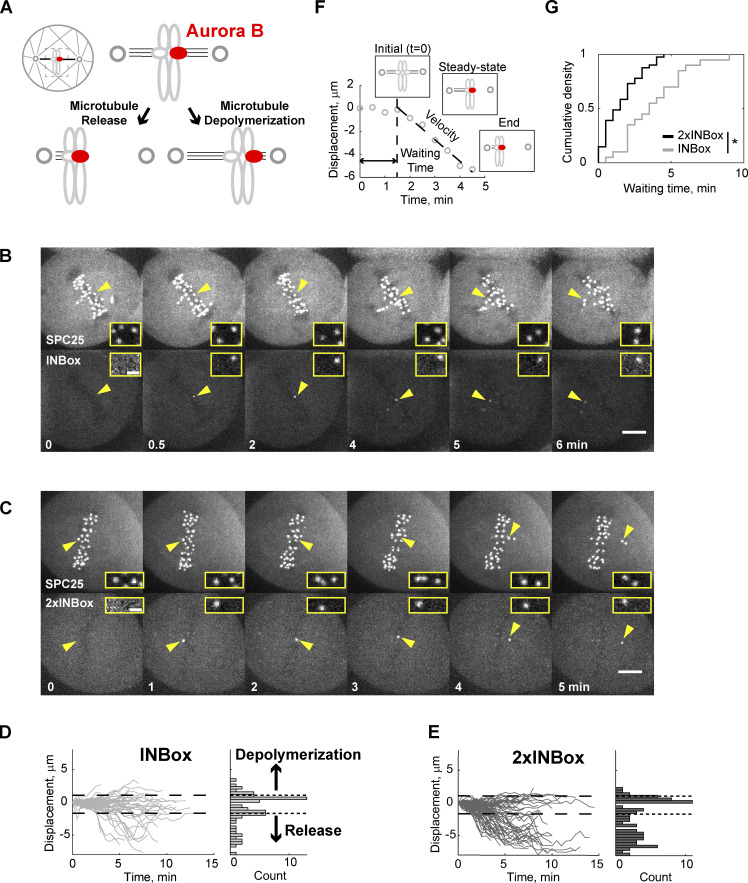
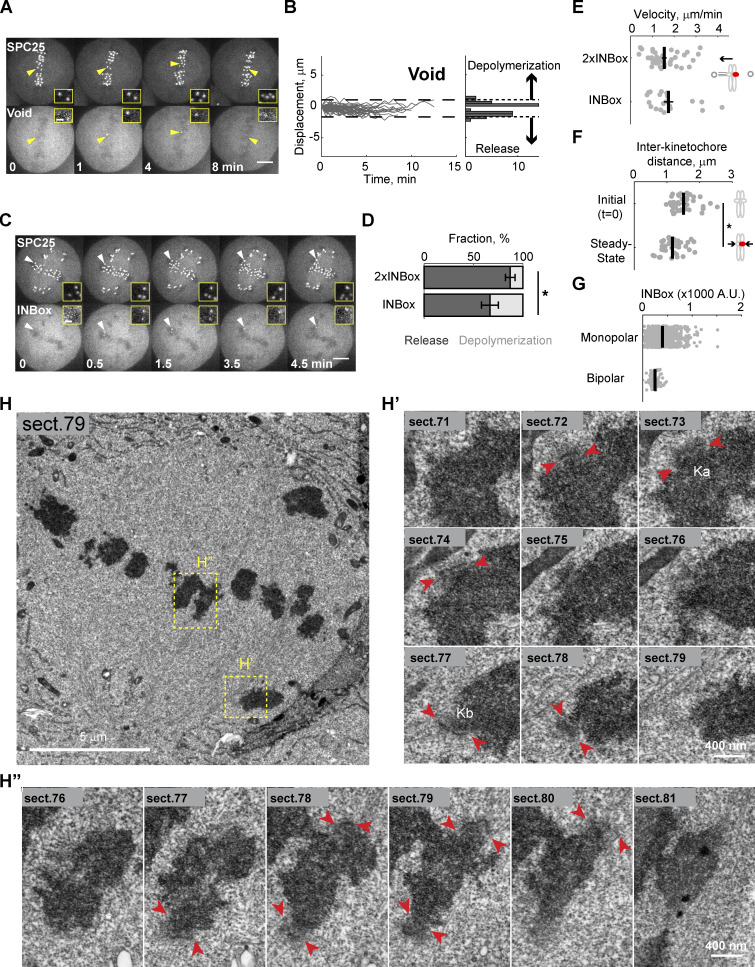
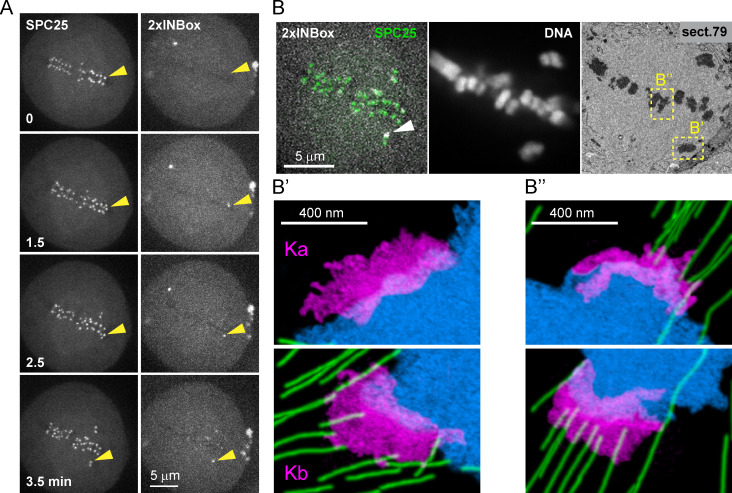
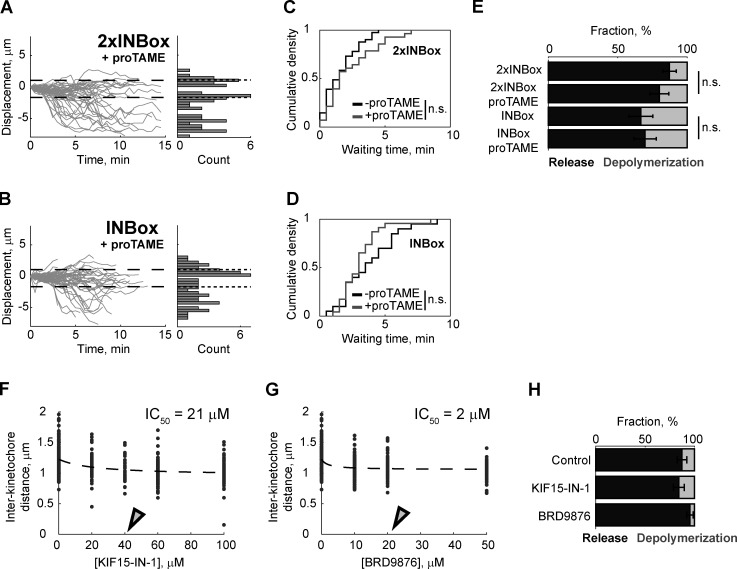
To ensure accurate chromosome segregation, interactions between kinetochores and microtubules are regulated by a combination of mechanics and biochemistry. Tension provides a signal to discriminate attachment errors from bi-oriented kinetochores with sisters correctly attached to opposite spindle poles. Biochemically, Aurora B kinase phosphorylates kinetochores to destabilize interactions with microtubules. To link mechanics and biochemistry, current models regard tension as an input signal to locally regulate Aurora B activity. Here, we show that the outcome of kinetochore phosphorylation depends on tension. Using optogenetics to manipulate Aurora B at individual kinetochores, we find that kinase activity promotes microtubule release when tension is high. Conversely, when tension is low, Aurora B activity promotes depolymerization of kinetochore-microtubules while maintaining attachment. Thus, phosphorylation converts a catch-bond, in which tension stabilizes attachments, to a slip-bond, which releases microtubules under tension. We propose that tension is a signal inducing distinct error-correction pathways, with release or depolymerization being advantageous for typical errors characterized by high or low tension, respectively.
为了确保染色体的准确分离,动粒与微管之间的相互作用受到机械和生化的共同调节。张力提供了一个信号,用于区分附着错误和双定向动粒,后者的姐妹正确附着在相反的纺锤极上。从生化角度来看,Aurora B 激酶使动粒磷酸化,从而破坏与微管的相互作用。为了将力学和生物化学联系起来,当前的模型将张力视为局部调节 Aurora B 活性的输入信号。在这里,我们表明动粒磷酸化的结果取决于张力。我们使用光遗传学在单个动粒上操纵 Aurora B,发现激酶活性在张力高时促进微管释放。相反,当张力较低时,Aurora B 活性促进动粒微管的解聚,同时保持附着。因此,磷酸化将一个张力稳定附着的捕获键转换为一个在张力下释放微管的滑动键。我们提出,张力是一个诱导不同错误校正途径的信号,释放或解聚对于分别以高或低张力为特征的典型错误是有利的。