Lombardi Marco, De Gara Laura, Loreto Francesco
Department of Science and Technology for Humans and the Environment, Campus Bio-Medico University of Rome, Via Alvaro del Portillo 21, Rome, 00128, Italy.
Department of Biology, Agriculture, and Food Sciences, National Research Council of Italy (CNR-DISBA), Piazzale Aldo Moro 7, Rome, 00185, Italy.
Physiol Plant. 2021 Aug;172(4):2090-2097. doi: 10.1111/ppl.13439. Epub 2021 May 7.
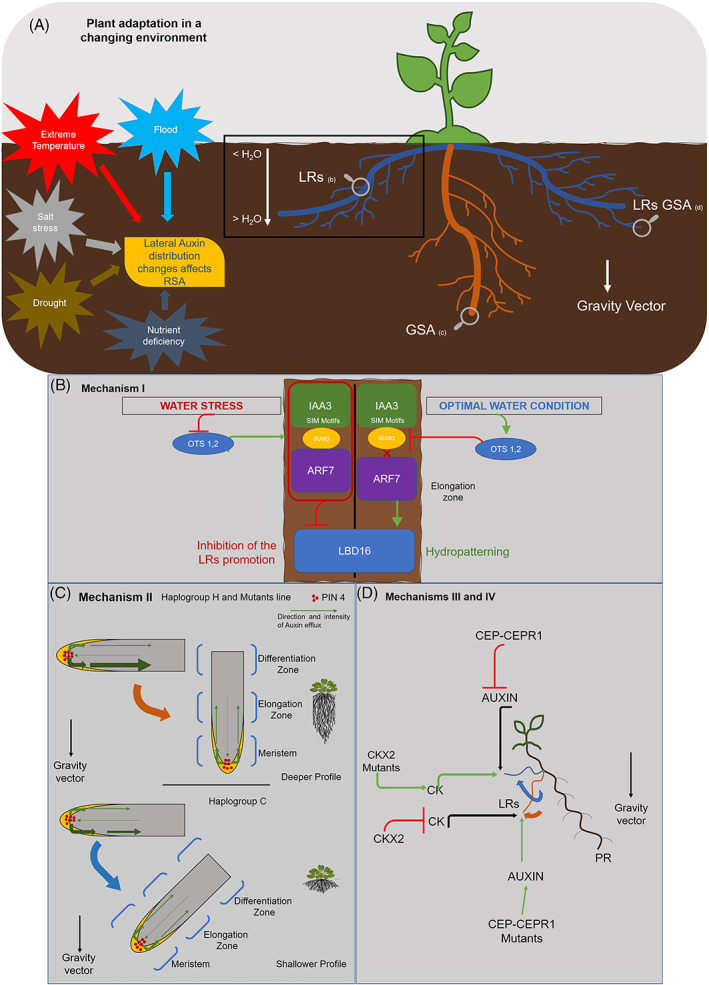
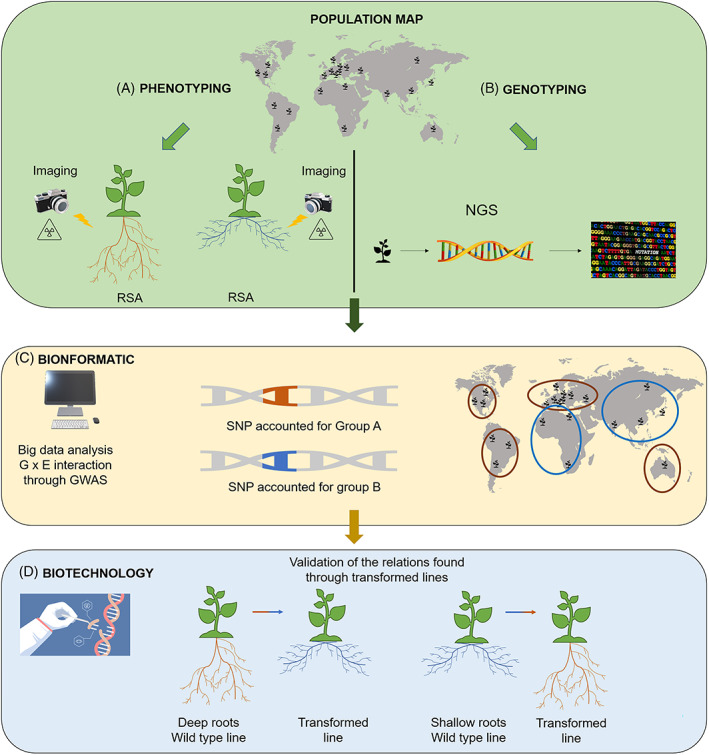
Climate change hampers food safety and food security. Crop breeding has been boosting superior quantity traits such as yield, but roots have often been overlooked in spite of their role in the whole plant physiology. New evidence is emerging on the relevance of root system architecture in coping with the environment. Here, we review determinants of root system architecture, mainly based on studies on Arabidopsis, and we discuss how breeding for appropriate root architecture may help obtain plants that are better adapted or resilient to abiotic and biotic stresses, more productive, and more efficient for soil and water use. We also highlight recent advances in phenotyping high-tech platforms and genotyping techniques that may further help to understand the mechanisms of root development and how roots control relationships between plants and soil. An integrated approach is proposed that combines phenotyping and genotyping information via bioinformatic analyses and reveals genetic control of root system architecture, paving the way for future research on plant breeding.
气候变化阻碍了食品安全和粮食安全。作物育种一直在提高产量等优良数量性状,但尽管根系在整个植物生理学中发挥着作用,却常常被忽视。关于根系结构在应对环境方面的相关性,新的证据正在不断涌现。在此,我们主要基于对拟南芥的研究,综述根系结构的决定因素,并讨论针对合适根系结构进行育种如何有助于培育出对非生物和生物胁迫具有更强适应性或恢复力、产量更高、土壤和水分利用效率更高的植物。我们还强调了表型分析高科技平台和基因分型技术的最新进展,这些进展可能进一步有助于理解根系发育机制以及根系如何控制植物与土壤之间的关系。我们提出了一种综合方法,通过生物信息学分析将表型和基因分型信息结合起来,揭示根系结构的遗传控制,为未来的植物育种研究铺平道路。