Phi Ji Hoon
Division of Pediatric Neurosurgery, Seoul National University Children's Hospital, Seoul National University College of Medicine, Seoul, Korea.
J Korean Neurosurg Soc. 2021 May;64(3):406-413. doi: 10.3340/jkns.2021.0015. Epub 2021 Apr 29.
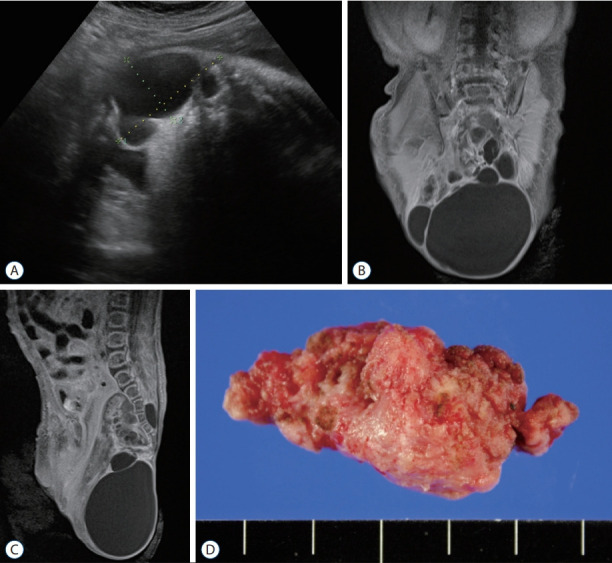
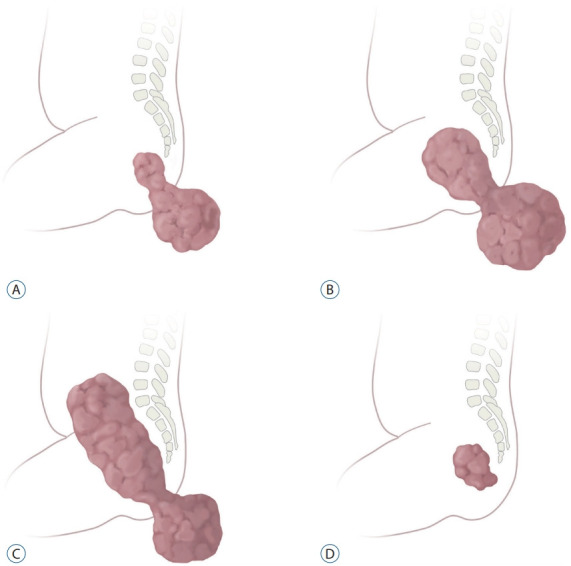
Sacrococcygeal teratoma (SCT) is an extragonadal germ cell tumor (GCT) that develops in the fetal and neonatal periods. SCT is a type I GCT in which only teratoma and yolk sac tumors arise from extragonadal sites. SCT is the most common type I GCT and is believed to originate through epigenetic reprogramming of early primordial germ cells migrating from the yolk sac to the gonadal ridges. Fetal SCT diagnosed in utero presents many obstetrical problems. For high-risk fetuses, fetal interventions (devascularization and debulking) are under development. Most patients with SCT are operated on after birth. Complete surgical resection is the key for tumor control, and the anatomical location of the tumor determines the surgical approaches. Incomplete resection and malignant histology are risk factors for recurrence. Approximately 10-15% of patients have a tumor recurrence, which is frequently of malignant histology. Long-term surveillance with monitoring of serum alpha fetoprotein and magnetic resonance imaging is required. Survivors of SCT may suffer anorectal, urological, and sexual sequelae later in their life, and comprehensive evaluation and care are required.
骶尾部畸胎瘤(SCT)是一种在胎儿期和新生儿期发生的性腺外生殖细胞肿瘤(GCT)。SCT是I型GCT,其中只有畸胎瘤和卵黄囊瘤起源于性腺外部位。SCT是最常见的I型GCT,被认为起源于从卵黄囊迁移到生殖嵴的早期原始生殖细胞的表观遗传重编程。产前诊断的胎儿SCT会带来许多产科问题。对于高危胎儿,胎儿干预(去血管化和减瘤)正在研发中。大多数SCT患者在出生后接受手术。完整的手术切除是控制肿瘤的关键,肿瘤的解剖位置决定手术方式。切除不完全和恶性组织学是复发的危险因素。约10%-15%的患者会出现肿瘤复发,且复发肿瘤常为恶性组织学类型。需要通过监测血清甲胎蛋白和磁共振成像进行长期随访。SCT幸存者在其生命后期可能会出现肛肠、泌尿和性功能后遗症,需要进行综合评估和护理。