Gebretensae Yemane Asmelash, Asmelash Daniel
Department of Statistics, College of Natural and Computational Science, Aksum University, Aksum, Ethiopia.
Department of Clinical Chemistry, School of Biomedical and Laboratory Sciences, College of Medicine and Health Sciences, University of Gondar, Gondar, Ethiopia.
Int J Gen Med. 2021 Apr 21;14:1485-1498. doi: 10.2147/IJGM.S306250. eCollection 2021.
COVID-19, which causes severe acute respiratory syndrome, is spreading rapidly across the world, and the severity of this pandemic is rising in Ethiopia. The main objective of the study was to analyze the trend and forecast the spread of COVID-19 and to develop an appropriate statistical forecast model.
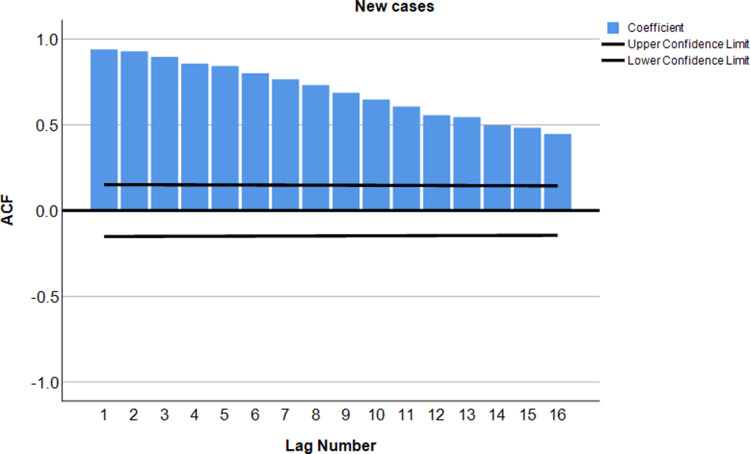
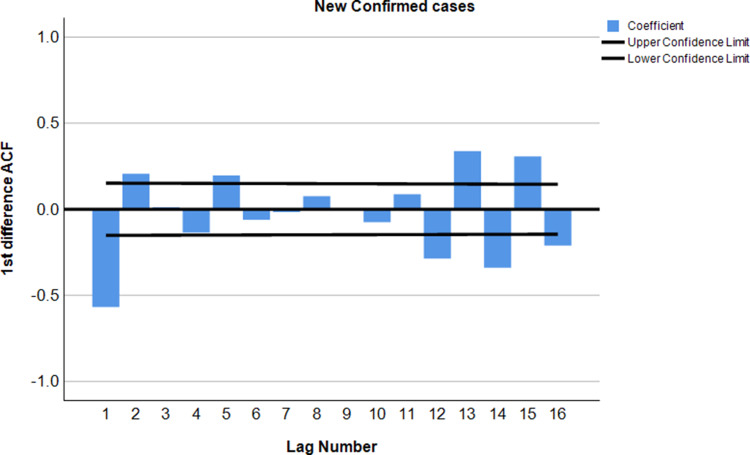
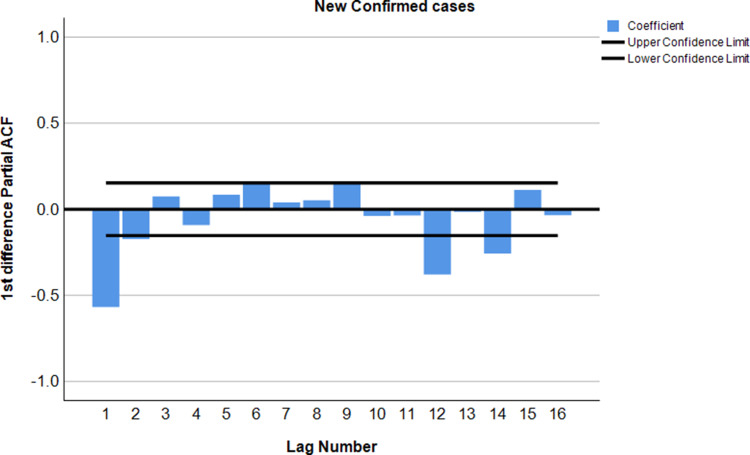
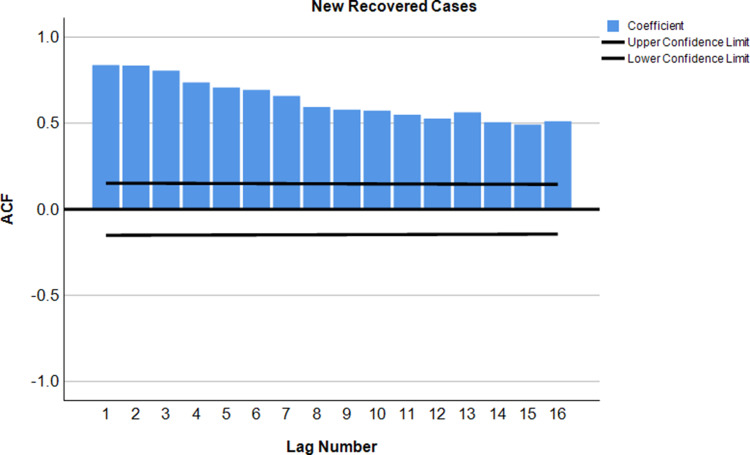
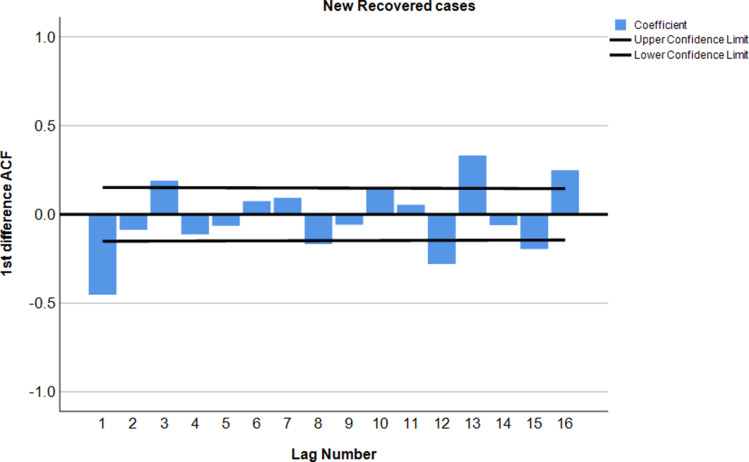
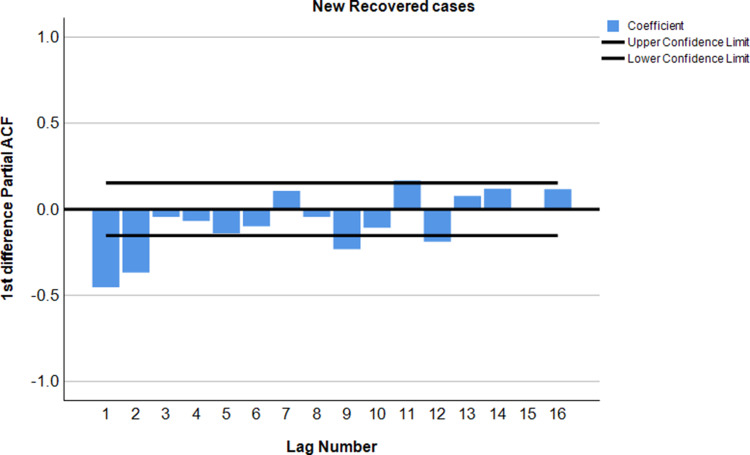
Data on the daily spread between 13 March, 2020 and 31 August 2020 were collected for the development of the autoregressive integrated moving average (ARIMA) model. Stationarity testing, parameter testing and model diagnosis were performed. In addition, candidate models were obtained using autocorrelation function (ACF) and partial autocorrelation functions (PACF). Finally, the fitting, selection and prediction accuracy of the ARIMA models was evaluated using the RMSE and MAPE model selection criteria.
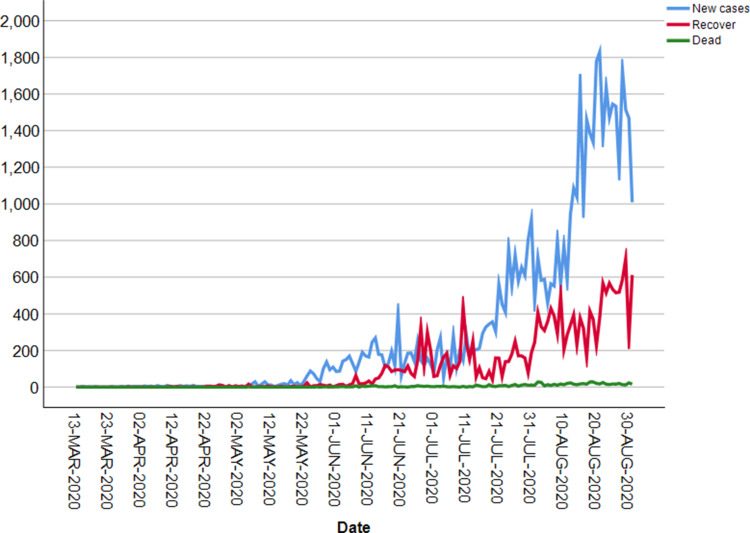
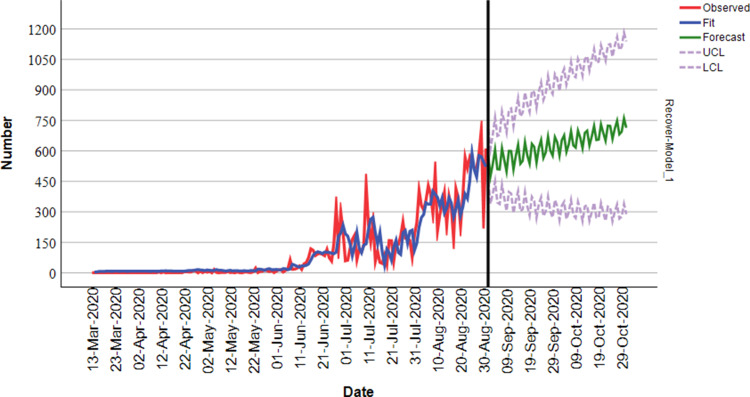
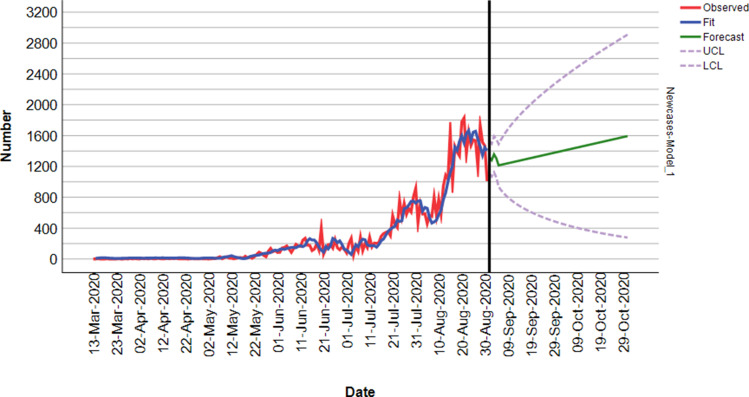
A total of 51,910 confirmed COVID-19 cases were reported from 13 March to 31 August 2020. The total recovered and death rates as of 31 August 2020 were 37.2% and 1.57%, respectively, with a high level of increase after the mid of August, 2020. In this study, ARIMA (0, 1, 5) and ARIMA (2, 1, 3) were finally confirmed as the optimal model for confirmed and recovered COVID-19 cases, respectively, based on lowest RMSE, MAPE and BIC values. The ARIMA model was also used to identify the COVID-19 trend and showed an increasing pattern on a daily basis in the number of confirmed and recovered cases. In addition, the 60-day forecast showed a steep upward trend in confirmed cases and recovered cases of COVID-19 in Ethiopia.
Forecasts show that confirmed and recovered COVID-19 cases in Ethiopia will increase on a daily basis for the next 60 days. The findings can be used as a decision-making tool to implement health interventions and reduce the spread of COVID-19 infection.
导致严重急性呼吸综合征的新型冠状病毒肺炎(COVID-19)正在全球迅速传播,在埃塞俄比亚,这场大流行的严重程度也在上升。本研究的主要目的是分析COVID-19的传播趋势并预测其传播情况,并开发一个合适的统计预测模型。
收集了2020年3月13日至2020年8月31日期间每日传播的数据,用于建立自回归积分移动平均(ARIMA)模型。进行了平稳性检验、参数检验和模型诊断。此外,使用自相关函数(ACF)和偏自相关函数(PACF)获得候选模型。最后,使用均方根误差(RMSE)和平均绝对百分比误差(MAPE)模型选择标准评估ARIMA模型的拟合度、选择和预测准确性。
2020年3月13日至2020年8月31日期间共报告了51910例确诊的COVID-19病例。截至2020年8月31日,总康复率和死亡率分别为37.2%和1.57%,在2020年8月中旬之后有较高的增长水平。在本研究中,基于最低的RMSE、MAPE和贝叶斯信息准则(BIC)值,ARIMA(0, 1, 5)和ARIMA(2, 1, 3)最终分别被确认为确诊和康复的COVID-19病例的最优模型。ARIMA模型还用于识别COVID-19趋势,结果显示确诊和康复病例数量每天都呈上升趋势。此外,60天预测显示埃塞俄比亚COVID-19确诊病例和康复病例呈急剧上升趋势。
预测表明,埃塞俄比亚确诊和康复的COVID-19病例在未来60天内将每天增加。这些发现可作为实施健康干预措施和减少COVID-19感染传播的决策工具。