Ranga Udaykumar
HIV-AIDS Laboratory, Molecular Biology and Genetics Unit, Jawaharlal Nehru Centre for Advanced Scientific Research, Jakkur (PO), Bangalore, 560 064 India.
Virusdisease. 2021 Jun;32(2):190-197. doi: 10.1007/s13337-021-00660-z. Epub 2021 Apr 22.
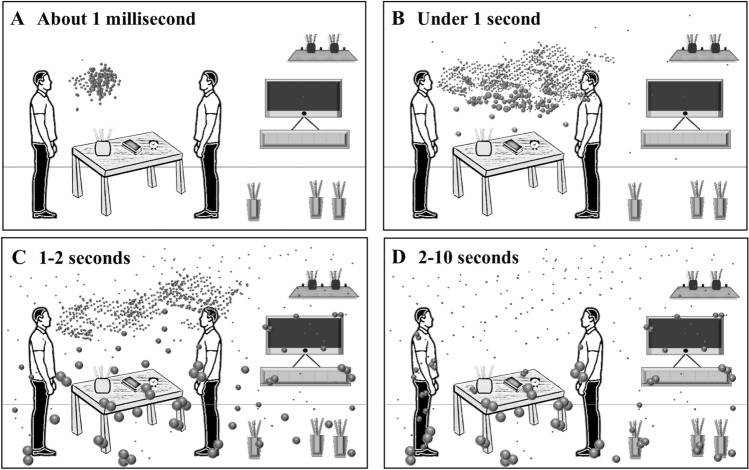
Aerosol particles can spread respiratory infections, especially those caused by viruses; however, the perceived threat is small for many technical reasons, as identified in this article. Under controlled conditions, aerosol particles can travel up to a distance of 28 feet (or 8 m); however, such aerosol particles are less likely to have sufficient quantities of viable viruses to spread infection. Additionally, nearly all the experimental models examined the behavior of the aerosols only in confined spaces, not in open areas; these findings, therefore, cannot be considered generally applicable. In the absence of scientific information and education, only misconceptions, unfounded fears, and unsubstantiated myths will prevail. Given that an effective vaccine and drugs are still not available, prevention remains the only option of protection against SARS-CoV-2, the new coronavirus. Wearing a mask is not only necessary but also critical to reduce the probability of viral spread by contact (fomite), not aerosol, transmission.
气溶胶颗粒可传播呼吸道感染,尤其是由病毒引起的感染;然而,正如本文所指出的,由于许多技术原因,人们感知到的威胁较小。在受控条件下,气溶胶颗粒可传播至28英尺(约8米)的距离;然而,此类气溶胶颗粒携带足以传播感染的活病毒的数量可能性较小。此外,几乎所有实验模型仅在密闭空间而非开放区域研究气溶胶的行为;因此,这些研究结果不能被视为普遍适用。在缺乏科学信息和教育的情况下,只会盛行误解、无端恐惧和毫无根据的谣言。鉴于目前仍没有有效的疫苗和药物,预防仍然是预防新型冠状病毒SARS-CoV-2的唯一保护手段。佩戴口罩不仅必要,而且对于降低通过接触(污染物)而非气溶胶传播病毒的可能性至关重要。