West Anthony P, Wertheim Joel O, Wang Jade C, Vasylyeva Tetyana I, Havens Jennifer L, Chowdhury Moinuddin A, Gonzalez Edimarlyn, Fang Courtney E, Di Lonardo Steve S, Hughes Scott, Rakeman Jennifer L, Lee Henry H, Barnes Christopher O, Gnanapragasam Priyanthi N P, Yang Zhi, Gaebler Christian, Caskey Marina, Nussenzweig Michel C, Keeffe Jennifer R, Bjorkman Pamela J
Division of Biology and Biological Engineering, California Institute of Technology, Pasadena, CA 91125, USA.
Department of Medicine, University of California San Diego, La Jolla, CA 92093.
bioRxiv. 2021 Apr 22:2021.02.14.431043. doi: 10.1101/2021.02.14.431043.
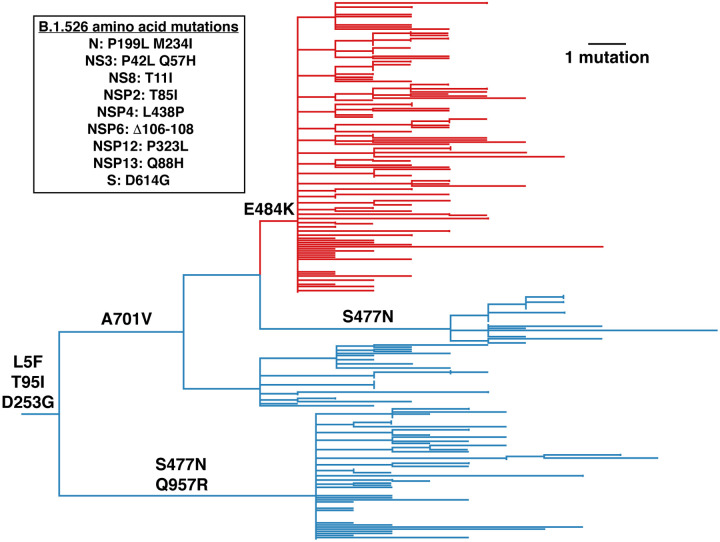
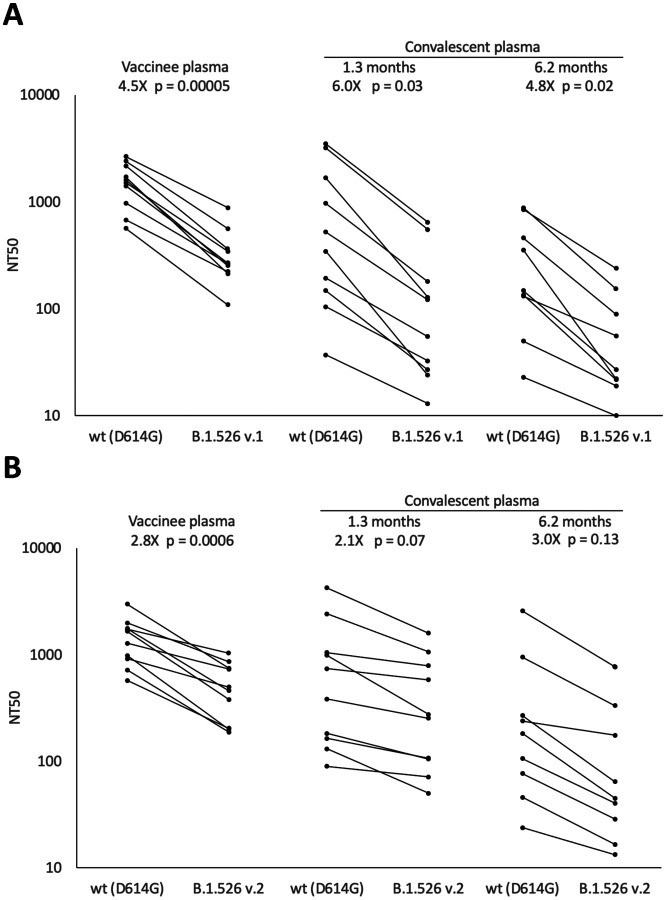
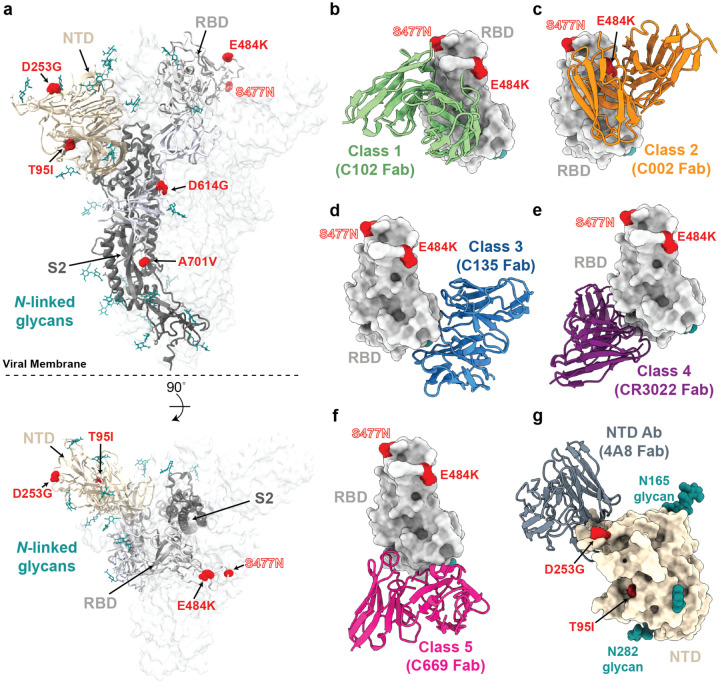
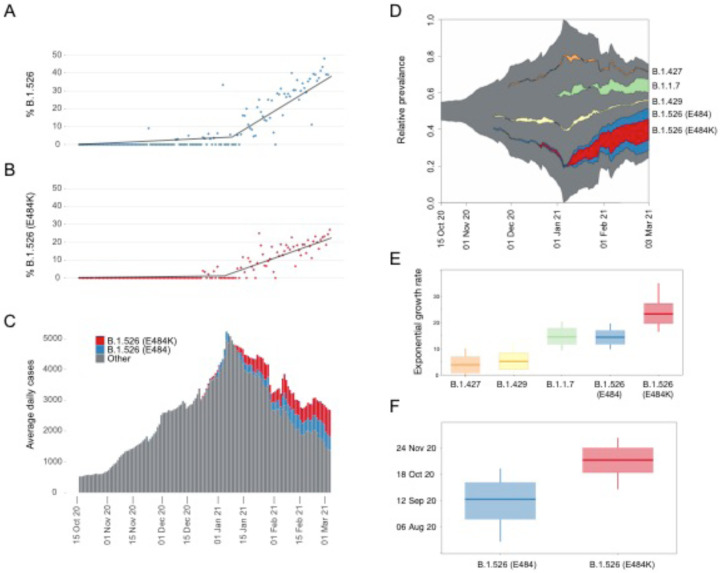
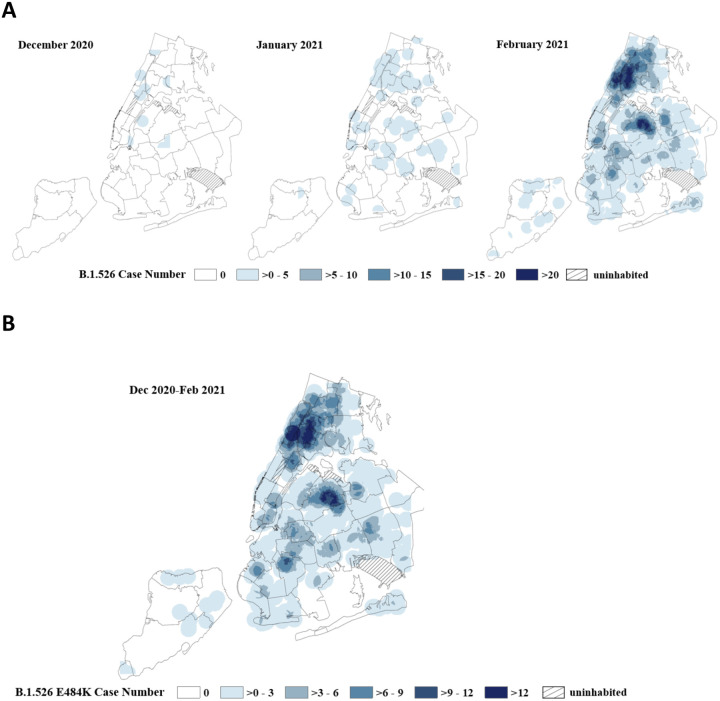
Wide-scale SARS-CoV-2 genome sequencing is critical to tracking viral evolution during the ongoing pandemic. Variants first detected in the United Kingdom, South Africa, and Brazil have spread to multiple countries. We developed the software tool, Variant Database (VDB), for quickly examining the changing landscape of spike mutations. Using VDB, we detected an emerging lineage of SARS-CoV-2 in the New York region that shares mutations with previously reported variants. The most common sets of spike mutations in this lineage (now designated as B.1.526) are L5F, T95I, D253G, E484K or S477N, D614G, and A701V. This lineage was first sequenced in late November 2020 when it represented <1% of sequenced coronavirus genomes that were collected in New York City (NYC). By February 2021, genomes from this lineage accounted for ~32% of 3288 sequenced genomes from NYC specimens. Phylodynamic inference confirmed the rapid growth of the B.1.526 lineage in NYC, notably the sub-clade defined by the spike mutation E484K, which has outpaced the growth of other variants in NYC. Pseudovirus neutralization experiments demonstrated that B.1.526 spike mutations adversely affect the neutralization titer of convalescent and vaccinee plasma, indicating the public health importance of this lineage.
广泛的新冠病毒基因组测序对于追踪当前大流行期间病毒的进化至关重要。最初在英国、南非和巴西检测到的变异株已传播到多个国家。我们开发了软件工具“变异数据库(VDB)”,用于快速研究刺突蛋白突变的变化情况。利用VDB,我们在纽约地区检测到一种新出现的新冠病毒谱系,它与先前报道的变异株有共同的突变。该谱系(现命名为B.1.526)中最常见的刺突蛋白突变组合是L5F、T95I、D253G、E484K或S477N、D614G和A701V。这个谱系于2020年11月下旬首次测序,当时它在纽约市(NYC)收集的已测序冠状病毒基因组中占比不到1%。到2021年2月,来自这个谱系的基因组在NYC样本的3288个已测序基因组中占比约32%。系统动力学推断证实了B.1.526谱系在NYC的快速增长,特别是由刺突蛋白突变E484K定义的亚分支,其增长速度超过了NYC其他变异株。假病毒中和实验表明,B.1.526刺突蛋白突变对康复者和疫苗接种者血浆的中和效价有不利影响,表明该谱系对公共卫生的重要性。