Department of Pathology, University of Veterinary Medicine Hannover, Hannover, Germany.
Department of Biochemistry, University of Veterinary Medicine Hannover, Hannover, Germany.
Front Immunol. 2021 Apr 12;12:640842. doi: 10.3389/fimmu.2021.640842. eCollection 2021.
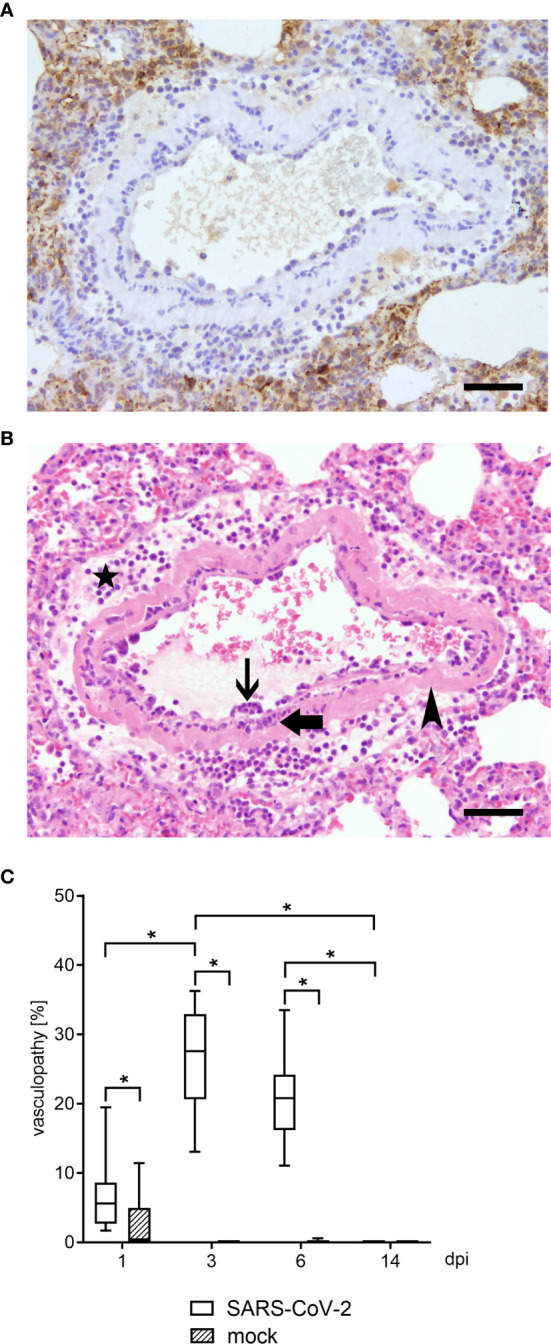
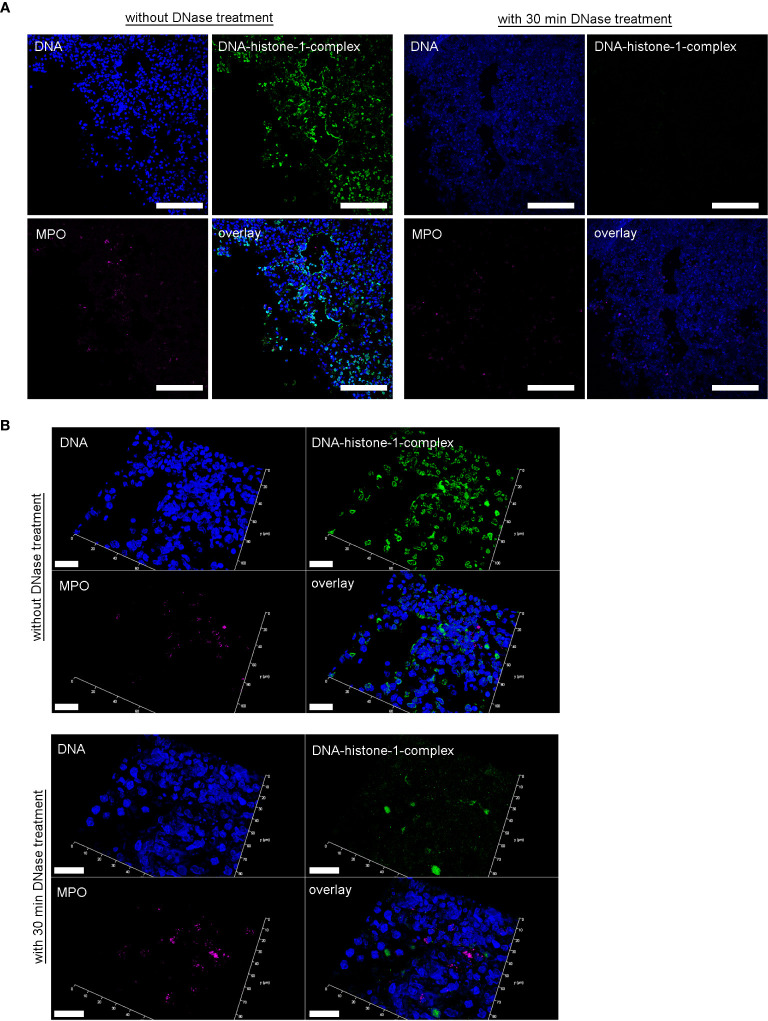
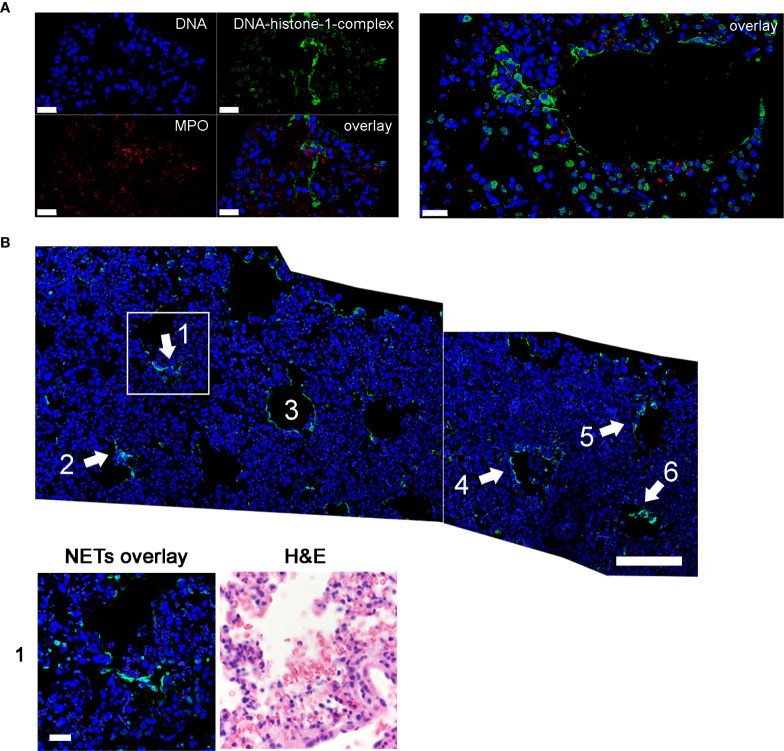
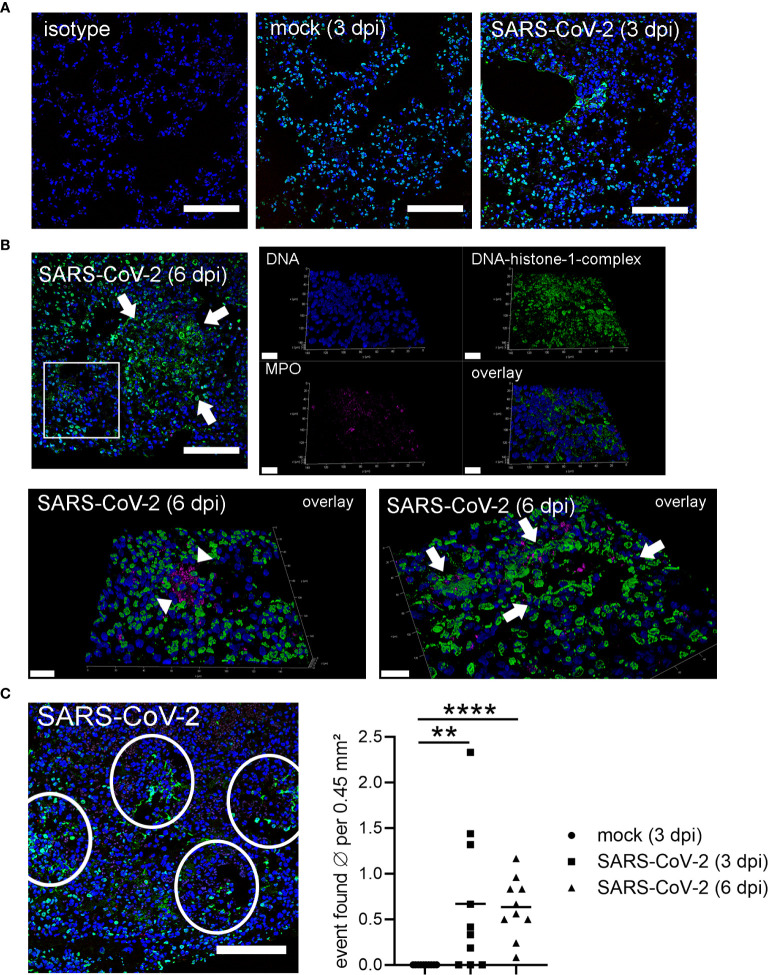
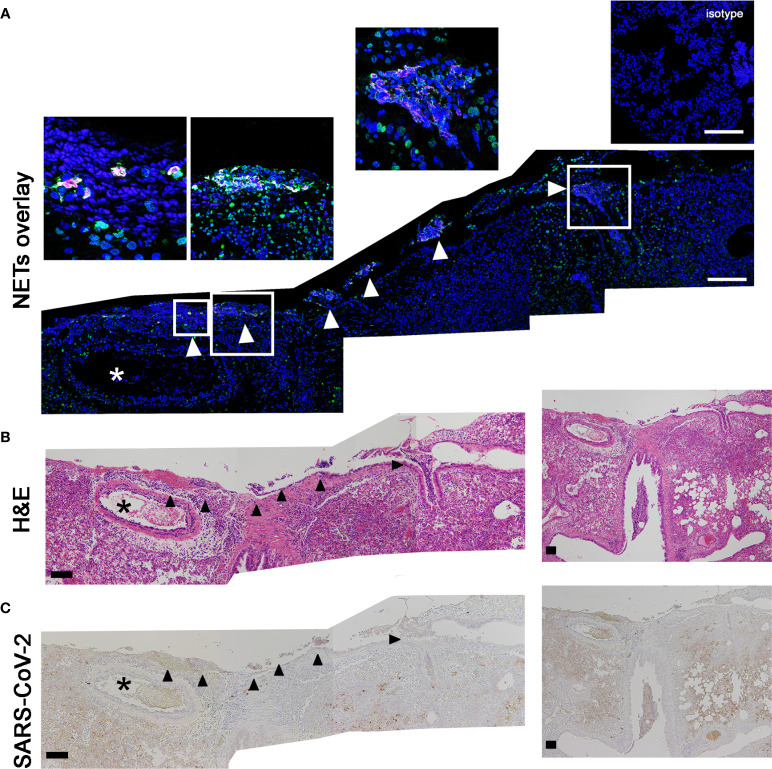
Neutrophil extracellular traps (NETs) have been identified as one pathogenetic trigger in severe COVID-19 cases and therefore well-described animal models to understand the influence of NETs in COVID-19 pathogenesis are needed. SARS-CoV-2 infection causes infection and interstitial pneumonia of varying severity in humans and COVID-19 models. Pulmonary as well as peripheral vascular lesions represent a severe, sometimes fatal, disease complication of unknown pathogenesis in COVID-19 patients. Furthermore, neutrophil extracellular traps (NETs), which are known to contribute to vessel inflammation or endothelial damage, have also been shown as potential driver of COVID-19 in humans. Though most studies in animal models describe the pulmonary lesions characterized by interstitial inflammation, type II pneumocyte hyperplasia, edema, fibrin formation and infiltration of macrophages and neutrophils, detailed pathological description of vascular lesions or NETs in COVID-19 animal models are lacking so far. Here we report different types of pulmonary vascular lesions in the golden Syrian hamster model of COVID-19. Vascular lesions included endothelialitis and vasculitis at 3 and 6 days post infection (dpi), and were almost nearly resolved at 14 dpi. Importantly, virus antigen was present in pulmonary lesions, but lacking in vascular alterations. In good correlation to these data, NETs were detected in the lungs of infected animals at 3 and 6 dpi. Hence, the Syrian hamster seems to represent a useful model to further investigate the role of vascular lesions and NETs in COVID-19 pathogenesis.
中性粒细胞胞外诱捕网(NETs)已被确定为严重 COVID-19 病例的一种发病机制触发因素,因此需要建立了解 NETs 在 COVID-19 发病机制中的影响的良好描述的动物模型。SARS-CoV-2 感染在人类和 COVID-19 模型中引起不同严重程度的感染和间质性肺炎。肺部和外周血管病变是 COVID-19 患者严重的、有时致命的、发病机制未知的疾病并发症。此外,已知中性粒细胞胞外诱捕网(NETs)会导致血管炎症或内皮损伤,也是 COVID-19 的潜在驱动因素。尽管大多数动物模型研究描述了以间质炎症、II 型肺泡细胞增生、水肿、纤维蛋白形成以及巨噬细胞和中性粒细胞浸润为特征的肺部病变,但目前尚缺乏 COVID-19 动物模型中血管病变或 NETs 的详细病理学描述。在这里,我们报告了 COVID-19 金黄地鼠模型中的不同类型的肺部血管病变。血管病变包括感染后 3 天和 6 天的内皮炎和血管炎,在 14 天几乎完全消退。重要的是,病毒抗原存在于肺部病变中,但不存在于血管改变中。与这些数据很好地相关,在感染动物的肺部中在 3 天和 6 天检测到 NETs。因此,叙利亚仓鼠似乎是进一步研究血管病变和 NETs 在 COVID-19 发病机制中作用的有用模型。